 Care
Care
What Is Permethrin and What Is It Used for in Dogs?
There are many anti-parasite substances and commercial formulations that combine them into products today. Many of them use permethrin as a repellent and insecticide against various ectoparasites (external parasites).
At Soyunperro we'll go over this widely used substance today. We'll look at what it's used for, its possible side effects, as well as examples of products that use it and how it's applied. Let's get started.
What Is Permethrin?
Permethrin is a synthetic form of pyrethrin, a plant-derived insecticide. Permethrin is a powerful external anti-parasite treatment for dogs, used to control and treat fleas, sand flies and other mosquitoes, lice, and ticks. The substance interferes with the ectoparasite's nervous system, paralyzing it and eventually causing death.
Permethrin has been approved by the FDA for use in dogs and is available over the counter. It's a widely used ingredient in the repellent sprays we use when traveling abroad, especially to tropical areas.
Uses of Permethrin
Permethrin is safe to use in almost all dogs, as long as it's applied correctly according to instructions. However, it's toxic to cats and aquatic animals. It's recommended not to use it on dogs living with a cat, or to wait until the application has fully dried.
It's also recommended that no dog treated with permethrin enter any aquatic ecosystem for at least 48 hours after treatment, which is the time considered necessary for the substance to dry and not become toxic to any other animal species. This allows repelling ectoparasite pests and preventing any contact between the dog and them, effectively fighting the transmission of various diseases they can carry, such as Lyme disease, ehrlichiosis, babesiosis, and leishmaniasis.
Fast-acting, the substance works within 24 hours of application and continues for 3 to 4 weeks through the animal's skin and subcutaneous tissue, providing continuous protection across the whole body.
Possible Side Effects
Using permethrin to eliminate an infestation by these ectoparasites can sometimes cause side effects in dogs. Symptoms are usually mild and short-lived.
The most common side effect (if any occurs) is redness at the application site, local swelling or erythema, as well as slight hair loss, especially at the application site. If this hypersensitivity reaction occurs, it's best to bathe the dog and consult a vet.
The following effects aren't very common, but we'll cover them so you're aware, in case they occur in a rare case. The more serious side effects would include:
- Vomiting.
- Drooling.
- Diarrhea.
- Increased excitability.
- Lethargy.
As veterinary advice: whenever a new treatment is introduced to our pet, it's a good idea to watch for the animal's possible reaction to the new substance. Adverse reactions to a new treatment aren't always immediate — they can take hours or even days, so owners need to stay alert.
Examples of Commercial Products
Nowadays there are dozens of external and internal anti-parasite products. With many formulas and combinations, several options are available on the market to keep our furry friend dewormed and therefore free of parasites and possible diseases year-round.
In this article, we'll cover examples of commercial products using permethrin. It can be a single active ingredient in a product, or combined with one or more other substances. (No brand pays to have these examples described here, but they'll serve as a reference).
As an example of the first case, we find Piretrón; its active ingredient is permethrin. It has repellent and insecticidal action against ticks, lice, fleas, and mosquitoes. The protection period is 4 weeks after treatment with the veterinary product (like most spot-ons).
Another example that combines permethrin is the Advantix spot-on. This spot-on for controlling pests in dogs is an effective solution for treating your pet against fleas, ticks, mosquitoes, or sand flies.
This treatment combines an insecticidal effect, aimed at killing parasites already present on the animal's coat or skin, with a repellent action. This last part repels pests and prevents any contact between the dog and the parasites, effectively fighting the transmission of various diseases.
This topical solution is made up of 2 chemical molecules: imidacloprid, a particularly fast-acting anti-flea agent, and permethrin. Advantix anti-parasite spot-ons (like the others) are available based on weight, from 4 to 60kg. So, it comes down to weighing what works best for your furry friend and what suits your budget, based on personal preference.
How to Apply It
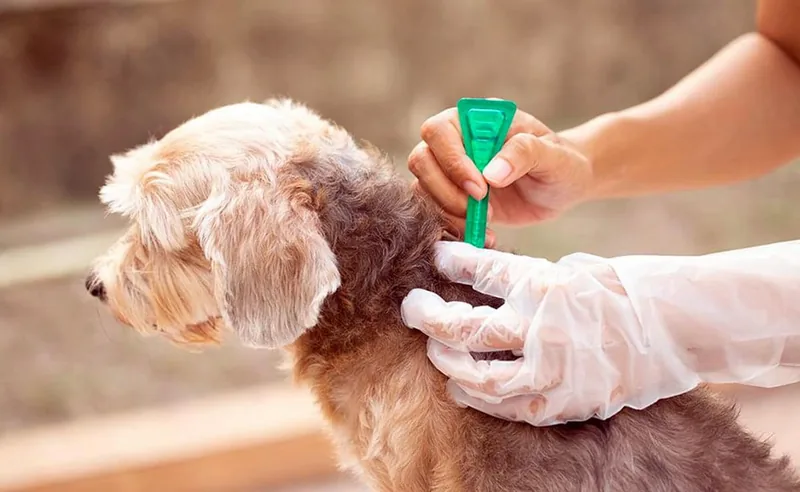
Applying this type of spot-on is a very simple task that shouldn't cause much trouble. The dog should stand up to make application easier; if it's very nervous or won't hold still, you can ask for help to make application easier.
So, the next step will be opening the spot-on (some need to be opened using the "nail" effect cap to make a hole). Next, all that's left is to deposit the entire contents of the spot-on (matched to your pet's weight) onto the dog's skin, having first parted the fur. You can spread it a little across the area before emptying all the liquid in one spot.
Let it dry without touching that area or bathing the dog for 48 hours, to make sure it works as effectively as possible. Treating your dog regularly against external parasites is essential, especially during peak season, which generally (depending on where you live) will be the summer months and warmer periods, when pests are more numerous and active.
IMPORTANT: This article is for informational purposes only and does not constitute veterinary, nutritional or behavioural advice. Every dog is different, and only your trusted vet can advise you on its specific needs.