 Training
What to Do if a Dog Comes to Attack My Dog?
Even when we devote enough time and attention to our furry friends' training, sometimes we can find ourselves caught up in unpleasant or even dangerous situations. One of these can happen when, while walking or enjoying a moment outdoors, another dog approaches our best friend with a clearly aggressive attitude. If you've been through something similar, you're surely asking yourself questions such as: "what do I do if a dog comes to attack my dog?"
Let's look in detail at what can cause your dog to be attacked and what our options are for preventing this attack.
Why Do Other Dogs Attack My Dog?
You might be surprised to know a dog doesn't always attack yours because they're aggressive or "badly trained". In fact, there are environmental factors, communication aspects and traits inherent to each dog that can end up "triggering" this kind of attack. For example:
- Your dog is very impulsive when interacting with other dogs. If your furry friend tends to get overexcited around other individuals, they're very likely to act in an invasive or overly confident way when approaching other dogs. This behaviour can scare or even "bother" some dogs, triggering defensive or offensive attitudes (for example, growling, showing their teeth, biting…). Impulsiveness is particularly common in young dogs going through canine "adolescence" and in those who haven't been through a proper socialisation process.
- Communication mistakes. Dogs have their own social behaviour codes, and body language plays a key role in their communication. Eventually, when two dogs meet and one — or both — hasn't had the chance to take these behaviour codes on board and/or has been exposed to inappropriate methods while being raised (for example, the use of physical force and violence as "training tools"), communication problems can happen. So, even if your dog is well trained and approaches another dog with a peaceful posture, they may still suffer an attack because that other dog isn't able to understand their intentions, probably from misreading your furry friend's body language.
- Anatomical characteristics. Some dog breeds have anatomical traits and characteristics that make communicating with other dogs harder. For example, brachycephalic dogs, such as the pug and the French bulldog, may struggle to show certain facial expressions and tend to make very particular sounds (similar to snoring) because of the breathing difficulties they live with. Sadly, some dogs may "misread" these involuntary actions and take them as threatening signals. And when this happens, they'll most likely adopt a defensive or offensive stance.
- Illnesses. Some health problems alter dogs' distinctive scent, especially in areas with a higher concentration of pheromones (for example, the genitals and anus). Although these changes may go unnoticed by human smell, dogs will easily pick up on them when interacting with yours. And this "strange" smell may trigger some rejection or negative emotions (stress, anxiety, fear) in other dogs, leading to an attack.
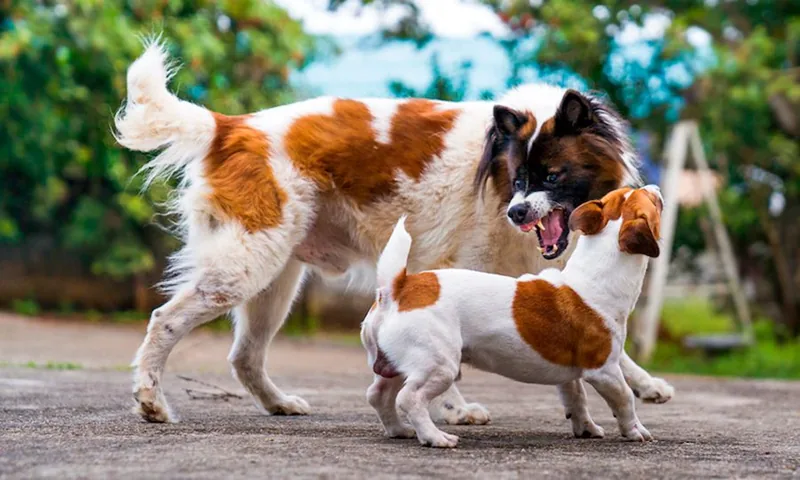
How to Act if a Dog Tries to Attack My Dog?
To prevent this attempted attack from turning into a fight your furry friend could get hurt in, the first thing you need to do is know dogs' body language. Do you know why? Because this way, you'll be able to recognise the signs pointing to the other dog preparing to attack, letting you anticipate the attack and take the steps needed to protect your best friend.
Dogs' body language is very broad, and includes every action, gesture, sound and posture used to express themselves and communicate with other individuals (whether people, dogs or other animals) and also with their surroundings. Dogs use their whole body for these purposes, including facial expressions, the ways they position or orient their ears and tail, the intensity and frequency of their barking, the different kinds of sounds they can make and so on.
Even so, when we talk about "predicting" an attack from other dogs, it's particularly relevant to identify the signs of offensive and defensive aggression in canine body language, which we sum up below:
- Defensive posture: the dog usually has rigid limbs and their fur standing on end, besides giving off "warning signals", such as baring their teeth, growling, or barking rapidly and constantly (with no pauses).
- Offensive aggressive attitude: here we'll see a dog preparing to attack, with warning signals becoming even more obvious. Their limbs will be far stiffer and more rigid, their fur standing on end, their muzzle wrinkled, and their barks will sound louder and shorter.
If you notice the dog yours is trying to interact with shows any of these signs or any sign of discomfort or stress, we recommend keeping a neutral posture and simply calling your furry friend to follow you and, as a result, move away from the dog showing signs of an intent to attack. It matters that you act as naturally as possible, avoiding shouting, making strange noises or sudden movements, since these attitudes will only increase stress levels (already high in these contexts).
It's worth remembering how important it is to practise the recall exercise with your dog, to make sure they'll come to you when you call them by name. This is essential not just to prevent possible attacks and accidents during walks, but also to optimise communication between you both and make their training easier.
Tips for Preventing Your Dog Being Attacked
If a dog approaches yours directly, showing some sign they intend to attack, there are other basic guidelines you need to know to prevent this situation turning into a bigger conflict. In this sense, we again stress how important it is to stay calm so you can act consciously, avoiding raising stress levels. Even so, we also give you the following tips:
- Don't pull on the lead to move your dog away from the "possible aggressor". Even though you may feel this urge, avoid tensing the lead while your dog is greeting another dog. Doing so will only convey your fear and/or nervousness, and these negative emotions can lead to an attack from the other dog. If the goal is moving your furry friend away from another dog, always turn to calling them or try to create a distraction so they leave on their own.
- Don't pick up your dog to avoid contact with other dogs. This is another very impulsive attitude owners have that can end up hurting their own furry friend. If a dog comes to attack yours and you pick them up to prevent this, all you'll achieve is making it even easier for the other dog to grab and shake them. What's more, the "aggressor" dog may also read your attitude as a threatening signal, directing their attack at you too.
- Turn to the other dog's owner. If you notice the dog approaching to attack yours is well cared for and has a collar or harness, their owner is most likely nearby and can help you handle this situation. If so, you can — and should — grab their attention and ask them to call their dog or come over to hold them.
- Try to hold the dog trying to attack yours. If your furry friend keeps a peaceful attitude and you can tie them up for a moment to act more freely, or ask someone to hold them, you can try to hold the "aggressor dog" to stop the attack from happening. Careful! To do this, always position yourself behind the aggressor dog and hold them firmly by the harness or collar.
- Don't stand between your dog and their possible "aggressor". You should never try to restrain the other dog by holding any part of their body. This will only cause them more tension, and you have a high chance of suffering an injury or getting bitten. You also shouldn't use your hands or your own body as a "shield" to protect your furry friend, since if you position yourself between two dogs in a context of an imminent attack or fight, you'll most likely end up hurt.
- Don't try to hit or hurt the other animal to scare them off. Again, you'll only be increasing tension and stress levels and, as a result, increasing the odds of the attack happening. Throwing water at the "aggressor" dog won't be effective at getting them to stop attacking yours either.
Lastly, remember how important it is to calm your furry friend down once you've managed to move them away from the dog trying to attack them. And once a sense of calm is restored, check their whole body to confirm whether they've suffered any injury or hurt. What's more, if you want to know what to do if your dog fights with another dog, we recommend this article.
IMPORTANT: This article is for informational purposes only and does not constitute veterinary, nutritional or behavioural advice. Every dog is different, and only your trusted vet can advise you on its specific needs.