 Care
Care
What to Do If My Dog Bites or Licks a Toad?
An encounter between a dog and a toad can end really badly. Why? Toads release a venomous substance that can seriously affect dogs' health. Whether out of play or curiosity, dogs bite or lick them and get poisoned right away.
That's why knowing the symptoms and acting quickly in a case of toad toxin poisoning is vital to saving its life. At Soyunperro we'll explain how to respond.
What Happens When a Dog Licks or Bites a Toad?
A toad's defense system means that, when licked or bitten, it releases an irritating liquid through its skin to defend itself and avoid being eaten.
This reaction can cause acute poisoning in our furry friend when it comes into direct contact with this substance through mucous membranes, the mouth, or the tear ducts.
Once the toxin enters the bloodstream, circulatory and nervous system disturbances begin, along with other symptoms you should know about.
Symptoms of Toad Poisoning in Dogs
During poisoning from contact with a toad's venom, the most common symptoms you might see in your dog can range from mild to severe. They are as follows:
Mild symptoms:
- Irritation of the oral mucosa and drooling.
Moderate symptoms:
- Irritation of the oral mucosa.
- Drooling.
- Ataxia.
- Irregular heart rhythm.
- Defecation.
Severe symptoms:
- Seizures or involuntary muscle movements.
- Arrhythmias, tachycardia, or labored breathing.
- Tremors and muscle weakness.
- Diarrhea, dizziness, and vomiting.
- Excessive drooling.
- Very dilated pupils.
- Stupor and difficulty keeping balance.
- Very red or bluish mucous membranes.
If you notice these signs in your dog and remember seeing it playing with or trying to catch a toad outdoors shortly before, there's a good chance it's a case of bufotoxicosis, which is the medical name for this type of poisoning.
In that case, don't waste time waiting for it to get better on its own. You should immediately wash the dog's mouth with water and lemon juice and take it to the nearest vet as soon as possible.

Types of Poisonous Toads in Spain and the United States
Obviously, not all toads are the same, and some carry a higher or lower level of toxicity. Among those that pose the greatest poisoning risk to our canine friends, we find:
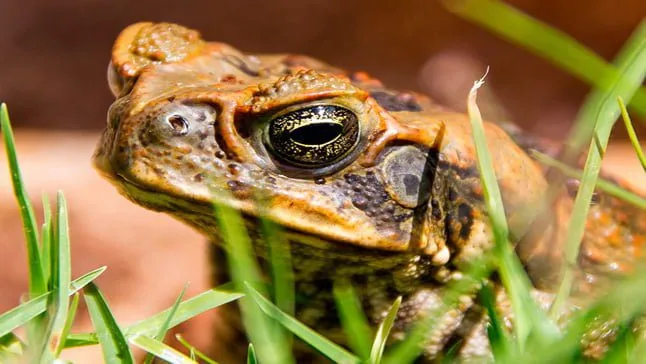
- The Colorado River toad, or Sonoran Desert toad. Found mainly in the southwestern United States and northwestern Mexico.
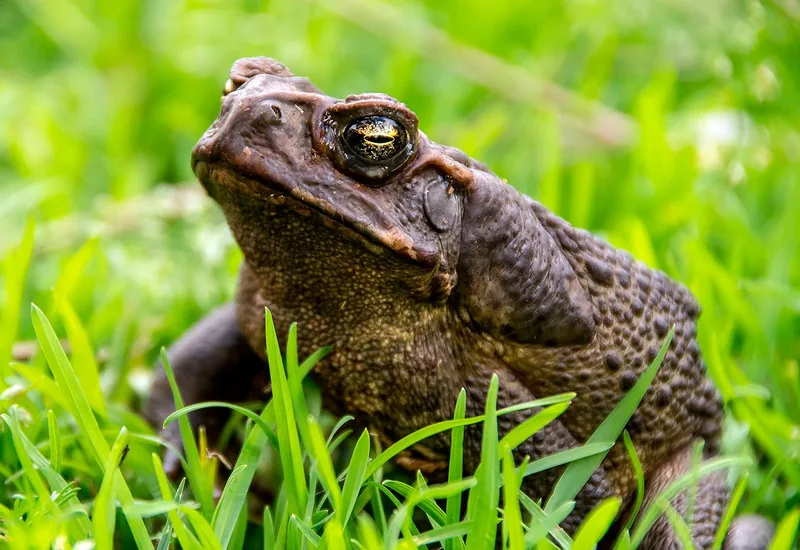
- The cane toad, or marine toad. Native to Central and South America.
Although toads don't have an organized venom-delivery apparatus, the glands on their head secrete various venomous substances called zootoxins, capable of causing the clinical effects mentioned above.
Toads have mucous glands distributed across their skin, which secrete mucus to defend against animal predators, and in this case your pet is the toad's predator.
If your dog bites a toad, it compresses these glands, causing the venom to be released and come into contact with its mouth.
These species are legally prohibited from entering Spain, so it's unlikely you'll find them here. Despite this, the general recommendation is to always keep your canine friend away from any amphibian, since they all have the same natural defense system.
A toad may not be dangerous to humans, but it can be fatal for our furry friends.
So be very careful: if your dog lives on a property or often walks through damp areas like rivers or lakes, watch it closely and don't let it chase or play with toads.
Too late? Then don't stop to figure out what type of toad it was, and, especially if the dog starts showing any sign of poisoning, rush off to find the vet.
Most Common Treatments
Once at the clinic, the vet will do an initial physical exam of the dog, while we give all the details about what happened and the symptoms (it's important to tell the vet whether the dog only bit it or swallowed it). The specialist will clean the dog's mucous membranes.
If the dog swallowed the toad, the vet will need to induce vomiting and sedate it if necessary, to remove the remains — if vomiting doesn't manage to expel the toad, endoscopic extraction or surgery will be needed.
The top priority is stopping the poisoning process and stabilizing the dog. Once your furry friend has made it through the most acute phase of the crisis, it will remain under observation. It will be given medication to help eliminate the toxins and reduce their effects.
The Importance of the Following Weeks
The weeks following this episode will be key to seeing how it responds to treatment and checking whether the poisoning has left any lasting effects. The dog's size, age, and prior health condition will be decisive in fighting off this type of poisoning.
Your care is also very important. You need to follow the vet's instructions, constantly check that the dog stays well hydrated, and give it the doses of medication it needs. This will help it maintain a good heart rhythm and treat the nervous system symptoms and seizures.
Finally, washing the areas that came into contact with the toad will help reduce the amount of toxin that may still be present.
IMPORTANT: This article is for informational purposes only and does not constitute veterinary, nutritional or behavioural advice. Every dog is different, and only your trusted vet can advise you on its specific needs.