 Nutrition
What's the Best Hypoallergenic Kibble?
The number of dogs with food intolerances to one or more ingredients grows exponentially every year. Hence the need to start using a hypoallergenic range that clears up whatever symptoms our dog is showing.
Let's look in detail at the best options in hypoallergenic food for a dog with food intolerances, and why.
What Is Your Dog Allergic To?
Food intolerances and food allergies are different in every dog. A dog might develop an allergy to cereals or to one specific cereal. To meats, or to just one type of meat or fish. To various vegetables commonly added to kibbles, such as peas or potato, and so on.
Knowing what it's intolerant to is the basis for being able to choose a kibble that doesn't contain that ingredient. We can find this out thanks to an intolerance test that we can have done at our trusted veterinary clinic.
If we don't know, or the results aren't conclusive, we can start on an elimination diet. This consists of feeding our dog a kibble containing a single source of animal protein (meat or fish) and, preferably, made without cereals. It's more than advisable to carry out this process under our vet's supervision.
The Best Hypoallergenic Kibbles
These are the best ranges we've found in hypoallergenic food, chosen for having a single source of animal protein (a single meat or fish) and for being made without cereals. We've also taken customer feedback into account for this ranking.
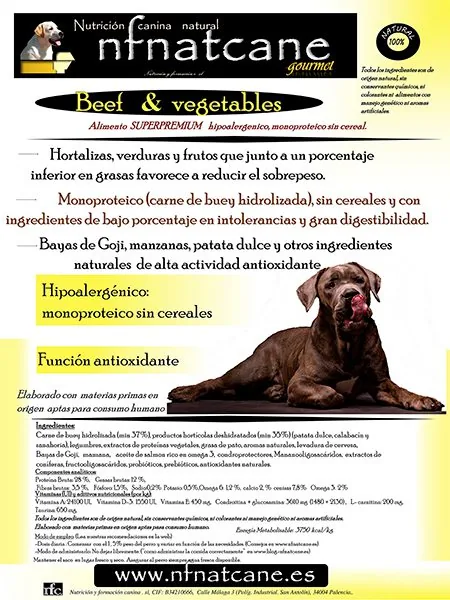
Beef & Vegetables by NFNatcane
Made with beef as its source of animal protein and free of cereals. We think it's a very well-balanced formula and, on top of that, moderate in calories to prevent excess weight. Its composition shows that this is a high-quality range. You can find more information on the NFNatcane website.
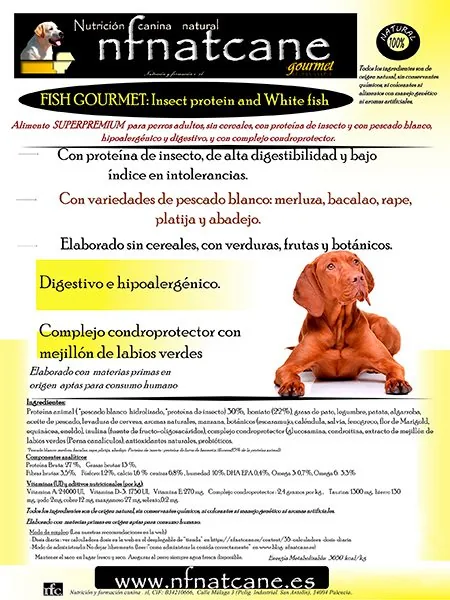
Fish Gourmet by NFNatcane
We're staying with the same brand, since this other hypoallergenic range is made with white fish and the innovative insect protein (which has the lowest rate of intolerance of any protein source). Ideal for diets that rule out meat and cereals, since it too is made without cereals. You can see all the information on their NFNatcane website.
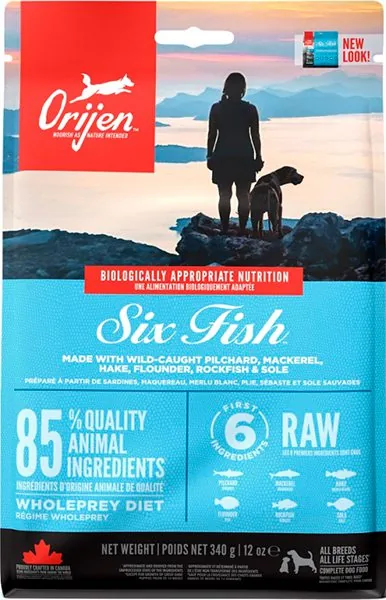
Six Fish by Orijen
Another wonderful range made with white fish and vegetables, free of cereals and of animal meats (lamb, beef, chicken, etc.). A balanced, complete formula, also ideal for a diet that rules out meat and cereals. We can see all the information on the Orijen website.
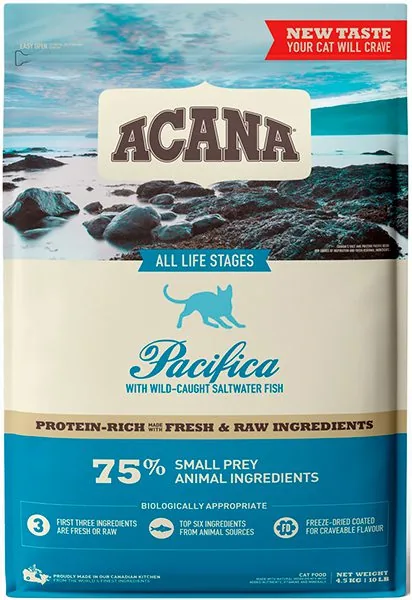
Pacifica by Acana
This range is also made with white fish and vegetables, free of cereals. A well-balanced formula and not a light one — in other words, ideal for dogs that don't need to maintain or lose weight. We can see all the info on the Acana website.
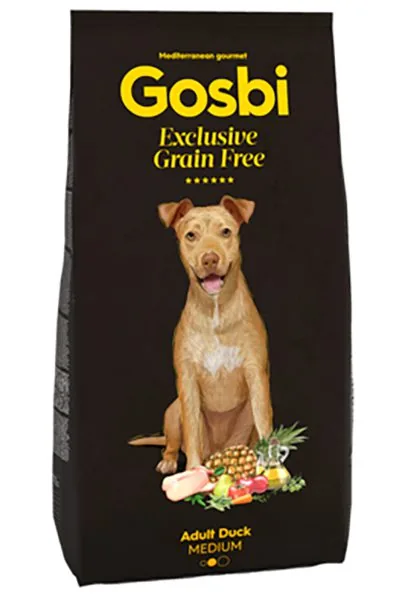
Adult Duck by Gosbi
A range made with duck as its source of animal protein, free of cereals and with fruit and vegetables in its balanced composition. Ideal for an elimination diet, as it contains a single source of animal protein. We can see all the info on the Gosbi website.
Which Range Should You Choose?
If we have a positive allergy test with a clear result, all we have to do is look for a kibble that doesn't contain that ingredient or ingredients in its composition (check the ingredient label).
If we can't afford the blood test, or we had it done but it gave us no useful information, we should start on the elimination diet under our vet's supervision. Choosing a grain-free kibble with a single source of animal protein is the most advisable route.
For example, a grain-free kibble with beef, or a grain-free kibble with fish, are good places to start.
Which Ingredients Cause the Most Allergies?
Broadly speaking, cereals, cereal by-products, dairy and eggs are the products that cause the most allergy problems in dogs. They're followed by meat proteins, with chicken being the product that causes the most allergies among the meat proteins.
Products most likely to cause allergies:
- Maize
- Wheat
- Barley
- Oats
- Eggs
- Dairy
- Chicken
That said, the fact that these are the products most commonly turned up when detecting allergies doesn't for a moment mean that your dog is allergic to them. Perhaps your dog is allergic to beet pulp, so common in dog kibbles, or to some typical additive such as colourings or preservatives.
IMPORTANT: This article is for informational purposes only and does not constitute veterinary, nutritional or behavioural advice. Every dog is different, and only your trusted vet can advise you on its specific needs.