 Care
Care
Why Do Dogs Eat Grass? Causes According to Studies
You've probably seen your dog, or a friend's dog, eating grass in the park more than once, and you may have wondered whether it's fine to let them do it or whether we should stop them.
Eating grass is a fairly common behavior in dogs, and many owners, worried about it, ask their vet. Below, we'll try to understand why our dog eats grass and whether we should allow this behavior.
Why Do Some Dogs Eat Grass?
Some studies claim that 68% of dogs eat grass regularly. As you can see, that's a fairly high percentage; however, very little research has been done to determine the causes of this behavior.
There are several theories that try to explain this behavior, so let's review them one by one to try to understand it.
Eating Grass to Purge
The most widespread popular explanation is that dogs eat grass to purge themselves. In other words, dogs would eat grass with the goal of vomiting, to relieve an upset stomach or possible parasites.
But, what does science say about this hypothesis? A study conducted by the University of California looked into this question, and the results were as follows:
- 68% of the dogs studied ate plants or grass regularly.
- Only 9% of the dogs showed signs of illness before eating grass.
- Vomiting occurred in only 22% of cases after eating grass.
Looking at these results, we see that the percentage of dogs showing discomfort before eating grass was very low, and moreover, they didn't always manage to vomit after eating it.
So, according to this study, eating grass isn't necessarily linked to stomach discomfort, and eating plants or grass could simply be a natural behavior for dogs.
Based on my personal experience as a professional vet, I share this study's conclusions, since I've seen that my own dogs eat fresh grass whenever they get the chance, and I've never linked it to a stomachache.
In addition, I keep their deworming up to date, so their behavior isn't related to intestinal parasites either.
Eating Grass to Meet Nutritional Needs
Some experts claim dogs eat grass to meet their nutritional needs.
In the case of wolves, this theory holds true, since a diet based exclusively on meat would be deficient; that's why they eat the stomach contents of their prey (which contains partially digested plant matter) and eat fruit as part of their regular diet.
However, domestic dogs' nutritional needs are already covered by high-quality kibble, which already contains adequate levels of plant matter.
Studies show that dogs fed a balanced diet still eat grass just the same. So we can confirm that eating grass isn't linked to nutritional deficiencies.
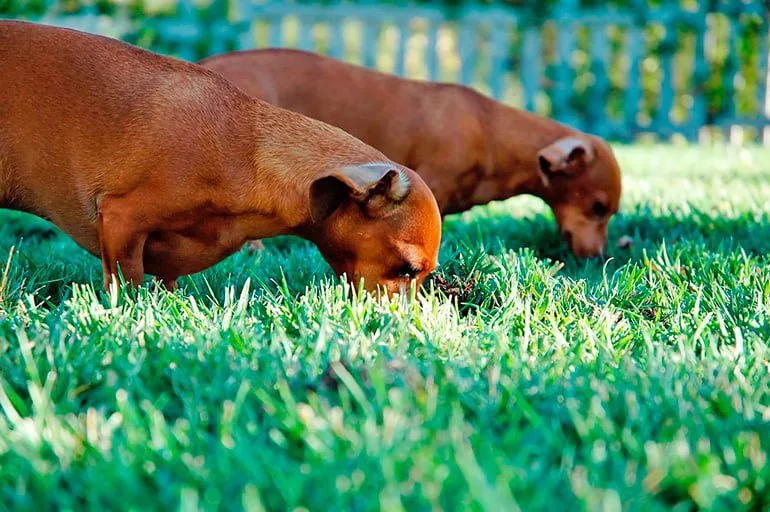
Dogs Eat Grass Because They're Hungry
Recent studies show that this behavior is directly related to satiety, meaning dogs eat more grass when they're hungry than when they're full.
So, this theory could explain a "grass-nibbling" behavior in animals that are anxious about food and don't feel full easily.
Eating Grass as Part of Their Natural Behavior
Eating grass is a common behavior in wild wolves and has its own explanation. Wild canids eat grass and other plants to help eliminate parasites and as part of their diet to avoid nutritional deficiencies.
Dogs descend from wolves, and many of the behaviors our pets show are an innate inheritance from their wild ancestors.
It seems dogs are drawn to the taste of grass and enjoy the habit of chewing it. In fact, it's been observed that dogs with direct access to grass tend to spend at least three minutes a day eating it.
So, we can conclude that, currently, the most accurate theory would be that dogs eat grass naturally and because they enjoy it, this being a normal, inherited behavior.
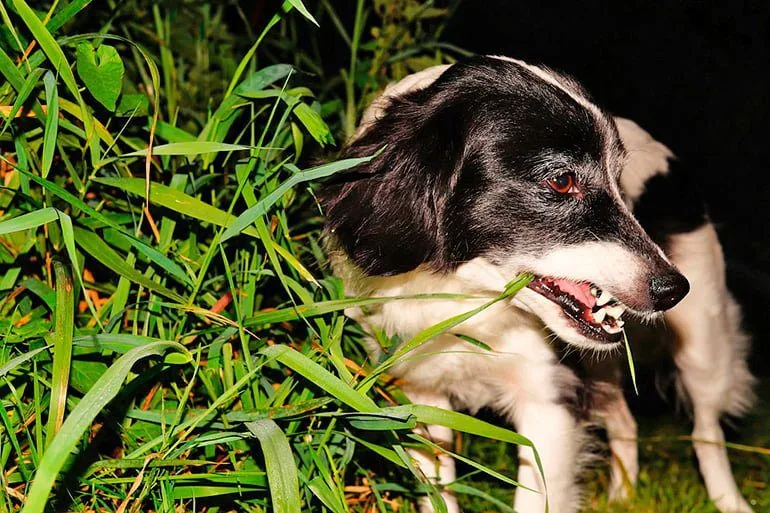
Should We Let Our Dog Eat Grass?
Now that you know this is a natural behavior that can be enjoyable for our dog, you're probably wondering whether it's fine for a dog to eat grass regularly or whether it can cause health problems.
From a behavioral or ethological standpoint, we should let dogs eat grass if that's what they want, and not suppress this behavior. However, from a health standpoint, we shouldn't let them eat grass from the street or from open fields.
Eating This Type of Grass Can Carry a Number of Health Risks:
- Grass in parks is often treated with pesticides, so if our dog eats it, it could get poisoned.
- Plants from open fields, even though we might think they're natural and safe, can carry parasites in the form of larvae or eggs and cause infestations in our pet if it eats them.
If you want your dog to enjoy eating grass safely, you could consider setting up a pot at home and growing lawn grass or another type of edible grass in it.
But we shouldn't forget that some dogs have a sensitive digestive system and may not tolerate eating grass well; so if vomiting or diarrhea appear, eating it is contraindicated.
IMPORTANT: This article is for informational purposes only and does not constitute veterinary, nutritional or behavioural advice. Every dog is different, and only your trusted vet can advise you on its specific needs.