 Training
Why Do Dogs Run Around Like Crazy?
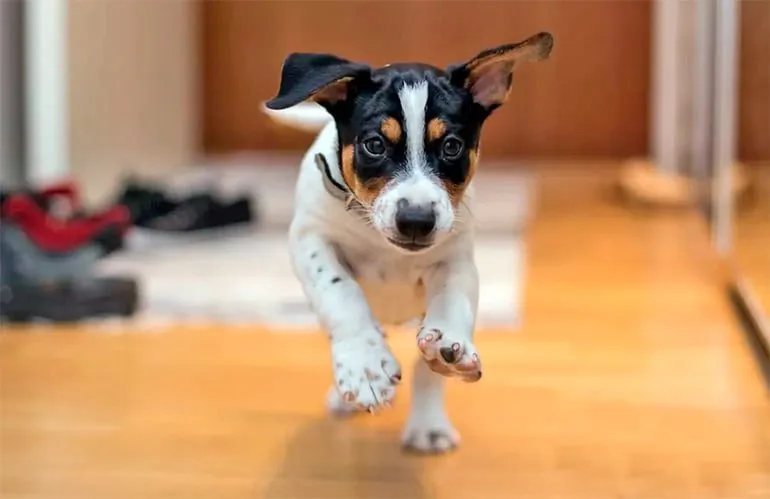
You've surely seen your dog start running around like crazy, back and forth non-stop until they end up exhausted. This fun dash can happen during play, but other times it happens out of nowhere.
Sometimes, on top of that, it's pointing to some mental or physical condition. If your dog's crazy dashes catch your attention, below we explain what causes them and how you should react. Shall we get started?
The Importance of Play for Dogs
Dogs, whatever their age, love playing. This eternal-youth trait was encouraged by humans during the domestication process. Running, or more specifically, chasing, is part of dogs' play. This and other playful behaviours start in the first weeks of life.
They help the dog prepare for tasks such as hunting, even though our canine companions don't need to hunt to feed themselves nowadays. That's why play isn't nonsense at all. So, first, it matters a great deal that puppies grow up alongside their mother and littermates until at least eight weeks old.
This contributes to their wellbeing and future psychological balance. Second, it's essential the dog has opportunities to play throughout their whole life, of course, adapted to the needs they show at each stage.
Dogs Running Around Like Crazy
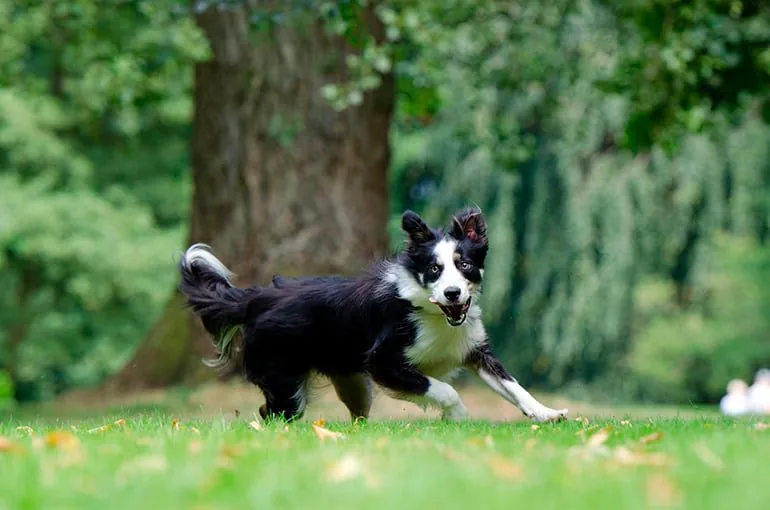
Sometimes our dog is in the middle of a play session and starts running around like crazy for several minutes straight. Sometimes, they're at home when, out of nowhere, they dash off running. This behaviour is nothing more than an emotional outburst, or in other words, a quick release of all their built-up energy.
Generally, a dog dashing off like crazy is celebrating that they feel happy, which is why the frantic dash happens during a play session. But it can also happen because they're overjoyed to see us after being alone or without activity for a while.
Even though dogs sense we're not the same species as them, they do consider us part of their family. Instinctively they want to keep every family member together, and since they have no way of knowing we'll come back when we leave, their joyful reaction can include an outburst of crazy, excited dashing about. It's like a greeting, but an exaggerated one.
Some Dogs Run in Circles
Running in circles is an action encouraged in herding dogs. This is how they manage to gather livestock together. It's believed to be based on the hunting strategy wolf packs develop.
This is based on each wolf approaching potential prey while keeping the same distance as the rest of the pack, while staying equidistant from the wolves to their right and left. This way they manage to fully surround the prey. Herding dogs reproduce this hunting behaviour.
Logically, in this case, to keep the livestock in their charge together and steer them. A single dog tries to fully surround the whole flock, hence why they run in circles, trying to achieve the same effect as if they were with their pack mates. They want to form a circle of wolves.
What Is a Stereotypy in Dogs?
Special mention should go to canine dashing when it happens compulsively, very often, or includes chasing their own tail. This behaviour is no longer part of healthy play. It's a stereotypy, defined as a repeated behaviour outside its logical context.
In this specific case, the dog would dash off running outside a play or excitement situation. They can do it so intensely that they even get dizzy and fall over. Stereotypies are linked to situations of stress, frustration, boredom and so on. That is, they tell us the dog's living conditions aren't ensuring their wellbeing.
To fix it, these conditions need changing, and it may be necessary to contact a canine behaviour professional or ethologist. This example shows us how important it is to keep the dog stimulated both physically and mentally. A dog with little company and a monotonous environment will suffer this and other behavioural problems.
It's Not a Good Sign if the Dog Spins in Circles
Although crazy dashes are entirely normal in dogs, sometimes they can point to, besides a stereotypy, a physical problem. For example, if the dash is uncoordinated, the dog could be suffering from a neurological disorder.
Other conditions that lead a dog to run in circles as if trying to catch their own tail are parasites or anal gland problems. If we suspect our dog isn't running around like crazy just for play, we should consult the vet. With a check-up, physical problems can be detected and treated.
Lastly, puppies may be more prone to running around chasing their tail. It's not unusual for this to happen right after they arrive at their new home and find themselves alone. Their own tail becomes a toy. On an occasional basis it's not worrying, but if it becomes a habit, it's a sign they need more attention.
Bibliography Berns, Gregory. 2013. How Dogs Love Us. Melbourne. Scribe Publications. Morris, Desmond. 1988. Observe a su perro. Barcelona. Plaza & Janés.
IMPORTANT: This article is for informational purposes only and does not constitute veterinary, nutritional or behavioural advice. Every dog is different, and only your trusted vet can advise you on its specific needs.