 Care
Care
Why Do Dogs Yawn?
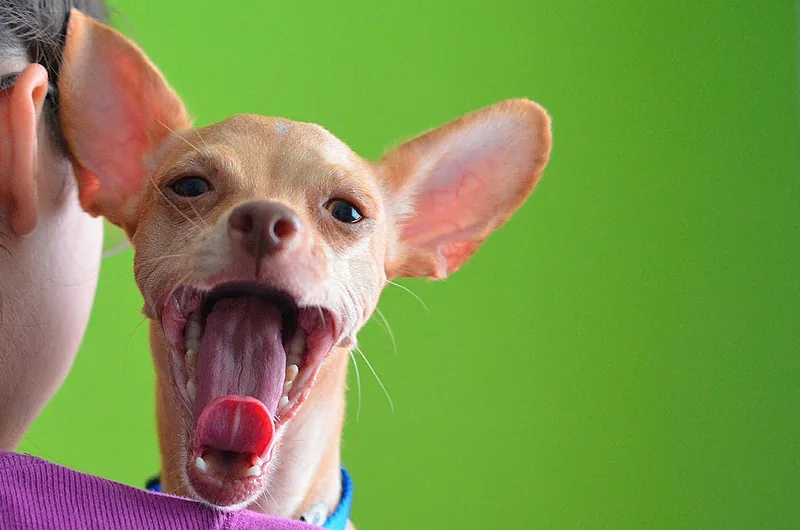
Humans associate yawning with tiredness or boredom, but in canine language, a yawn can mean very different things. To know why our dog is yawning, we need to focus on the situation.
You've surely seen your dog yawn tons of times, thinking it's just a bit lazy and always sleepy. Well, you'll be quite surprised to learn the real meaning behind its yawns.
Yawning in a Dog's Body Language
Dogs use many gestures and expressions to convey information — about their mood, possible dangers, nervousness, stress... but also happiness, calm, joy, and love.
Canine language can be interpreted through tail movement to ear position, without skipping curious details like excessive lip-licking or shaking for no reason.
To know what our dog's yawns mean, we need to analyze the situation, since they don't always mean the same thing:
Yawning Out of Respect or Anxiety
You've surely experienced this — when you approach your dog to take a photo, it turns its head away, avoiding your gaze, and sometimes yawns. Or when it crosses paths with another dog, it yawns.
This type of yawn is out of respect — the dog is trying to signal through the yawn that there's no danger, that it doesn't want to attack. It's a way of signaling safety, but under some kind of pressure.
It can be tricky, since it signals it won't bite, but it does so because it's in an uncomfortable, nervous, or stressed state. If the yawn repeats several times, it means the dog's stress level is rising.
States of anxiety, whether from the examples shown or others, cause our dogs to yawn. Excessive anxiety can be dangerous, potentially triggering aggressive behavior.
Yawning Through Imitation
It's no surprise that dogs yawn simply because they see us yawn — a study by a Tokyo university proved this. There are even dogs that bare their teeth, trying to mimic a smile (from seeing their human smile).
So the situation could also be that our dog is yawning because it saw us yawn moments before and is simply imitating us.
Yawning From Tiredness or Boredom
Dogs also yawn when they're sleepy, like many other mammals. That's why if we see our dog yawn at dusk or when waking up from a nap, it's not because it's stressed, but because it's feeling lazy.
In calm situations, where the dog is lying down taking its little naps, it's no surprise to see the occasional yawn here and there.
Yawning From Joy
Can you yawn out of joy? Dogs can — they tend to yawn when anticipating happy, pleasant situations. This type of yawn is used as a relaxation mechanism, to keep from getting too excited (though they always end up getting excited anyway).
Even while walking with their human, playing with them, or lying peacefully on a patch of grass, they may yawn simply expressing joy and comfort.
How to Know Which Type of Yawn It Is?
We need to apply common sense and assess the situation our dog is in while yawning.
If, for example, it crosses paths with a dog it knows and yawns while sniffing or playing with it, that's nothing bad. That said, if it yawns constantly, it could indicate anxiety.
Unfortunately, a yawn isn't a signal with just one meaning — it has several meanings, always depending on the situation it occurs in and how often it happens.
What Physical Reason Makes a Dog Yawn?
Yawning is an automatic mechanism dogs use to oxygenate their lungs more, speed up their cardiovascular system, and send more oxygenated blood to the brain.
It's a natural anti-stress mechanism the dog's brain uses, which in turn is a signal we can interpret differently depending on where, how, and what situation our dog is in while yawning.
IMPORTANT: This article is for informational purposes only and does not constitute veterinary, nutritional or behavioural advice. Every dog is different, and only your trusted vet can advise you on its specific needs.