 Care
Care
Why Do My Dog's Paws Smell Like Corn Chips?
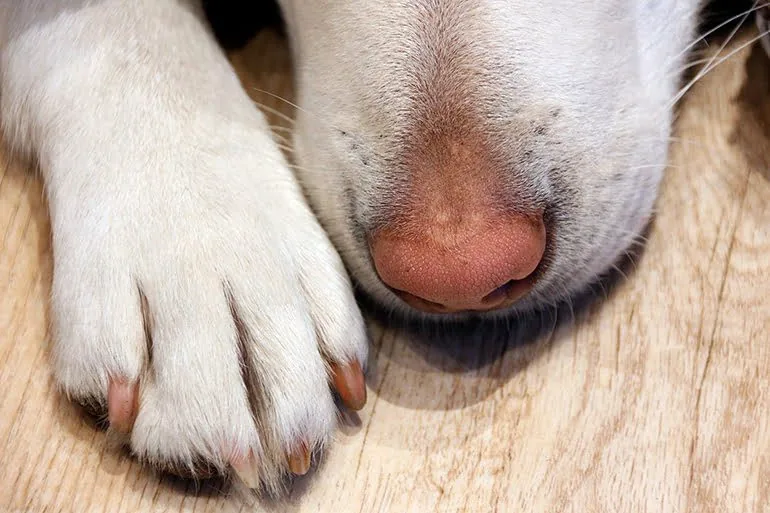
Some people mention that their dog's paw pads give off a distinctive smell they compare to well-known cheesy snacks. In principle, this isn't due to any condition, but rather to the particular characteristics of this part of canine anatomy.
Paw pads, even though we don't usually give them the attention they deserve, serve important functions. When their health is compromised, their typical smell can change.
Fun Facts About Dog Paw Pads
Paw pads are a dog's support structures. They stand out for having a thick layer of keratin, the protein that makes up our nails. Underneath that layer, their structure feels cushiony.
This is because they're made up of fat and elastic tissue, which work by absorbing the impact from walking, jumping, or running, and distribute weight evenly across all four legs. In addition, these characteristics also let them act as insulation for when the dog needs to walk across difficult terrain.
So, they hold up to walks on snow or on asphalt on the hottest days. They're well supplied with blood vessels and have numerous nerve endings, making them very sensitive. This explains why dogs don't like having them touched, and why any injury causes them a lot of discomfort or bleeding.
Wear and Tear on Dogs' Paw Pads
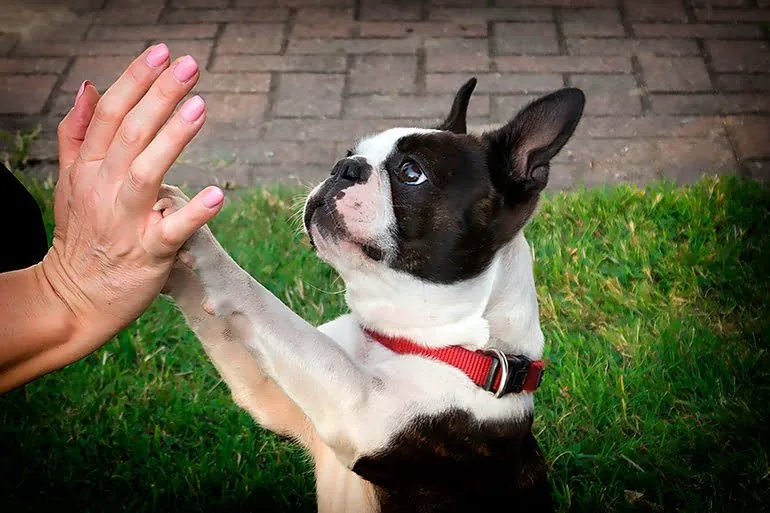
Paw pads go through changes over the years. They wear down over time, which is why older dogs more often show problems with them. They gradually lose elasticity, making them more prone to drying out and cracking. Puppies' pads, on the other hand, are very soft and smooth.
What Are Dogs' Paw Pads For?
Besides cushioning steps, making it easier for the dog to move, and insulating against extreme temperatures, paw pads serve other, perhaps lesser-known but equally important functions. These are the following:
- Sweating: unlike people, dogs don't have sweat glands spread across their body — instead, these are concentrated in the paw pads. They're not enough on their own, which is why dogs also need to pant to cool down.
- Marking: taking advantage of these glands, dogs mark their territory. After urinating or defecating, they scratch with their front paws, but also with their back ones, against the ground. Besides scent marking, they leave clearly visible marks on surfaces suited for it — though not so much on a sidewalk.
The Smell of Your Dog's Paws
The typical smell paw pads give off is a mix of secretions from the sweat glands with whatever the dog has been stepping on, plus the microorganisms naturally found in that part of the body. On the skin, dogs host various microorganisms, such as Pseudomonas and Proteus-type bacteria or fungi.
All of these are part of the normal microbiota — meaning their presence doesn't reveal any disease. On the contrary, it indicates the balance between the different microorganisms is correct and healthy.
What Causes Bad Smell in Dogs' Paws
Sometimes, the paw pads smell different and unpleasant. Symptoms such as lesions of varying severity, darkened fur located between the toes, swelling, limping, pain, excessive licking, etc., usually appear.
In these cases, it's likely the microbiota balance has broken down, now causing an actual condition. What happens is that, for some reason, the conditions favor infestation by pathogenic organisms, or some of those already part of the normal microbiota grow excessively to the point of causing problems.
Given how important paw pads are to a dog's daily life and how sensitive they are, if we notice symptoms that something's wrong, we should see the vet to diagnose and start treatment as soon as possible.
How to Care for Your Dog's Paw Pads
It's a good idea to check them from time to time to catch any problem early. Paw pads are highly exposed to damage due to their direct contact with the ground. In some cases, using dog shoes could be advisable. It's not just on the roughest terrain that wounds happen or foreign bodies get stuck.
Walking on city sidewalks, dogs can hurt themselves on small pieces of glass or get burned by overly hot asphalt. Avoid walking on ground that's too hot by not going out during the hours of peak sun. If you spot a foreign body and can't remove it with tweezers, see the vet.
In addition, parasites such as ticks can settle in the spaces between the toes. Remove them with special tweezers and apply an anti-parasite treatment against them to your dog. Small lumps may also be found, for example if an abscess has formed.
Protecting Your Dog's Paw Pads
As part of their maintenance, we can very carefully trim the fur growing between the toes in dogs where it's too long. In cases where we notice excessive dryness, we can apply petroleum jelly or moisturizers and protectants specifically made for paw pads.
Always watch to make sure the dog doesn't lick them. It's better to act before dryness turns into cracks. These are more painful, harder to heal, and can become complicated by infections. Finally, whenever they get wet, dry thoroughly between the spaces of the paw pads. Moisture is a factor that contributes to the appearance of infections.
Bibliography Carlson and Giffin. 2002. Manual práctico de veterinaria canina. Madrid. Editorial el Drac.
IMPORTANT: This article is for informational purposes only and does not constitute veterinary, nutritional or behavioural advice. Every dog is different, and only your trusted vet can advise you on its specific needs.