 Care
Care
Why Does My Dog Bring Me Things When I Get Home?
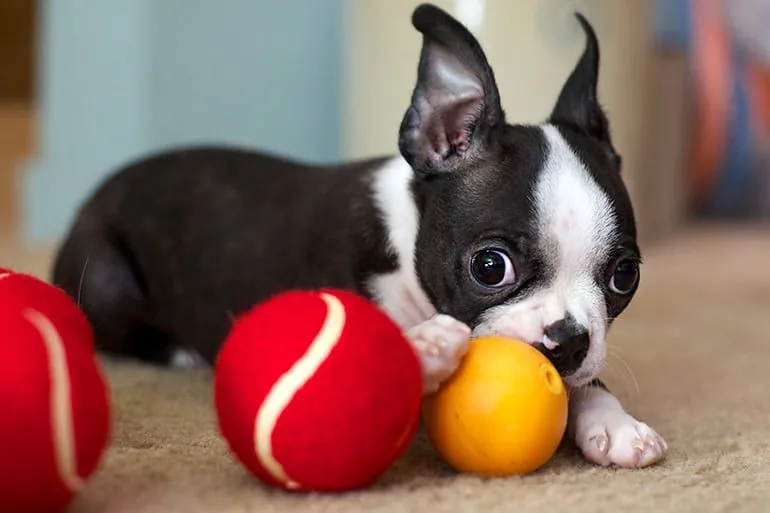
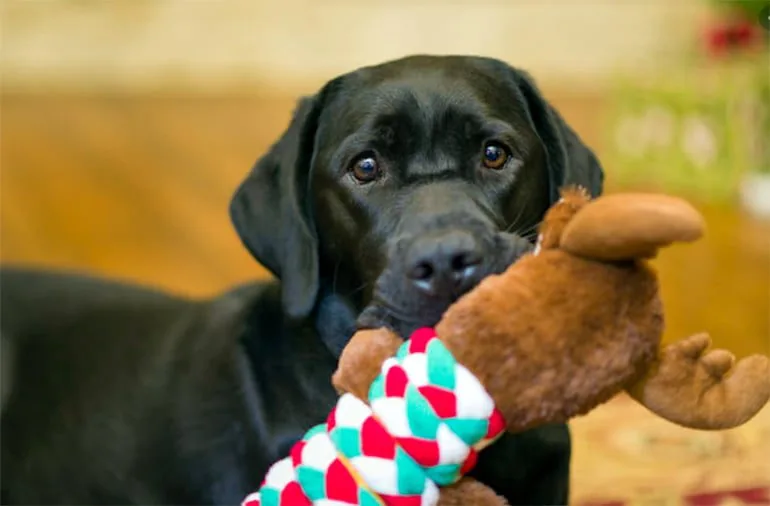
Has it ever happened that as soon as you walk in the door, your dog greets you happily carrying some object in its mouth? Whether it's its favorite toy, a chew bone, or something it's swiped from around the house, it's not unusual for dogs to bring us all kinds of things.
Below, we'll explain what your dog is trying to communicate when it picks something up in its mouth and brings it to you, why this behavior happens, and how you should react to keep the communication between you flowing smoothly.
What Dogs Do to Get Attention
The first thing we should think about when our dog greets us with an object in its mouth is that it wants to ask us for something. It's seeking our attention with some goal in mind. As soon as we walk in, it'll generally follow the same sequence of movements, with slight variations.
You surely recognize it: the dog approaches you happily, wagging not just its tail but its whole hind end, and it approaches, not directly, but moving from side to side, as if showing us the object in its mouth. And it's true, it is showing it to us, but it subtly turns its face away so we can see it but not take it.
Other dogs sit and drop the object on the floor, between their paws. But that doesn't mean they're giving it to us, since if we try to reach for it, it'll usually immediately grab it again with its mouth and run off with it. We can interpret this as an offering signal, or more specifically, an invitation to play.
Signals to Play
Dogs love to play, even more so if the game is with us. They're social animals, like humans, so they're built to share and interact with their own kind, and thanks to domestication, with people too. So it's not strange for our dog to ask us to play.
Bringing us an object is one way it does this. It shows it to us to tempt us into snatching it away and start a game that turns into a chase. Another very common way of inviting us to play happens without any object in its mouth. The dog simply plants its front paws and chest on the ground while raising its hindquarters.
It also looks at us with its mouth open and tongue out. It might let out a sharp bark and jump around us, keeping that same posture. This is a very common position when a dog is inviting other dogs to play. Nudging us with its snout or front paws are other ways our dog might use to encourage us to play with it.
Why Does My Dog Want to Play When I Get Home?
Generally, dogs spend their time dozing off while we're out of the house. Hearing us arrive means their rest period is over. They've been shut in and still for hours, and our return means activity, since we usually take them for a walk or, at least, interact with them or start doing things they can watch.
It doesn't even need to be a case of us having left the house. If the dog's been lying down for hours, it may bring us an object when it decides it's time to get moving. It's likely that when you get home after a hard day at work, all you want is to rest, not start a play session. But for the dog, it's exactly the opposite.
It's waiting for you so the fun can begin. If you've decided to share your life with a dog, keep in mind that before you flop onto the couch, you need to take it for a walk and give it some time to unwind. Proper mental and physical stimulation is vital for a dog's wellbeing throughout its whole life.
How to Respond to a Dog's Invitation to Play
Dogs learn to play during their first months of life. They do it alongside their mother and siblings, which is why it's essential they're not separated before at least eight weeks old. By playing with each other, they learn the rules, the limits, and also how not to hurt one another. A dog inviting us to play is simply being a dog.
Through play, it's showing a completely normal, and in fact desirable, behavior for this species. It's also usually reinforced by our reaction. In a way, we could also consider ourselves "playful primates." Like dogs, we retain the ability to play into adulthood too.
The dog repeats the gesture because it senses we respond well to it. If we laugh, pet it, talk to it, or start a game, we're giving it positive reinforcement. That's the recommended attitude. If, for whatever reason, we can't meet its request right at that moment, we should never scold it, let alone punish it. We should simply ignore it.
Bibliography Morris, Desmond. 1988. Dog Watching. Barcelona: Plaza & Janés.
IMPORTANT: This article is for informational purposes only and does not constitute veterinary, nutritional or behavioural advice. Every dog is different, and only your trusted vet can advise you on its specific needs.