 Care
Care
Why Does My Dog Get So Excited When I Get Home?
One of the canine behaviors we owners love most is their enthusiastic greeting when we get home. As soon as they sense us, they rush to the door and, even if only a few minutes have passed since we left, they welcome us with a whole show of excitement.
Full-body wiggling, licks, wild running, happy barking, and even small pee leaks are usually part of their excited, expressive greeting. But do you know why they make such a fuss? We explain it in the following article.
Your Dog Knows You're Arriving Home
You've surely experienced this before — suddenly your dog heads toward the front door and stares fixedly at it. It usually wags its tail horizontally and intensely sniffs the ground under the door. It's in a state of alertness. It's paying attention to something you don't perceive, but that's already triggered a strong reaction in it.
That something is a family member about to arrive. The dog isn't psychic, nor does it understand clocks. It seems like magic, but the truth is its highly developed senses let it anticipate events like our arrival. The dog hears the car, the elevator, or footsteps before anyone else. Besides its keen hearing, it has an exceptional sense of smell.
This is how it knows who's on the other side of the door. So, even though we think we've just put the key in the lock, the truth is our dog has known for a while that we're about to come in. This gives it time to anticipate our reunion and build up its excitement, which explodes the moment it sees us.
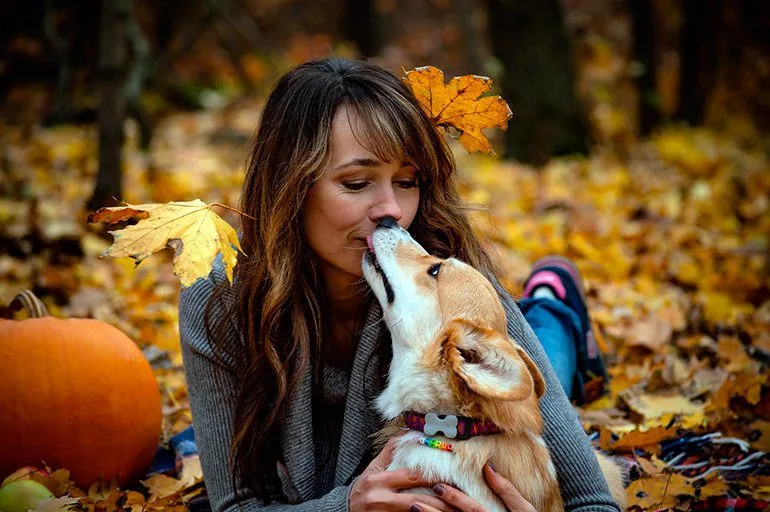
Your Dog Really Loves You
A dog's excitement when greeting us comes from us being its main point of reference. Dogs are social animals adapted to pack life. Once domesticated, experts have observed that, even when living at home with other dogs, they always turn first to their caretaker as their reference point.
If they feel scared and seek protection, or want some need met, they'll look toward us and come to us. Some might think this is a self-interested relationship, since we're their food source. But studies have scientifically shown how and which parts of a dog's brain activate in the presence of its caretaker.
Even just through their scent. Based on this data, it's been determined that dogs feel genuine affection for us. They feel happy in our presence. So, being this important to them helps explain the excitement they feel when they welcome us, as well as the issues some show when left alone at home.
A Dog's Daily Routine
Our dog is happy just from our presence alone, but on top of that, we're synonymous with something good about to happen. For it, having possibly spent hours alone at home, that something is probably the best part of its day. Maybe when we get home, the first thing we do is take it for a walk, or maybe it's mealtime.
Simply responding with pets or affectionate words to its greeting is already a reward for it. Dogs love exploring and receiving both physical and mental stimulation. Giving it activity and company strengthens our bond with it, and it's essential for its wellbeing. This helps explain its excitement when greeting us.
Canine Communication
Dogs don't talk, but they don't need to in order to make it clear, in this case, that they're very happy to see us again. Its body movements, meaning its body language during the welcome, show a cheerful, affectionate attitude, and often, a clear invitation to play.
By the way, tail wagging isn't synonymous with joy — it actually shows the dog is in a state of emotional conflict between its desire to approach and its desire not to. Our dog loves us, but we're still strange two-legged creatures much bigger than it.
Reinforcement Techniques in Dogs
Every time our dog greets us enthusiastically, we respond by petting it and showering it with affectionate words. Our positive reaction is immediately picked up and interpreted by it as approval of its behavior. The dog understands we're praising it for its greeting, so it'll keep repeating it, since its top priority is pleasing us.
It'll do this even if we've only been gone a few minutes. Every time this exchange of greetings repeats, we're reinforcing this behavior. Of course, this isn't a bad thing, but if you feel your dog's welcome is excessive, try not to respond while it's so worked up, and only pet and talk to it once it's calmed down.
This way, you're telling it that what you want is for it to be calm. On the other hand, if your dog shows exaggerated reactions — for example, destroying things or crying the whole time you're gone — there's a solution. But you'll need patience, dedicate time to it, and reach out to canine behavior professionals or ethologists.
Bibliography Berns, Gregory. 2013. How Dogs Love Us. New Harvest. Morris, Desmond. 1988. Dog Watching. Barcelona: Plaza & Janés.
IMPORTANT: This article is for informational purposes only and does not constitute veterinary, nutritional or behavioural advice. Every dog is different, and only your trusted vet can advise you on its specific needs.