 Care
Care
Why Does My Dog Like Sleeping on Me?
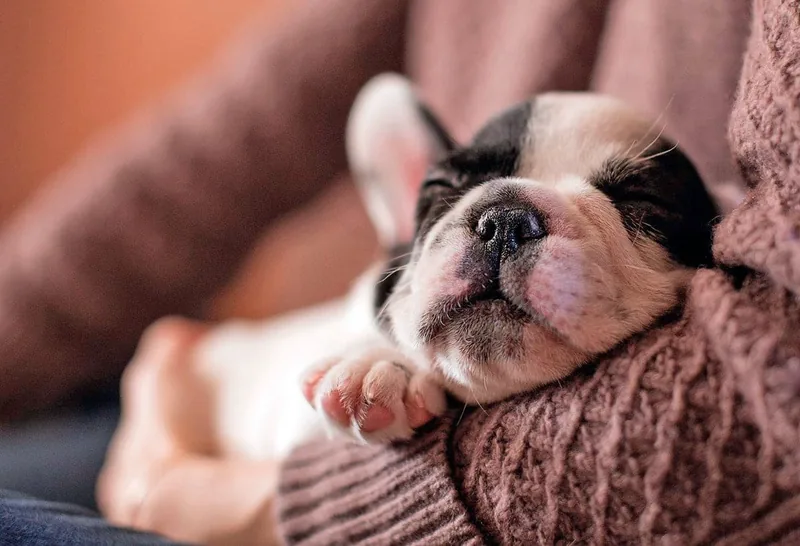
Whether on the couch, in bed, or even on the towel you spread on the ground to sunbathe, it's not unusual to end up with your dog sleeping on top of you. You've surely experienced this and wondered why it does this, and how you should react to it.
In this article, we'll explain where this preference comes from, this desire to sleep in close contact with you, whether it's a good idea to allow it, or whether it's better to discourage this behavior.
How Dogs Sleep
Dogs are social and sociable animals. Their ancestors lived in packs, where everyone worked together to ensure survival and pass on their genes. This cooperation included resting time. Every pack member slept together. This way, they protected each other from the weather and potential dangers.
They slept in a fetal position, curled into a ball, pressed against each other and facing away from the wind to better maintain body heat. Today's dogs don't sleep in danger, but the instinct to huddle together while sleeping is still very much alive in them. And we're their pack.
This is the basis of their determination to sleep as close to you as possible, even if that means squashing you. It also explains their confusion when we don't allow it, or close the bedroom door on them. If you have more than one dog at home, you'll notice it's not unusual for them to rest together. It's a comfort if you don't let it join you.
My Dog Wants to Sleep With Me
This need for close contact while sleeping, which leads the dog to press against and lie on top of us, has, as we've seen, a simple explanation. Resting next to us offers it several important benefits. We highlight the following:
- Attachment: contact during rest helps strengthen the bond between caretaker and dog. Thanks to domestication, we're its main point of reference, hence the importance of maintaining this attachment.
- Protection: like its ancestors, the dog instinctively knows sleeping together is important. So, it seeks your protection, but at the same time, it's protecting you during a moment of maximum vulnerability like rest. In other words, you're a safe place for it.
- Temperature: although it'll sleep on you year-round, in warmer months it'll likely end up sprawled on the floor to cool off. But the rest of the year, it'll press against you or lie on top of you to stay warm. This close contact is the best way to preserve body heat.
- Comfort: dogs aren't foolish, and there's no doubt our bed or favorite couch is a good spot. Especially if its own bed isn't very cushioned, it's cold, or it has any joint discomfort.
- Affection: generally, dogs are affectionate, and pressing against us is a way of showing us this affection. On top of that, it's a reciprocal feeling that, through our closeness, it feels is returned.
Is It Good for My Dog to Sleep With Me?
The truth is a dog will be interested in sleeping on you if it trusts you. So, this desire is usually synonymous with having built a good bond with it. This is good news, worth celebrating, that confirms your role as its caretaker. The dog is showing us it feels so comfortable with us that it relaxes to the point of falling asleep.
Actually, humans work in a similar way. We need a calm, relaxed environment to fall asleep, and we won't do it in the presence of strangers. So, there's no problem letting your dog sleep with you. That said, if you decide to allow it, it needs to be consistent — no allowing it one day and not the next.
Canine training is based on consistency. Think about what you want and make a decision. Don't change it, and make sure every household member respects what's been agreed. By the way, your dog sleeping on top of you doesn't mean it's trying to dominate you. A different case is if it growls at you or blocks you from getting into bed. That's a training issue that needs addressing.
What to Do If I Don't Want My Dog Sleeping in My Bed
Where a dog rests is a personal choice. If you've read this far, you already know why it wants to sleep on you. But if you don't feel like allowing it for whatever reason, it'll have to accept your decision. It won't be any less happy because of it, as long as you meet its needs. That said, it would be a good idea to let it sleep on a bed near you.
What If My Dog Doesn't Want to Sleep Next to Me?
Not every dog is interested in sleeping with its caretaker, or doesn't do so every day. Some may simply have trouble getting onto beds or couches due to age or a health issue. Others fall asleep alongside other pets in the house, if there are any, and show no intention of changing their sleeping spot.
It's also possible you've adopted a dog that doesn't seek this close contact with you because it's suffered some trauma in its previous life. These dogs may need a lot of time to build enough trust to feel comfortable sleeping with us. We need to respect their pace. The reward is worth it.
IMPORTANT: This article is for informational purposes only and does not constitute veterinary, nutritional or behavioural advice. Every dog is different, and only your trusted vet can advise you on its specific needs.