 Training
Why Does My Dog Nudge Me With Their Muzzle?
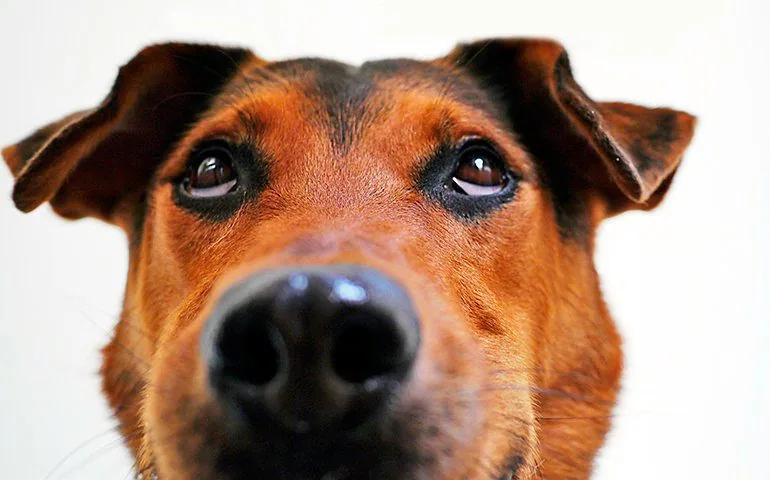
You've surely had your dog nudge your hand with their muzzle and look you in the eye, as if waiting for something. And that's exactly it. Dogs have specialised in communicating with humans. Hardly surprising, given the close relationship that binds us.
And this isn't imaginative or naive owners humanising their pets. There are even studies showing the intentionality hidden behind these gestures. Below we explain what your dog is asking of you when they use their muzzle to nudge you and communicate with you.
How Gestural Communication Arises in Dogs
When it comes to the muzzle, it's very common for some dogs to use it as part of their communication, in this case with us. The gesture of nudging with it seems to originate from the earliest canine infancy. Specifically, in newborn puppies, with their eyes and ears still closed. They can't walk, but they can crawl guided by their sense of smell.
They're highly vulnerable, and can't even regulate their own body temperature. In other words, they depend entirely on their mother. She's their source of food, warmth and hygiene. As soon as they're born, puppies head towards a nipple and start suckling. Their mother licks them clean and stimulates them to defecate and urinate.
When they search for a nipple, it's not unusual to see them move their front legs to the side, making room among their littermates, and against the teats, as if nudging them. This helps stimulate milk flow. Another movement we can see is "head-butting" against the nipple. This gesture, made with the muzzle, also helps with feeding.
Why Do Dogs Nudge Us With Their Muzzle?
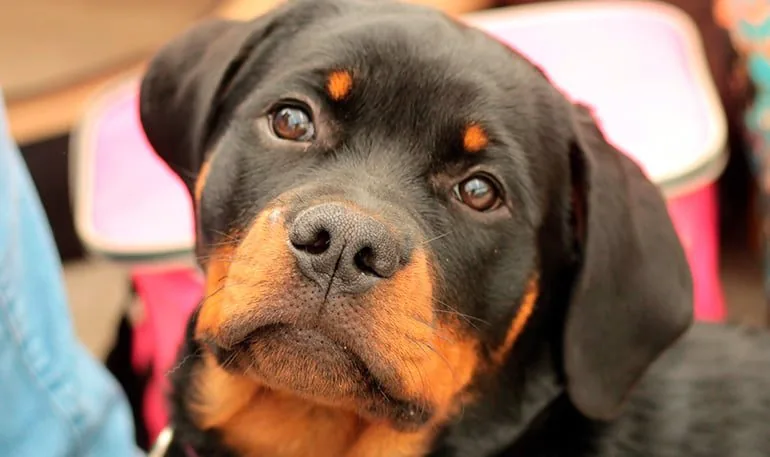
From our perspective, we can read a muzzle nudge as a request. That's why, if our dog, whatever their age, nudges us with their muzzle, they're likely asking us for something.
Depending on the context, we can usually understand what they're asking of us. For example, if it's walk time, the dog may nudge us with their muzzle to get our attention. Some are even able to bring their lead.
If, on the other hand, it's mealtime, we should read the muzzle nudge as a request for food. They'll usually nudge our hand with their muzzle, lifting it and making us look at them. We could think of the gesture as the canine version of "hey, you!"
Other Meanings of Nudging You With Their Muzzle
Other very common requests our dog can make with this gesture are inviting us to play or simply asking for our attention so we stroke them. Depending on circumstances, we can choose to respond to the request or not, but under no circumstances should we scold the dog, let alone hit them.
Why Not Correct a Dog by Hitting Their Nose
It's not unusual, even nowadays, for some owners to direct physical punishment at a dog's muzzle, which is, of course, entirely inadvisable. Some people believe they're training their dog by hitting their muzzle or grabbing it when they do something considered wrong.
Others rub the muzzle against urine or faeces if the animal has relieved themselves inside the house. The truth, though, is that physical punishment has been shown to be entirely ineffective. It only makes the dog feel fear and, as a result, damages their bond with their owner.
A dog's learning process, whatever their age, should be based on rewarding behaviours we want to reinforce and ignoring negative ones.
If we have doubts about training our dog, the right professionals to advise us are canine behaviour experts, trainers or ethologists.
The Study on Dog Gestures
A study carried out at the University of Salford, UK, in 2018, found other meanings for the muzzle nudge. To draw these conclusions, researchers used recordings owners themselves made of 37 dogs. There were 16 females and 21 males. Their ages ranged from 1.5 to 15 years.
Nudging with the muzzle is considered a referential gesture. This means it doesn't happen accidentally or by chance, but deliberately. This confirms the dog does it with the intention of telling us something. This study recorded up to 19 different, common communicative gestures in this species.
Humans learn to make this kind of gesture between 9 and 12 months old. It's been shown dogs can develop several gestures for the same goal, adapting to our response. So it's been established that a muzzle nudge can mean a request for strokes or for some object.
Why Does My Dog Push Their Food?
Lastly, dogs also use muzzle nudges to hide food. Scratching the ground with their paws, moving and nudging with their muzzle, both with their nose and jaw, and shifting soil, are the set of actions dogs carry out to hide an object.
To do this, logically, they need access to suitable ground, though it's not unusual to see them try to dig with their muzzle even on tiles. It's an instinct to protect food they can't eat right away from scavengers or insects.
Bibliography Morris, Desmond. 1988. Observe a su perro. Barcelona. Plaza & Janés. Worsley and O'Hara. 2018. "Cross-species referential signalling events in domestic dogs (Canis familiaris)". Animal Cognition 21, pp. 457-465.
IMPORTANT: This article is for informational purposes only and does not constitute veterinary, nutritional or behavioural advice. Every dog is different, and only your trusted vet can advise you on its specific needs.