 Care
Care
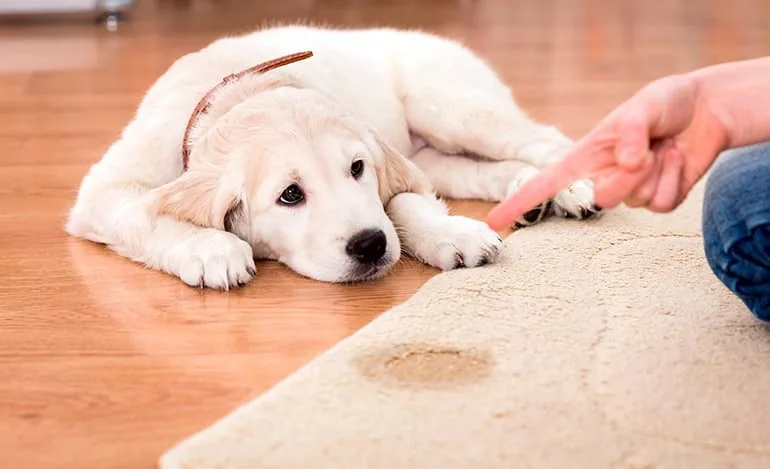
Why Does My Dog Pee When It’s Excited?
Some dogs release small to moderate amounts of urine at certain moments, like when we pet them or a visitor arrives. In these cases, we might think it's urinary incontinence with a psychological origin.
But there are other causes of incontinence worth knowing about, to rule out a physical issue behind our dog's urine leaks. Below, we explain the reasons behind incontinence and how to address it.
Reasons for Urinary Incontinence in Dogs
Urinary incontinence is defined as losing control over urination. There are several types of incontinence that can affect our dog. Here's the information to tell them apart:
- Hormone-deficiency incontinence: caused by an estrogen deficiency in females and testosterone in males. This causes a loss of muscle tone. Urine leaks happen when the dog relaxes or falls asleep. It can be resolved by administering hormones.
- Neurogenic incontinence: appears when there's a spinal cord injury, an infection, or a tumor interfering with the nerves controlling the bladder. The bladder fills until the sphincter can't hold, and urine leaks out in an uncontrolled trickle. This is hard to treat.
- Incontinence from bladder overdistension: due to a partial bladder obstruction from urethral stones, tumors, or a narrowing. The cause needs to be treated, a catheter placed in the bladder while it hasn't regained its tone, and necessary medications prescribed.
- Kidney failure: dogs with this issue eliminate more urine than normal, so they may pee indoors if they don't get all the outdoor opportunities they need. It's treated with a specific diet, good hydration, and medications suited to the dog's symptoms.
- Submissive urination: also known as stress incontinence, this happens when the dog is upset, restless, or stressed. This is why urine may leak when we pet it or around strangers. We'll cover this in this article.
Other causes of incontinence are also considered, like ectopic ureters or pelvic adhesions. These ureters cause continuous urine drainage into the vagina since they don't end at the bladder. Pelvic adhesions happen shortly after sterilization. Both conditions can be resolved through surgery.
Submissive Urination in Dogs
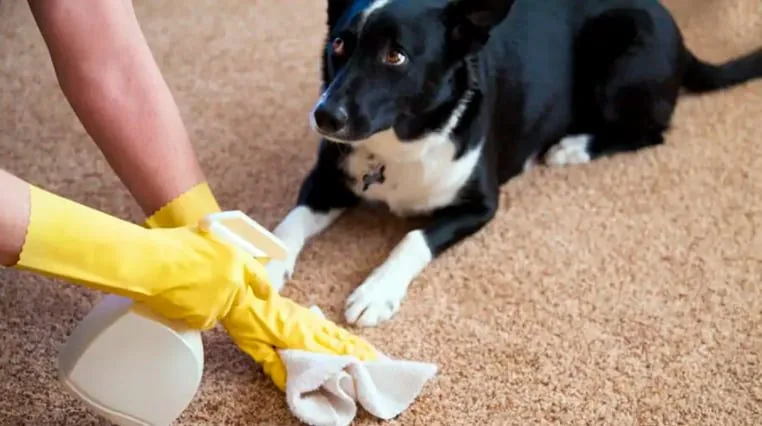
Once a physical cause for urinary incontinence has been ruled out by a vet, submissive urination is a relatively common issue in dogs, especially puppies. What happens is an involuntary release of urine from contracting the abdominal wall muscles.
The muscles affecting the urethra also relax. This happens, for example, when the dog gets upset, is nervous, or very stressed. As a result, the dog releases small amounts of urine. So, it might pee when we take it to the vet, or become anxious if a stranger approaches.
Why Does My Dog Pee When I Pet It?
It makes sense that our dog gets upset at the vet clinic or, generally, in unfamiliar situations. But it can be harder for us to accept that this incontinence happens when we're the ones petting it. We never think we're a source of stress for our dog, but the truth is, we are.
When we approach it, the dog enters an emotional conflict. It's torn between approaching and moving away. It recognizes us, but at the same time, we're strangers and large bipedal animals who often get too close without following canine courtesy protocol. That's why its reaction is to wag its tail, and, for some, to pee.
The Importance of Socializing Your Dog
Some dogs are more sensitive than others to outside stimuli. This can be influenced by socialization. This is the term for the life stage in dogs lasting from three to twelve weeks old. This is a period when the dog has a great capacity for learning, and from a positive perspective too.
So, this is the ideal time to expose it to different situations, animals, people, objects, and so on. A properly socialized dog is more likely to react in a balanced way to any stimulus presented throughout its whole life.
That's why, if our dog urinates from stress due to inadequate socialization, it's a good idea to give it a daily routine that lets it anticipate what's coming, reducing its stress. Also, a vet specialized in canine behavior or an ethologist can give us guidelines to achieve this and improve our dog's wellbeing.
Treating Stress-Related Urinary Incontinence
It's possible to treat these dogs with medications that help increase urethral tone, always prescribed by a vet. But also, a series of measures can be considered to try to prevent these episodes. These are:
- If we identify the stressful situations where the dog loses control of its bladder, we should avoid them as much as possible.
- When we can't, at least we should reduce how long these moments last.
- Learn how to approach the dog. Don't look it directly in the eyes, crouch to its level, turn sideways, and let it be the one to approach.
- Never scold it. It's not doing this on purpose — it simply can't control it. Also, punishment will scare it more, making the situation worse.
- If the dog is very nervous when it pees, it's best to ignore it until it calms down. Attending to it in that moment tells it you're rewarding its upset behavior. Instead, reward it when its attitude is calm.
Bibliography Carlson and Giffin. 2002. Dog Owner's Home Veterinary Handbook. Madrid: Editorial el Drac. Morris, Desmond. 1988. Dog Watching. Barcelona: Plaza & Janés.
IMPORTANT: This article is for informational purposes only and does not constitute veterinary, nutritional or behavioural advice. Every dog is different, and only your trusted vet can advise you on its specific needs.