 Care
Care
Why Does My Dog Watch Television?
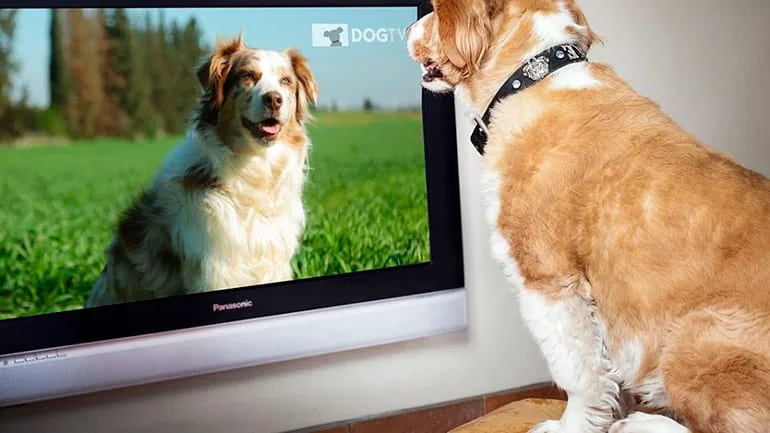
It no longer surprises us when our canine companions show human-like behaviors. After centuries of living side by side, it's practically inevitable. In this sense, one increasingly common habit that sparks a lot of curiosity is when they sit next to us, watching the images on screen. Why does my dog watch television? We explain it in detail.
Factors That Influence Whether a Dog Pays Attention to TV
The truth is, not every dog is a TV viewer. This habit depends on several factors, breed among them. In fact, it's known that sighthounds and terriers pay more attention to visual stimuli, while dogs generally tend to rely more on their senses of hearing and smell.
The type of images and colors shown also matter a lot. Lastly, we shouldn't forget that the TV's technology can make a real difference.

What Does a Dog See When It Watches TV?
A dog's eye detects images faster than a human's. For people, TV images appear as continuous motion. A dog, however — which perceives them at a rate of 75 Hz per second — only sees a kind of blurry flicker.
In recent years, though, new devices have come out that refresh at higher rates. Of course, the goal isn't to improve our dogs' viewing experience, but the image quality for humans. The fact that dogs find it easier to follow the action on these new smart devices is just a side effect that explains why it's becoming more common to see them sitting calmly in front of the screen.
In short: the more modern the device, the more likely a dog is to pay attention to the TV.
Do Dogs Have a Favorite Show?
The content that seems to interest canine audiences most has to do with nature — especially footage showing all kinds of animals in motion. As you'd expect, what attracts them most are recordings of other dogs.
Watching puppies run, play, or wrestle with their siblings fascinates them. A dog will even show curiosity when it sees another dog crying or being praised. In this sense, their psychology works like ours — through identifying with whoever's on screen.
Sound, usually tied to the image, also matters a lot. On older devices, it's likely what draws them in most.
Another factor in capturing a canine audience's attention is the camera angle. If the camera is positioned at a similar level to theirs — close to the ground — they'll tend to focus more on what's being shown.
Colors also play a role, since they perceive a narrower color range than humans do. All this information has proven very useful in creating the first channel exclusively for dogs.
DogTV, the First Channel for Dogs
This new channel, not yet available in Spain, broadcasts content designed exclusively for dogs. Originally produced in Israel, it's currently only available in the United States, Germany, the United Kingdom, and France.
It's a channel designed for families who spend many hours away from home and have no one to leave their dog with. The content was designed based on studies of canine psychology. Its main goal is to combat separation anxiety, one of the most common problems in big cities.
DogTV's programming offers short segments, never longer than 6 or 7 minutes. Content with calm, relaxing music is prioritized. There's no barking or jarring sounds that could make viewers nervous. They also use colors dogs are more sensitive to, like a combination of blue and yellow.
So how's it going in your household? Does your furry friend drop everything to watch "The Dog Whisperer," or maybe prefer nature documentaries instead? Would you consider subscribing to a channel just for your dog? Leave us your thoughts in the comments.
IMPORTANT: This article is for informational purposes only and does not constitute veterinary, nutritional or behavioural advice. Every dog is different, and only your trusted vet can advise you on its specific needs.