 Care
Care
My Dog Doesn’t Like Having Its Paws Touched. Why?
Knowing your dog's body language is essential for a good relationship. Petting your pet is very pleasant, but you've surely wondered at some point, "why doesn't my dog like it when I touch its paws?"
Just like with humans, dogs prefer receiving pets and affection in certain areas of the body, while other areas bother them. Why is that? We'll tell you below!
How to Know If Your Dog Feels Uncomfortable When You Touch Its Paws?
For some owners, it's obvious their dog doesn't like having its paws touched. How do you think yours feels? It might show signs of discomfort you haven't noticed:
- It lowers its ears.
- It hides its paw or presses it against your hand.
- It starts nervously licking the area.
- It starts staring at you fixedly, even while lying down.
My Dog Won't Let Me Touch Its Paws
There are various reasons a dog might feel uncomfortable when its paws are touched. It can react by immediately pulling them away, but also by becoming nervous or aggressive.
These are the main reasons:
Canine Body Language
We often tend to interpret dogs' reactions by comparing them to human ones. But dogs have their own body language, with signals that mean different things.
In this sense, have you ever seen a dog touching another dog's paws? No, so it's not a natural gesture for them. This is one of the reasons behind their discomfort.
Discomfort
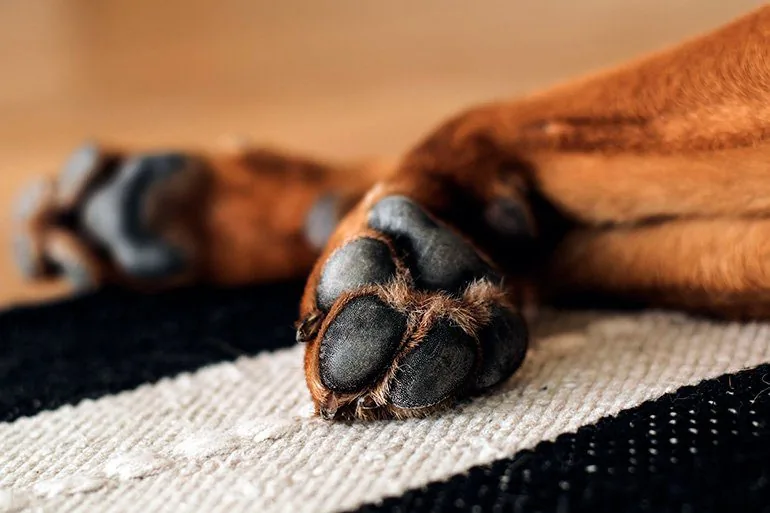
Paws have a large number of nerve endings, which is why they're a very sensitive area in dogs. Touching them creates a sensation similar to tickling, which is very uncomfortable for your dog.
Injuries
An injured dog will avoid you touching the area that hurts. During walks, a splinter can get lodged in its paws, or it could hurt a nail. Because of the pain, the dog won't want you touching its paws.
If you suspect your dog might be injured, ask someone else for help calming or distracting it while you examine the area.
Psychological Trauma
It's common for rescued dogs to be more wary and fearful — that could be the reason behind their discomfort when you try to pet their paws. This is because, on the street or with previous owners, they may have suffered abuse and mistreatment that caused trauma.
What Can You Do?
To start, avoid touching your dog's paws while petting it — there's no reason to make it uncomfortable if you've already noticed it doesn't like it.
That said, there are situations where you need to examine your dog's paws — for example, if there's a wound, to check for fleas or ticks between its toes, or when you need to do something as simple as trimming its nails.
The best approach is to get your dog used to having its paws petted from puppyhood, since this is a crucial part of relaxing it while you pet it. That said, if your pet is already an adult and you need to check its paws, follow these tips:
- Try to make it feel comfortable and safe. Lay it down on its bed with a toy it likes nearby.
- Start by petting its head and back, and calmly work your way down to the thighs.
- Talk to it the whole time. Use a soft, calm tone of voice.
- Approach its paws gently and watch its reaction.
- Pet its paws for a few seconds, then move to other parts of its body. Repeat this, keeping your hands on its paws a bit longer each time.
- Offer it an edible reward when it lets you touch its paws. This way, it'll interpret it as something positive.
- Be very patient — you may need to try this for several days before your dog feels comfortable.
- If needed, ask for someone else's help distracting the dog while you check its paws. If you need to trim its nails, teach it to stay calm with contact on its paws before taking it to the groomer's — otherwise, it may react aggressively with the staff.
IMPORTANT: This article is for informational purposes only and does not constitute veterinary, nutritional or behavioural advice. Every dog is different, and only your trusted vet can advise you on its specific needs.