 Care
Care
Why Don’t Dogs Like Some People?
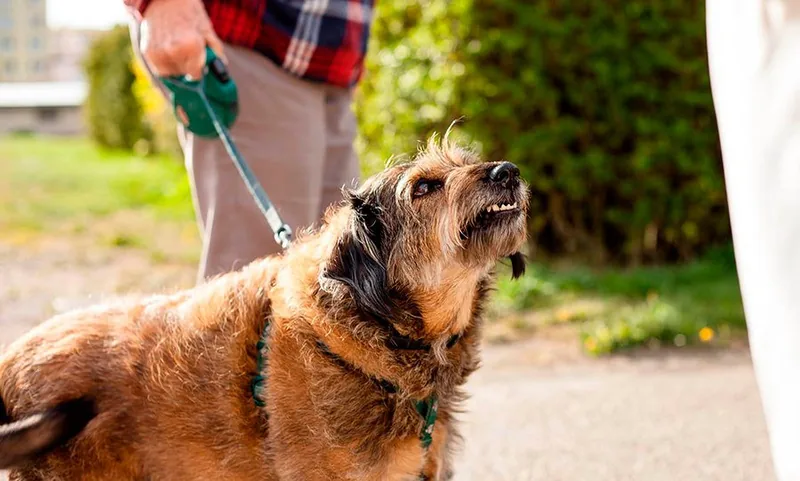
You've surely seen your dog bark at a stranger while out on a walk, or at someone visiting your home, at some point. People who may have never had any contact with your dog before but that it just doesn't like.
We might think our dog isn't well trained, or that it's confusing the person it's barking at with someone else it knows and dislikes. But the truth isn't that — simply put, there are people your dog won't like, for certain reasons we'll go over below.
My Dog Barks at Friends, Visitors, and Even Strangers. Why?
This isn't a quirk of your dog's, since, as we'll explain below, there are many factors that can lead a dog to detect and classify a person as a potential danger. That's why we should never correct our dog in these situations, since its instinct is warning that person not to come closer, since it doesn't trust them.
Causes Behind a Dog Not Liking Certain People
Among all the causes we'll look at, smell, hearing, and sight are the main senses our dog will use to determine whether a person is trustworthy or not. In that order, since smell is the first thing our dog will detect when someone approaches.
Unfamiliar, Associated, or Intense Smell
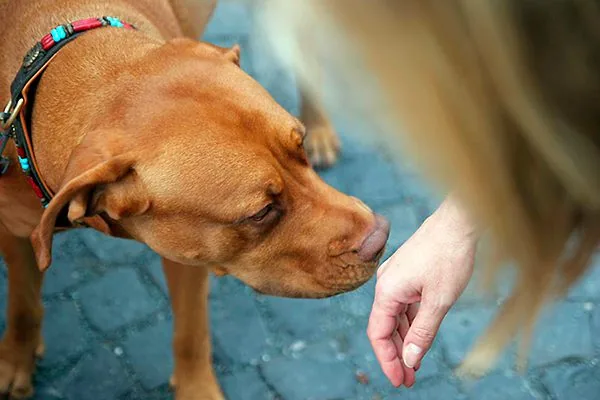
Dogs know what humans smell like, which is why when someone with a strange smell approaches, one that doesn't smell human, our dog will become alert, unable to identify it. After this alert, it'll classify that person as a potential danger, so it'll bark or become tense in their presence, staying on guard.
An overly strong cologne smell can mask a person's normal scent, causing our dog to react poorly. The pheromones humans release when upset, nervous, or scared are also detectable by dogs, who'll interpret them as a warning sign.
The smell of another dog or animal can also cause our dog to act standoffish. Especially if that other dog isn't very friendly with ours... dogs quickly associate the scent of their canine rivals, who mark their urine in the park, for example.
A nervous or scared human can be dangerous. That's how dogs think, which is why when they smell the pheromones of someone excited, nervous, or scared, they react by becoming alert.
If our dog has suffered abuse or abandonment in the past, it may have associated certain smells with those stressful situations. If a person carries those specific smells, our dog will remember the trauma and become alert too.
A study from Emory University analyzed several dogs using MRI while they perceived the smell of their caretakers, their humans, their family. It showed these smells activated the brain's pleasure center. So, dogs can immediately identify and classify a person based on their smell, especially if it matches their family's.
Unnatural and/or Abrupt Behavior
Imagine a human running toward a dog with open arms, shouting its name, baring their teeth, and staring the dog in the eyes... this is actually pretty common — it's someone who wants to greet a dog. Now imagine the opposite: a dog running toward you, staring into your eyes, and baring its teeth... you'd surely think it wants to bite you, that it's a dangerous dog, right?
Most humans don't know how to behave around a dog — they try to pet it without knowing it at all, they stare fixedly into its eyes (a sign of a challenge in canine language), they smile at it, baring their teeth (a sign of aggression), and so on. That's why many dogs, seeing a person behave this abruptly, either run away or become aggressive toward them.
Seeing how a stranger interacts with its owner, its human, can also set off its alarms. If a stranger is abrupt or nervous with its human, the dog will know something's wrong and will bark or become aggressive toward them. This is completely natural, since a dog will always defend its family.
Strange Appearance
Although sight isn't a dog's main sense, with adequate light (during the day), they can identify a human without trouble. Also, they'll use their sense of smell to confirm it really is a human.
But what happens when something smells human but doesn't look human? This will trigger our dog's alarm, since it won't know exactly what's going on and will prefer to stay alert. For example, someone wearing a hat and a big beard can seem genuinely strange to our dog.
Someone dressed up for Carnival or Halloween will also seem very strange to our dog, which will either feel scared or become alert or aggressive. The same happens with children — yes, children.
A child is actually a very small human. Many dogs are used to children and don't identify them as a danger. But there are dogs with no children in their family environment, and when they see one walking down the street, they don't know exactly what it is. Such a small human — is it really human?
Conclusion
Dogs don't dislike people for no reason at all. There's always a connection triggering their alarm, which is why they may act standoffish or aggressive toward certain people. These can be strangers or people they know — friends, family, or neighbors.
If a dog detects a strange smell on them, pheromones they shouldn't be smelling, or abrupt, unnatural behavior, it's completely natural for the dog to act wary around that person. So, yes, your dog knows more than you do when it doesn't like someone.
IMPORTANT: This article is for informational purposes only and does not constitute veterinary, nutritional or behavioural advice. Every dog is different, and only your trusted vet can advise you on its specific needs.