 Care
Care
Why Is My Dog Limping?
When a dog limps, it's telling us it has pain or weakness in one of its legs. Limping is common in problems affecting the bones and joints, but it can also indicate muscle or nerve damage.
We can check the leg at home looking for an injury that would explain the limp, but if we don't find any damage, seeing the vet for a diagnosis is essential, since there are many possible causes behind a limp. Let's look at some of them.
What Do I Do If My Dog Is Limping?
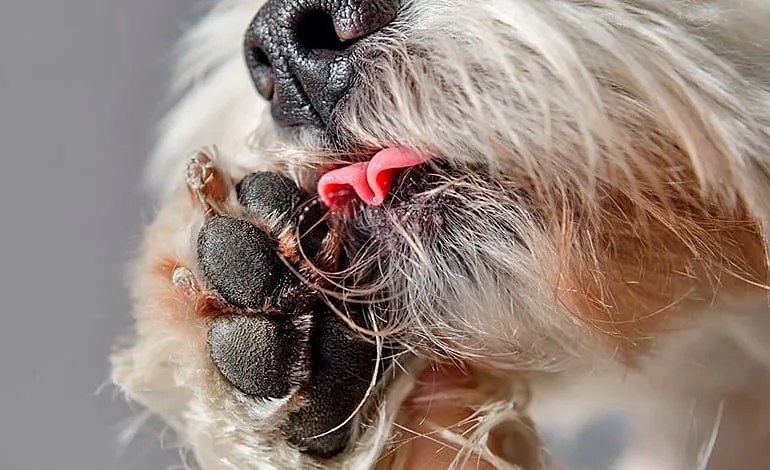
To find out what caused the dog to limp, we need to see the vet. But at home, we can try to find the location of the injury. Sometimes it's just a wound on the foot or between the toes, a broken nail, or pododermatitis.
If that's not the case, we can keep gently feeling from bottom to top, looking for the most sensitive area. We can also flex and extend the leg, without forcing it, stopping as soon as it bothers the dog. But unless it's a mild wound we can treat at home, only the vet will be able to give us an accurate diagnosis.
The first thing this professional will do is ask us about the circumstances in which the limp appeared. We need to note whether it appeared suddenly or is chronic, whether it came after an accident, a fight, or spontaneously, which legs are affected, what the injured leg looks like, whether the dog puts weight on it or not, etc.

Causes of Limping in Dogs
There's a wide range of causes that can trigger limping in dogs. They're more or less severe, and unless the dog is limping from a mild wound, seeing the vet is essential to reach a diagnosis. We'd highlight these causes:
- Infections, which we can detect as red, warm, and painful areas. Sometimes a wound is visible and pus may come out.
- Sprains and strains, which appear suddenly and can come with swelling. The affected leg is sometimes used but not normally.
- Fractures and dislocations, characterized by causing very intense pain. The damaged leg can't be used at all. There can be deformity, swelling, and bruising.
- Hereditary orthopedic diseases, which usually appear progressively, with limping already visible in young dogs. It doesn't go away and worsens over time. Usually no external changes are detected in the leg, or there's only slight swelling.
- Arthritis, osteoarthritis, or degenerative joint disease, the most common cause of limping in older dogs. It's typical for it to be more noticeable when the dog gets up and to lessen with movement.
- Spinal cord or nerve damage, which cause weakness and paralysis. They can affect one or several legs.
- Bone tumors, which can be felt as a firm mass or lump. It can be painful if pressed. Cancer is diagnosed more often in older dogs.
How Is Limping Diagnosed in Dogs?
To resolve a dog's limp, finding what's causing it is essential. Except in cases where we find a wound on the foot or an embedded foreign body, to reach a diagnosis, the vet will need to turn to different tests, besides the exam and palpation.
The most common is taking X-rays, which allow diagnosing fractures and dislocations. They also give information about bone growths or soft tissue inflammation. But sometimes these aren't enough, and more complex tests are needed. For example, a CT scan or MRI.
The problem is this equipment is only available at a limited number of centers and can involve a considerable cost. Sometimes a joint fluid analysis is done when there's inflammation in a joint. The fluid is extracted with a needle, and if it's not clear and pale yellow in color, it points to an injury or infection.
Treatment for Limping in Dogs
Logically, treatment will depend on the cause, which is why a good diagnosis matters so much. As an example, below we'll go over what to do for the most common causes of limping in dogs:
- Wounds: only if superficial can they be treated at home. They need to be cleaned and disinfected. If there's a foreign body, it's removed with tweezers and then disinfected. A broken nail can be trimmed so it doesn't catch on things.
- Sprains: will need pain medication, along with rest, restricted activity, leash walks, or applying cold or heat as the vet indicates.
- Fractures: require fixation of the affected bones. Depending on their characteristics and the dog's, immobilization or surgery may be needed. Recovery depends on good post-operative care. If surgery isn't done when needed, there's a risk of permanent damage.
- Bone infections: antibiotics are prescribed, but the damaged part of the bone also needs to be removed.
- Orthopedic diseases such as hip dysplasia are treated with pain medication, restricted activity, weight control, and in some cases, surgery.
- Arthritis is a degenerative disease that can't be cured, but it can be treated to ease its effects. Physical therapy, weight control, painkillers, and chondroprotectants are prescribed.
Bibliography Carlson and Giffin. 2002. Manual práctico de veterinaria canina. Madrid. Editorial el Drac.
IMPORTANT: This article is for informational purposes only and does not constitute veterinary, nutritional or behavioural advice. Every dog is different, and only your trusted vet can advise you on its specific needs.