 Training
Why You Shouldn't Carry Your Dog Around
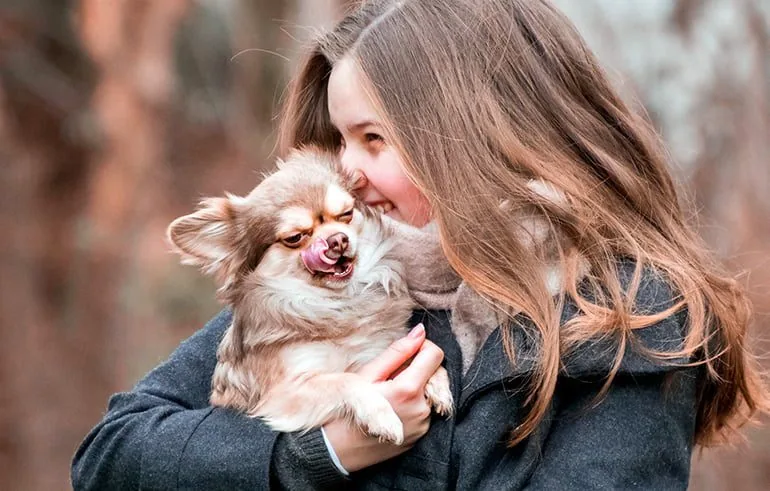
It's fairly common to come across owners on the street walking along carrying their dog. Logically, these tend to be small or very small breeds, and this is how they take them everywhere.
But is it good for the dog to be routinely carried around, with no chance to sniff the ground, lampposts or trees, let alone interact with their own kind? Here at SoyUnPerro we explain it in detail.
Benefits of Carrying Your Dog
Really, the only positive thing about the habit of carrying a dog around is preventing or avoiding some conflict with another dog, or resolving a similar situation, which is an advantage when our dog is tiny, such as a Chihuahua or Yorkshire, and, for example, is about to end up in the jaws of a much larger dog, or we're walking over difficult terrain.
This advantage can be used on specific occasions, though. For example, when we spot dogs nearby who could potentially bite ours. There's no need to carry them the whole time we're out. For us it's a gesture of affection, the way we would with a small child. But dogs aren't children…
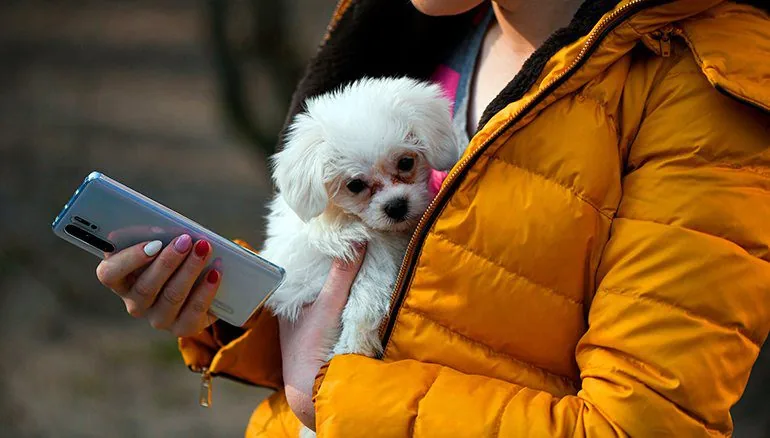
Drawbacks of Carrying Your Dog
However small your dog is, they're still a dog, exactly like large or giant breeds. So, like any dog, they have basic needs for their wellbeing. Besides receiving care, food and vet attention, it's essential for dogs to be able to explore their surroundings and interact.
They can't go without this stimulation or exercise. Always carrying them removes all these beneficial experiences, entirely necessary for their psychological balance. However much we love them, if we treat them like a cuddly toy and don't recognise their canine nature, we're seriously harming them. The result is problems…
You've surely seen tiny dogs who won't stop barking, bite, don't obey, cry, are extremely fearful, or look for a fight the moment they get the chance. These aren't cute quirks of tiny dogs — they're symptoms of very serious behavioural problems. A dog isn't happy this way, however many trendy accessories or gourmet dishes we give them.
I'm Scared to Walk My Dog
First of all, do plenty of research before adopting on what dogs need and how their psychology works. This way you'll understand how to look after them, and why. If you still have doubts, get in touch with a vet, ideally one specialising in ethology. More and more clinics offer meetups for first-time owners where basic handling is taught.
You also get to meet other people in the same situation, and it also helps dogs start interacting in a controlled environment. Logically, dogs know how to communicate with each other, and if left to it, they'll usually sniff each other and interact with no problem at all. It's usually us who ends up triggering problems without realising it.
We get nervous the moment we spot another dog, pick ours up, or pull on the lead. Our nervousness is picked up on by dogs, and the result is a problem. So accurate information and practice are the best way to clear up fears and handling mistakes, however good the intentions behind them are.
If You Do Carry the Dog…
In conclusion, in some circumstances, on specific occasions, we can indeed carry our dog. For example, if they're in danger from another dog's attack, or if we're walking over difficult terrain where it would be riskier to let them walk on the lead or off it. As you can see, these are exceptional cases that don't come up every day.
On another note, routinely carrying the dog around is indeed advisable for puppies who haven't yet finished their vaccination schedule. These dogs won't be protected against highly contagious, potentially fatal infectious diseases, such as parvovirus or distemper.
During this period, contact should be avoided with dogs whose health status we don't know, and even with their droppings. At the same time, though, it's essential for the dog's psychological balance to receive as much stimulation as possible. They're at an optimal stage for positive learning, which prevents future problems.
How to Hold Your Dog Properly
Dogs aren't babies, so you shouldn't lift them by holding them under the armpits and pulling on their front legs, since you could hurt them. The right way to hold them is passing one of your arms under their rear end and the other around their chest, between their two front legs.
This arm can also go behind or in front of their legs, depending on the dog's size, and yours too! Keep them close to your body, without squeezing, and never carry them hanging in baby carriers. It's not an ergonomic position for a dog.
IMPORTANT: This article is for informational purposes only and does not constitute veterinary, nutritional or behavioural advice. Every dog is different, and only your trusted vet can advise you on its specific needs.