 Care
Care
Canine Alzheimer's: Cognitive Dysfunction Syndrome
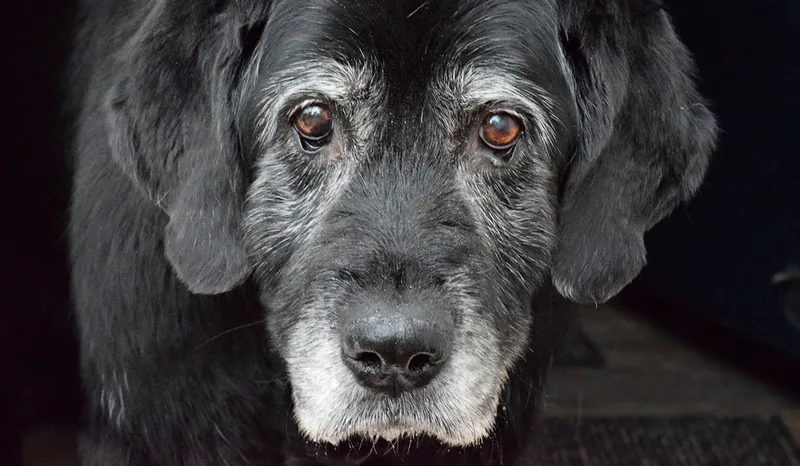
Alzheimer's doesn't just affect older people. In fact, Alzheimer's exists in dogs too, and shows up in a very similar way. Everything learned and experienced over a lifetime gradually fades from memory.
It's a neurodegenerative disease, and although there's no going back, with plenty of love, patience, and an early diagnosis, we can help our furry friend feel more comfortable and secure, slowing down the disease's symptoms.
We'll also manage to reduce the anxiety Alzheimer's, also known as Cognitive Dysfunction Syndrome or CDS, tends to cause in dogs.
Symptoms of Alzheimer's in Dogs
The first thing we should know about Alzheimer's is that it mainly affects older dogs, especially from 8 years of age onward. In fact, it's estimated that one in two dogs over 15 has this disease. That said, cases can also occur in younger dogs.
At first, changes in the dog's behavior are subtle and can go unnoticed, until more obvious disturbances appear.
As a dog ages, it's normal for it to gradually lose abilities, just as happens to us. With Alzheimer's, however, the progressive loss of memory and problems with awareness and learning ability are much more obvious. In fact, the first signs that can make us suspect it are:
- Its memory fails and it struggles to concentrate. If you notice your dog no longer obeys or pays attention like it used to, it may have forgotten certain commands or no longer understands expressions that were familiar to it.
- There are behavioral changes. Our dog may show abnormal behaviors, such as urinating on the bed or indoors, or staring blankly at a fixed point.
- Apathy or lack of interest in what's happening around it is another of the first symptoms of Alzheimer's in dogs. The dog no longer plays or interacts as much, and its physical activity decreases. It may even struggle to walk.
- Changes in sleep habits. In the early stages of the disease, our dog may no longer sleep at its usual times, sleeping at odd hours and wandering around the house at night.
- If you notice it seems disoriented, hesitating about where to go or what to do, it may be due to memory loss.
- Anxiety tends to increase in dogs with Alzheimer's, so if it used to be very calm, with this disease its stress will multiply. This is due to the changes its central nervous system undergoes.
- It's more aggressive or irritable. This is also fairly common, so keep in mind it will be much more prone to getting upset.
It will be very valuable diagnostically if you give your vet a detailed account of the changes mentioned above, or others your pet has shown, since a diagnosis of age-related cognitive dysfunction is reached by ruling out other conditions.
Cognitive tests are usually included in diagnosing the disease, using circuits or moving objects to help pinpoint the diagnosis.
If you've noticed some of these changes in your dog and see they're getting worse over time, take it to the vet so they can examine it and confirm whether it's Alzheimer's disease. These symptoms can be due to other disorders, so it's important for it to be seen and treated by a professional.
Treatment for Alzheimer's in Dogs
Currently, Alzheimer's is a disease with no cure. That said, with the right treatment, this disease's progression can be slowed in the dog and its quality of life improved. For this, early detection is important. The basis of treatment includes environmental enrichment therapies, specific nutritional support, and drug therapies.
Depending on the stage of the disease, the vet will recommend one treatment or another. Generally, various medications are prescribed to help delay this syndrome's progression, combined with a special high-quality diet and nutritional supplements.
A diet rich in Vitamin E, C, and beta-carotenes, for example, will help slow down some of the disease's effects. Finally, some learned behaviors can be reinforced to make them harder to forget.
There are various drugs that increase blood flow to the brain and encourage biochemical changes, many of them still experimental, while others are already used in medical practice.
What Care Does a Dog With Cognitive Dysfunction Need?
Proper nutrition and reinforcing daily routines are some of the special care and attention that will help a dog with Alzheimer's feel less anxious. Other recommendations that can be useful in these cases are:
- Try to have it eat and go out for walks at the same time every day. Check with your vet and, if there's no reason against it, set up some physical exercise routines for the dog. For example, short walks or simple games.
- Avoid leaving it alone at home for long periods.
- If you need to travel, try to make sure it has company and its routines aren't disrupted.
- Music can be a great ally to help the dog feel calmer and more relaxed.
All of this, along with all the affection you can give it, will help your furry friend feel more comforted despite the disease. Don't forget that it's precisely at these times that it will need you the most.
IMPORTANT: This article is for informational purposes only and does not constitute veterinary, nutritional or behavioural advice. Every dog is different, and only your trusted vet can advise you on its specific needs.