 Nutrition
Best Dog Kibble: A Guide by Age and Size
You've probably come here looking for the best kibble for your dog, based on their physical characteristics such as size, daily energy expenditure, age and special requirements such as chondroprotectants for their joints or extra energy if they're a working or hunting dog.
The first thing you should know is that every dog is unique, which means the best kibble for my dog does not necessarily have to be the best kibble for yours. Every dog needs specific feeding based on their lifestyle, age and size.
So let's review the best dog food ranges currently available, the highest quality ones based on their ingredients and manufacturing process.
What's the Best Kibble Brand?
You surely know plenty of dog food brands, such as Royal Canin, Acana, Orijen, Taste of the Wild, Orion and a long list of others. These are brands that invest heavily in advertising, which is why they're so well known, but that doesn't mean they're the highest quality.
To know what the best kibble for our dog is, we should rely solely on the range's label, where the ingredients appear. Under the manufacturers' code of good practice, these ingredients have to be listed from highest to lowest based on the amount the kibble contains.
After analysing plenty of dog kibble brands and ranges, based on our experience, we can say these are the best dog food brands for the quality of their ingredients and manufacturing processes:
- NFNatcane, for quality products with clear labelling and good customer service. And I won't lie to you, also for their great value for money. Good quality at a good price — perfect for me. You can see more on their website: nfnatcane.es
- ERA, for being a super-premium product. It has highly balanced formulations with high-quality ingredients. They offer excellent value for money and are clear on their labels, and it's also made in Spain, so we won't be paying unnecessary shipping the way we would with imported kibble. You can see more on their website: cunipic.com
I strongly recommend you spend a few minutes reviewing these brands' ranges, their ingredients and how they're made.
Which Is the Best Brand of All?
It depends on your dog: if they're a puppy, a young dog with a sedentary life, a working dog or an older (senior) dog, one brand/range will suit them better than another. The ideal is to choose the most suitable one for them, not the one you like most because of its advertising.
Let's look in detail at the best ranges based on each dog's characteristics.
What's the Best Kibble for a Puppy?
There are two important aspects here: the first is the huge amount of energy puppies burn, since they're tireless — it doesn't matter if they're three months or seven, they're pure energy.
The second aspect is their nutritional needs, since being in full development they need more nutrients (and high-quality ones) that they can properly make use of.
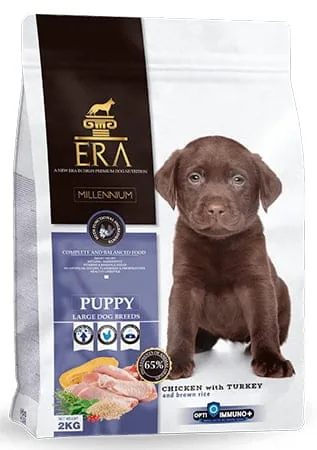
These are the ranges we like most for a puppy, for the high quality of the ingredients used, their manufacturing process and their metabolisable energy content:
- ERA Millennium Chicken and Turkey, made with 65% chicken, turkey and salmon, vegetables, fruit and algae to boost their immune system. Its intense, delicious flavour will make your puppy love it while it nourishes them properly.
- NFNatcane Puppy Gourmet, made with a variety of meats such as lamb, duck, turkey or chicken (for the fussiest eaters). NFNatcane Junior Fish, made with salmon. Maxi Junior, also with chicken and fish but specific to medium and large breeds.
- Orijen Puppy, made with a wide variety of meat and fish and no grains, an excellent option for feeding our little puppy. The value for money isn't great, since it's a fairly expensive kibble, but each to their own.
The Best Kibble for Overweight or Older Dogs
If there's one thing they have in common, it's that they need to control their calorie intake, but without giving up the nutrients they need to stay healthy. In this case we should focus on products moderate in calories and not packed with carbohydrate.
As before, depending on your dog, they should choose the best option. Ideally, try these ranges until you see which one they like most and which agrees with them best.
- NFNatcane Beef & Vegetables, made with beef and moderate in calories. A grain-free range with extra chondroprotectants to look after older dogs' joints.
- ERA Millennium Duck and Lamb, made with boneless duck as a high-quality animal protein; this kibble is highly digestible, complete and, above all, tasty. Ideal for older/senior dogs who need high-quality food to stay healthy and strong.
- Acana Light & Fit, made with a variety of meats and fish and no grains. An excellent option for our older dog or dogs who need to lose weight. Excellent value for money.
What's the Best Food for Young Dogs?
Here we get into broad territory, since there are plenty of suitable, perfectly valid ranges for young dogs with normal physical activity.
And no, if your dog goes out for a walk three times a day and plays with other dogs, that's not high energy but medium/moderate. In other words, it's average for what's considered a dog with "normal" habits.
Here I'd recommend looking carefully at every option and ruling out any containing an ingredient you know either your dog doesn't like or doesn't agree with them. Then, among the remaining ones, you'll need to try them out/vary them, letting your dog be the judge. Since you probably want to know what I use (and if you don't, I'll tell you anyway), I'll say that what my dogs like most are these ranges, which I rotate through the year so they eat more variety and don't get bored.
- ERA Centurion Grain-Free Salmon and Venison, a high-quality range with an excellent combination of meat ingredients. Entirely grain-free and excellently formulated to cover all our dog's nutritional needs. With 60% meat ingredients and sweet potato as a healthy carbohydrate source.
- NFNatcane Fish Gourmet, a complete, balanced kibble range that will give our dog all the energy they need to make the most of their youth, while keeping them from gaining weight. What I like most about this range is the high quality of its ingredients, its variety of hydrolysed white fish, and also the novel insect protein — the food of the future.
- Acana Sport & Agility, made with a variety of meats and fish and no grains. With a high percentage of animal fat to cover all the nutritional needs of working dogs/those needing a high-energy diet. Good value for money.
And when I talk about young dogs, by the way, I mean dogs between a year and a half and six or seven years old.
What's the Best Kibble for Working Dogs and Nursing Mothers?
Now we get to the highest-calorie ranges, which need to properly nourish dogs who do physical activities with high energy expenditure (jogging, cycling, hiking, herding and so on) and bitches nursing their pups.
Bear in mind these ranges are recommended when dogs have high nutritional demands, but when they don't need so much energy, it's best to switch to a less energy-dense one (unused energy/calories can turn into extra weight).
- NFNatcane Working Dog is a range specifically designed for dogs with high energy expenditure, according to its manufacturer. Looking at its composition, we can see it has 4,205 kcal/kg.
The Best Kibble for Sick Dogs
Does the manufacturer know your dog's problem? Do they know their history? Whether they're fat, thin, eating well or badly? So… how are they supposed to know what's best for them based on their illness?
To know the best kibble range for your dog, you should talk directly to the manufacturer. Explain what's going on with your dog, and they'll be able to advise you personally based on their experience and products.
This isn't a joke — spend five minutes sending them an email; they always reply, even when they don't have ranges suitable for your dog. The best kibble for a sick dog is one that's compatible with their illness and also gives them quality nutrients. That's it.

Other Recommended Dog Kibble Brands
There's a lot of trickery here; the brands I mention below I only recommend on occasion. Some of their ranges are good, but others not so much.
I'm talking about the best-known ones, the ones that advertise the most and, often, the most expensive ones… My question is, if their ingredients aren't actually anything special either, why such high prices? Plenty of people think that being more expensive makes it better… a big mistake.
Orijen and Acana
These are the same company; Orijen is just the expensive range and Acana the less expensive one, though it's not really cheap either. I tried both brands for a while, plenty of their ranges. Some agreed with my dogs and others didn't so much.
In their ingredients we can see they lean heavily on the "fresh meat" hook, so remember what we said about dehydrating foods… fresh foods, once they lose their water, end up as dehydrated foods in far lower amounts than stated.
Despite all this, Orijen strikes me as a good dog food brand, though somewhat overpriced, in my view. You can see more about Orijen and Acana on their official websites:
Taste of the Wild
To keep being honest, what worries me most about this company is that it doesn't specify the percentages of its ingredients, so we don't really know what amounts it's actually using in its products.
It's not that I want to think badly of them, but whoever isn't clear on their label… it's because being clear doesn't suit them. You can see more info on their official website:
Royal Canin
It's impressive to see how a company brings out breed-specific products, since every dog is different and there could be, for example, a German Shepherd with a sedentary life and another German Shepherd with an active life — why use the same kibble? It doesn't make sense, unless it's something like "herding breeds", where you can already predict they'll have high energy expenditure (if they're actually doing herding work, of course).
On another note, if we look at the composition of their ranges, most contain high amounts of grains. This might be good for a sick dog who doesn't need protein or fibre in their diet, but it isn't as healthy for a dog with normal health (always based on my experience).
What Should You Look at in a Kibble to Know if It's Good?
Good question — this is where everyone falls into the trap of assuming pricier kibbles are, for some unknown reason, the best. Nothing could be further from the truth.
The fundamental thing in a quality kibble is that it matches our dog's needs. That's right — no two dogs on the planet are the same, so why should they all eat the same thing? It doesn't make sense.
Requirements for Puppies and Mothers
Both puppies bursting with energy and pregnant bitches need food rich in nutrients of high biological value.
Their metabolism needs extra energy — in one case to develop, and in the other to cover their own nutritional needs and also feed their nursing pups.
Giving our puppies good food is fundamental for them to develop properly, growing up healthy and strong.
Requirements for Young Dogs
Here come the whirlwinds! If you don't have a dog between one and five years old… you don't know what energy in its purest form looks like. This is the age when they need certain essential nutrients to bulk up (what we know as filling out).
Requirements for Older Dogs
Older dogs actually need the fewest calories, since as they age their life becomes calmer and their nutritional needs keep getting lower.
Even so, they do need a minimum to stay healthy, and obviously, the higher the quality of that "minimum", the better their health will be.
Requirements for Sick Dogs
Every dog is different, and depending on what illness they have, they'll do better with food higher or lower in protein, calories, fibre and so on…
Each case needs to be looked at individually, since good nutrition can help them cope far better with their illness (or recover).
Breed and Habits Matter Too
It's not just about knowing their age and leaving it there — you need to assess each dog individually. If we have a small-breed dog, they probably won't need food as rich in calcium during growth as a large-breed one.
The same goes for daily activity: a dog who goes out for three calm walks a day doesn't need the same calories as one who goes running with their owner, hiking or jogging.
Conclusion on the Best Food for a Dog
It doesn't matter what you're looking for in a kibble, because you probably think the more meat, fat or protein it has, the better it'll be… but is that what you think is best, or is it really what's best for your dog?
We should first assess our dog and, based on their needs, look for a suitable kibble. There's no perfect kibble for every dog — every dog has their own perfect kibble.
What Are the Highest-Quality Ingredients in a Kibble?
Luckily for those of us living in Spain, the law requires canine food manufacturers to specify the ingredients used. This tends to be stated on their product labels, so let's look at which ones we should consider high quality and which not.
Meat and Fish
From highest to lowest quality, meats could be classed like this:
- Fresh meat
- Dehydrated meat
- Meat meal
- Meat by-products
Why isn't dehydrated meat above fresh meat? Simply because it contains essential amino acids, but both are very high quality, fresh and dehydrated alike. Even so, fresh meat has to be dehydrated to compare its amount to dehydrated meat — let us explain:
Think of a label starting with FRESH CHICKEN MEAT 35%
You'll genuinely be convinced that product has 35% chicken in its composition, right? Well, it happens to everyone… it happened to me too, back in the day. Dog kibble, when it's made, is fully dehydrated, since we buy it in "dry" format.
So 35% fresh meat could actually be around 15% dehydrated. That's why we need to work out how much meat it actually contains in dehydrated format.
If you read 35% fresh meat or 30% dehydrated meat, I can assure you the second will have far more meat. Then we move down to lower qualities such as meal, followed by by-products, which we should avoid.
Grains
A grain-free dog kibble is far better than one packed with grains, right? Nope! Wrong — it depends on each dog. Strange as it may seem, there are dogs who need a low-protein diet, so adding grains is beneficial for them.
On another note, what's going on with the absurd fashion for grain-free kibbles? Nobody seems to notice that the grain removed isn't replaced with meat, but filled in with legumes, and… did you know legumes cause dogs a lot of wind?
As you've just read, grains aren't all bad, and we shouldn't accept just any type of grain either — let's see which are suitable and why:
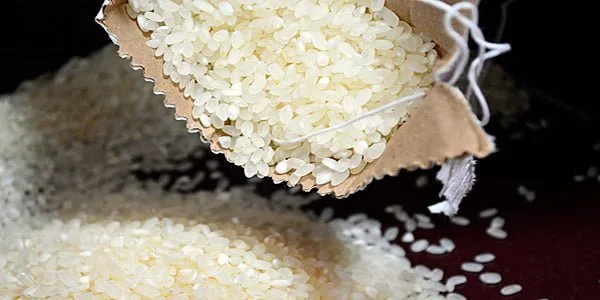
- Rice
- Oats
That's it — there are no other grains I can recommend based on what I know. Rice, always in the right amount, is an excellent carbohydrate source, better than many types of legumes.
Oats provide carbohydrate and improve our dogs' coat and skin (always in the right amount), and also help digestion run more smoothly, among many other things.
Grains we shouldn't accept: maize, wheat, barley and so on… These types of grain have low biological value nutritionally, so they're often used as "filler" to cut production costs. If you have the option, it's best to avoid them.
Fruit, Vegetables and Legumes
It's fine for a kibble to contain fruit and vegetables, but always in low proportions, since too much fibre can be disastrous for a healthy dog's digestive system.
Legumes are, in many cases, a substitute for rice, so I'm not fully convinced when they're added in large amounts. In the right amounts, they can be valid and even nutritious.
Watch out for misleading labels that try to make fools of us, splitting a single ingredient into by-products so it looks like there's less of it. For example:
Peas 10% pea fibre 8% plant protein (probably from pea) 7%
They're actually slipping in 25% peas, which is obviously a hugely excessive amount for a dog's menu. So be very careful with ingredients split into by-products, because if a manufacturer tricks you with that, who knows what they're actually selling you…
Watch the Ingredient Label
We need to make sure the first ingredient or ingredients are always meat or fish, ideally stating the percentage in "dehydrated meat" so we can get our bearings better.
Summary and Personal Opinion
Everyone is free to feed their dog however they want, but remember that with good food their health will be stronger. I don't like people who won't spend money on good food for their dog, even knowing it's not expensive, but who'll happily have three beers any given day.
If you genuinely care about your dog, if you love how they greet you with love when you get home, if you enjoy their company… I don't understand why you shouldn't care a bit more about their diet. Even more so, after reading everything I've explained to you.
Think about this for a moment: if you always ate processed, low-quality food like what we find in big fast-food chains, how would your health be? If you eat healthy food, like our beloved Mediterranean diet, wouldn't your health be far better?
The same goes for our dogs — good food is fundamental. And remember to vary it every so often; don't let them get bored eating the same thing all the time. Variety is the spice of life.
If you're left with any doubts, I'll be happy to try to help you resolve them. Just leave a comment.
IMPORTANT: This article is for informational purposes only and does not constitute veterinary, nutritional or behavioural advice. Every dog is different, and only your trusted vet can advise you on its specific needs.