 Breeds
Australian Shepherd
The Australian Shepherd is a dog that dazzles with its intelligent gaze and boundless energy. Although its name might suggest otherwise, this breed was forged on American ranches, where it became an indispensable partner for handling livestock. Discover everything you need to know about its looks, its fascinating history, and the care it requires.
Physical Traits That Define the Australian Shepherd
The Australian Shepherd is a medium-sized dog, slightly longer than tall, with a build that combines power and agility. Under the official American Kennel Club (AKC) standard, males stand between 51 and 58 cm at the withers, while females fall between 46 and 53 cm. Weight ranges from 18 to 29 kg, varying by sex and build.
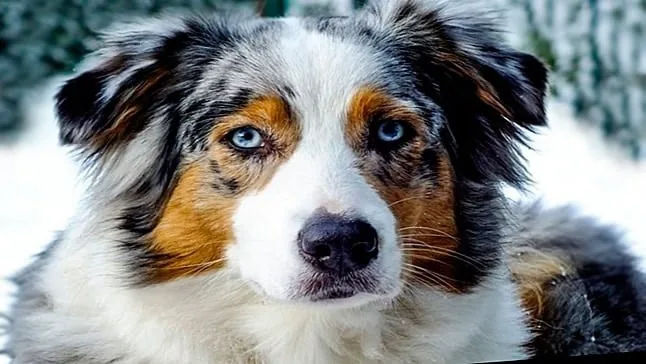
Its head is well-proportioned, with a well-defined stop and high-set triangular ears that fold forward when the dog is alert. The eyes, one of its most mesmerizing traits, can be brown, blue, amber, or even show heterochromia (one eye of each color), always with an alert, intelligent expression. The coat is double-layered: a smooth-to-slightly-wavy outer coat and a dense undercoat that protects it from both cold and heat. Accepted colors include blue merle, red merle, black, and red, all with or without white and/or copper markings. Its life expectancy runs around 12 to 15 years.
A Cowboy Born in the United States
Contrary to what its name suggests, the Australian Shepherd didn't originate in Australia. The breed was developed in the western United States during the 19th century, when ranchers needed a versatile, hardy dog with a strong ability to handle flocks and herds across vast, rugged terrain. Its "Australian" nickname came from the arrival of Basque shepherds who emigrated from Australia to America along with their herding dogs, and American ranchers mistakenly associated those skilled dogs with the Oceanian country.
Breeding focused on dogs with tremendous physical stamina, agility, and the independence to make decisions during long working days with cattle and sheep. These qualities, combined with its intelligence, also made the Australian Shepherd excel at rodeos and equestrian shows, where it showed off its skill herding horses and performing tricks. The major kennel clubs officially recognized the breed throughout the 20th century, cementing its reputation well beyond rural settings.
Intelligence, Loyalty, and a Tireless Work Ethic
The Australian Shepherd is an extremely intelligent, loyal dog with a strong tendency to form a close bond with its family. Its herding heritage gives it a natural instinct to protect and control movement, which can lead it to try to "herd" children, other pets, or even adults if it isn't given proper training.
It's an energetic, tireless worker that needs daily physical and mental stimulation. It excels at dog sports like agility, flyball, or competitive herding. Its temperament is well balanced, but it can be reserved with strangers if not properly socialized from puppyhood. It's not a dog suited to sedentary owners, since boredom can trigger destructive behavior or excessive barking.
Secrets and Quirks of the Breed
One of the most striking quirks of the Australian Shepherd is its naturally short or absent tail. Around one in five dogs is born with a naturally bobbed tail, a trait ranchers valued for preventing injuries while working with livestock. Its hypnotic gaze isn't a coincidence either: the combination of light-colored eyes and an intense expression is a working tool it uses to control the flock without needing to bark.
Another lesser-known quirk is its genetic predisposition to certain diseases. A scientific study published in the journal PLOS One analyzed the incidence of alleles responsible for hereditary conditions in European Australian Shepherds, revealing a notable frequency of mutations linked to conditions like drug sensitivity (MDR1) and progressive retinal atrophy. This finding underscores the importance of genetic testing before breeding to preserve the breed's health.
Health, Exercise, and Special Care
The Australian Shepherd is generally a healthy breed, but has a predisposition to certain hereditary diseases. The most common include collie eye anomaly, progressive retinal atrophy, hip and elbow dysplasia, and MDR1 gene drug sensitivity. It's essential to get puppies from responsible breeders who run genetic tests and official X-rays on the parent dogs.
As for daily care, its double coat needs frequent brushing — at least two or three times a week — to remove dead hair and prevent tangles, stepping up frequency during shedding season. Exercise should be plentiful: it needs more than an hour of intense activity a day, combining long walks, intelligence games, and dog sports. Early socialization and positive training are essential for channeling its energy and preventing behavioral problems.
IMPORTANT: This article is for informational purposes only and does not constitute veterinary, nutritional or behavioural advice. Every dog is different, and only your trusted vet can advise you on its specific needs.