 Training
Bikejoring
You've surely considered, more than once, the chance to enjoy your bike and your dog at the same time, and whether it's actually feasible and safe. We're sure we're not telling you anything new when we say there are several sport disciplines practised with a bike and a dog at once.
Even so, today we'd like to tell you about one of the most popular and easiest to get into: bikejoring.
Bikejoring is a sport discipline involving running with a dog and a bike or scooter at the same time, with no need for a specific course. Because of this, this discipline is winning more and more fans worldwide, since it can be practised in plenty of places.
And although bikejoring is considered a type of mushing, it's the most recent creation and the most accessible to everyone.
In this article we explain what we need to put this fun activity into practice, along with its rules and some advice that can prove useful if we want to get started.
Getting Started With Bikejoring
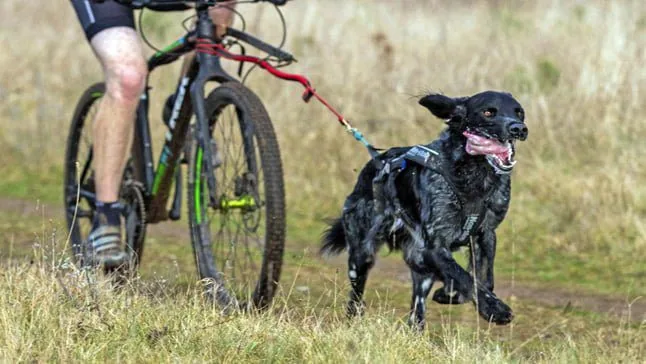
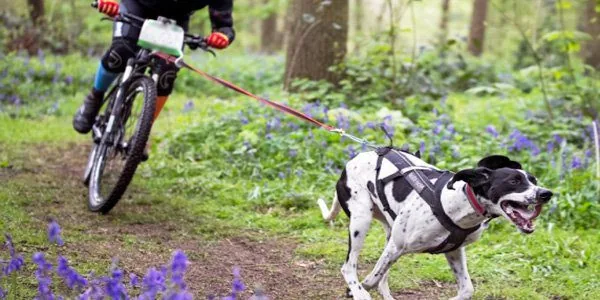
To be precise, bikejoring is a sport activity involving riding a bike or scooter alongside a dog tied to your body through a rope and harness. The dog always runs ahead and needs to be minimally trained for it.
You can run along quiet paths or through the countryside via trails, as long as certain conditions are met, which we also describe below.
Prior requirements:- Our dog needs to be in good health and good physical shape.
- It's advisable not to start alone. We can get started somewhere with other practitioners already, from whom we'll surely pick up some tricks that will make the process easier.
- The paths we're going to run along need to be as free as possible of traffic and pedestrians, and need to have been checked out beforehand.
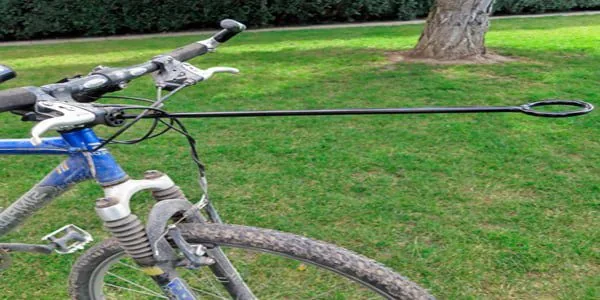
To get started, you don't need much: your dog, a mountain bike or a scooter, plus the following accessories:
- A helmet, goggles and gloves (the last two aren't essential, but are highly advisable).
- A tow line fitted with a bungee.
- A bikejoring antenna, which stops the tow line from getting caught in the wheels.
- A crossback or bikejor harness. Careful: the one commonly used for walking a dog won't work.
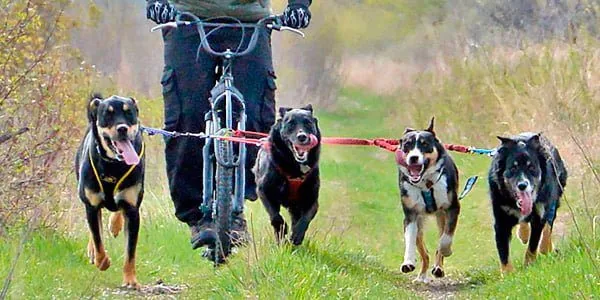
- Lastly, and only if we have more than one dog, a neckline, used to link each dog's harness together.
How to Start Practising Bikejoring
Before continuing, we'd like to point out there are two fundamental types of bikejoring, namely:
- Bikejoring with a single dog: In this case, our bike won't need any modifications, and we'll provide driving force by pedalling while the dog pulls, or by combining and alternating both forces.
- Bikejoring with more than one dog: There's no pedalling, and the bike goes with no chain, so the dogs will be the only source of power we rely on.
Both types can also be applied using a scooter. What matters most, besides having suitable equipment and healthy dogs, is that practising bikejoring demands properly choosing the terrain and the course or trail we're going to travel along.
Unlike canicross, where forest trails tend to be used, bikejoring is practised on smooth tracks with less elevation change. Even so, we should avoid asphalt at all costs, since it damages our furry friend's paw pads, especially when running.
We need to gradually get our dog used to being the one pulling us and the bike, which doesn't mean we should never pedal or stop helping them; especially on slopes or when the terrain becomes harder.
We'll take special care on slopes; on the way up our job will be to pedal to help our dog, and obviously not leave all the work to them, and on the way down, hold them back enough to stop them getting carried away, with the resulting risk that involves, using the brake as often as needed.
At all times, the tow line should stay taut, whether going up or coming down.
More experienced practitioners reach genuinely astonishing speeds, but, as with everything, caution is an essential value in any kind of sport, and even more so in one like this where we're risking not just our own safety, but that of other people and animals.
Useful Accessories for Bikejoring
Besides the mandatory use of a helmet, tow line, harnesses and safety antenna, there are other accessories for practising bikejoring that will make it easier and more comfortable.
Among these accessories is the use of gloves, since they protect against excessive brake use and will protect us from possible pinches stemming from more frequent use, besides minimising the harm caused by constant friction with the handlebar grips.
Using shin guards and knee pads offers extra protection, since while practising bikejoring, especially at first, we'll be more likely to suffer a fall or need to jump off the bike.
Basic Concepts and Advice
It's essential to have some basic principles clear before starting to practise bikejoring. The dog needs to be familiar with a series of essential commands.
These are practically the same ones used in any mushing discipline.
Some examples:
- Gee (pronounced jee) to turn right
- Haw (haw), when we want them to move left
- Easy to slow down
- Pick Up, when we want to speed up and so on.
If there's a mushing centre in your city, you can pay a visit to get advice on the matter, or look up mushing's basic commands online.
They don't have to be the same, that is, we can use our own language, as long as they're commands easy for our furry friend to understand and that can be pronounced as quickly as possible.
It's obvious that the first few times they won't understand what we're asking of them. That's why we need to carry out the action ourselves, every time we say a given command, until they get familiar with it.
If, for example, we want to speed up, we'll say "Pick Up" while pedalling faster, so the dog will link "Pick Up" with going faster. We'll follow the same process with each of the commands.
It matters a great deal to do all this over short, obstacle-free stretches with no animals or people, before venturing onto longer routes.
It's hugely positive for learning to reward the animal every time they properly carry out what we expect from them (positive reinforcement), but without overdoing it. The reward should match their progress. This way we'll increase their willingness to take on new stimuli.
Scouting the Terrain
It's essential to know the route we're going to travel along beforehand, as well as anticipate obstacles, vehicles pulling out, people, livestock and so on…
Before going with our dog, we should travel the route we're going to use several times, checking curves, elevation changes, crossings, farm access points, busier and quieter times, ground condition and so on…
If there's a bikejoring club or association in our area, joining it will put us far ahead, besides letting us start off on tracks used for this purpose, at least until we feel confident enough to choose our own.
Practising bikejoring can become a thrilling exercise full of stimulation, strengthening our relationship with our pet and enriching our love for cycling enormously, filling us with genuinely exciting, pleasant moments and stimulation, both for us and for our loyal, furry companion.
If done with due caution and common sense, respecting the basic rules, enjoyment is practically guaranteed.
What's great about this sport discipline is that satisfaction starts from the moment we hitch the animal to our bike, since the learning and settling-in process itself is hugely fun. Even so, don't think we'll achieve it without a certain amount of effort, patience, determination and enthusiasm.
Things genuinely worth doing require prior preparation and a degree of sacrifice and willpower. Even so, careful — we need to be aware that dogs, just like humans, don't enjoy the same activities equally.
If our furry friend shows no minimal willingness towards this practice (it's logical they'll seem confused at first), we should never force them or insist they end up liking it.
Ideally we'd start getting them familiar with bike rides (with due caution and in safe spots) from puppyhood.
We encourage you to try this healthy, interesting activity, and discover new, exciting sensations and ways of communicating with your loyal friend. Even so, don't forget you can never be too cautious. This is about having pleasant, healthy moments, not putting your own safety, your dog's, or that of other people and animals at risk.
This article is purely informational and for awareness. Because of this, we advise that before starting, or at the slightest doubt, you get proper guidance from already experienced practitioners or an association dedicated to this purpose near where you live. Go ahead and enjoy your dog and your bike at the same time through practising bikejoring.
IMPORTANT: This article is for informational purposes only and does not constitute veterinary, nutritional or behavioural advice. Every dog is different, and only your trusted vet can advise you on its specific needs.