 Breeds
Border Collie
The Border Collie isn't just a clever dog: it's a mental athlete shaped by centuries of extreme functional selection. Its hypnotic stare and its ability to anticipate movement make it the ultimate herding dog, but also a companion that demands real commitment and a daily sense of purpose. Understand its nature, and you'll get unwavering loyalty and a bond few other breeds can match in return.
Traits that define the Border Collie
The Border Collie is a medium-sized, agile and perfectly balanced dog, with a frame slightly longer than tall. According to the official American Kennel Club (AKC) standard, males stand 48 to 56 cm at the withers and weigh 14 to 20 kg, while females measure 46 to 53 cm and weigh 12 to 19 kg, always in balanced proportion to height.
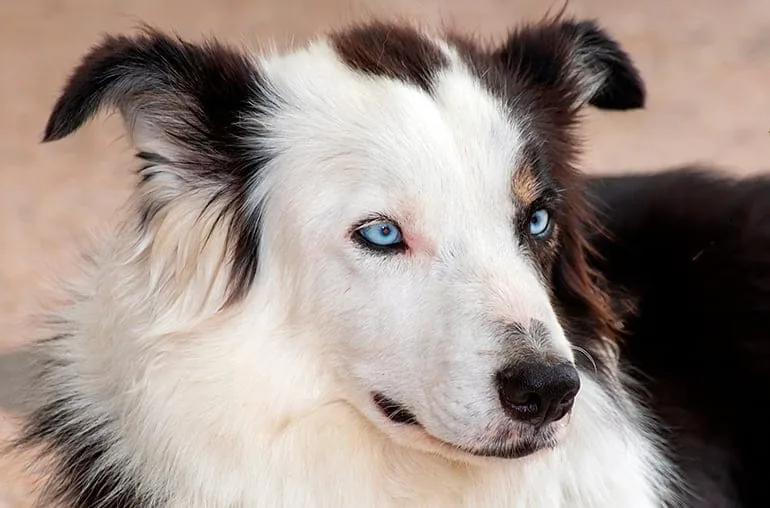
Its coat comes in two types: smooth, short and dense over the whole body, and rough, medium-length with characteristic feathering on the legs, chest and tail. Both share a weatherproof double coat, with a soft undercoat and a coarser outer layer. Accepted colours are notably wide-ranging: classic black and white, tricolour, blue merle, red merle, sable and chocolate, always combined with white in typical markings such as a collar, blaze, chest and tail tip. The alert expression of its almond-shaped eyes, usually brown, is one of its trademarks.
The life expectancy of a healthy, well-cared-for Border Collie runs from 12 to 15 years, a longevity that reflects the robustness forged by generations of selection based on function rather than fashion.
Herding roots on the border
The Border Collie was born on the border between Scotland and England, a region of steep hills and harsh weather where sheep farming demanded dogs with stamina, intelligence and remarkable independence. Its very name reveals that legacy: "Border" refers to the border line, and "Collie" comes from the Gaelic word for Scottish sheepdog.
For centuries, shepherds in the region selected dogs purely for their working ability, ignoring looks or show trends. This purely functional selective pressure forged a dog capable of making quick decisions without waiting for constant commands, reading the flock's body language precisely and covering long distances with an efficient, tireless trot. The modern standard still rewards function over appearance, and to this day many responsible breeders test their dogs in real herding trials before using them for breeding.
A mind that never rests
The Border Collie's herding instinct isn't learned behaviour: it's pure genetics. This dog tends to organise, watch over and move anything that shifts around it, whether sheep, children, bicycles or even shadows. Without a proper outlet, that inner drive looks for any channel of expression, often with unwanted consequences such as obsessive chasing or repetitive behaviour.
Its working intelligence lets it pick up new commands in very few repetitions, but that same mental sharpness demands concrete tasks that provide real satisfaction. Structured scent games, learning a new trick every week or collecting toys by name are examples of "work" that keep it psychologically balanced. Its bond with the family is intense and lasting, though it can turn into dependency if it isn't taught from puppyhood to gradually cope with being alone.
Unique details of the Border Collie
The Border Collie is considered the smartest dog in the world according to canine psychologist Stanley Coren's ranking, capable of picking up a new command in fewer than five repetitions. But its most exclusive and fascinating trait is the "eye": a hypnotic, low, penetrating stare it uses to control the flock without barking or physical contact. That stare is a working tool no other breed possesses with such intensity.
The breed's genetic uniqueness has also drawn scientific attention. A scientific study from the University of Sydney assessed genetic diversity and the management of hereditary diseases in the Border Collie, underscoring the importance of responsible breeding that preserves the breed's long-term health and avoids the build-up of harmful mutations in very closed lines.
Keys to a healthy Border Collie
The Border Collie is generally a robust breed, but it does have a predisposition to certain health problems every owner should know about. These include hip dysplasia, idiopathic epilepsy and various hereditary eye disorders such as progressive retinal atrophy and Collie eye anomaly. Homozygous merle dogs can present deafness and serious eye defects, so responsible breeding avoids pairing two merle dogs.
Daily physical exercise is essential, but falls short without a parallel mental challenge. A Border Collie needs to run, explore and, above all, solve problems. Disciplines such as agility, obedience, recreational herding or scent discrimination games channel its energy constructively. Early and ongoing socialisation is equally vital to prevent hypersensitivity to stimuli and reactive behaviour.
Caring for its double coat calls for regular brushing, stepped up during seasonal moults, to remove dead hair and keep the skin healthy. Quality food suited to its activity level, along with regular vet check-ups, round out the basics so this mental athlete can enjoy a long, balanced life.
IMPORTANT: This article is for informational purposes only and does not constitute veterinary, nutritional or behavioural advice. Every dog is different, and only your trusted vet can advise you on its specific needs.