 Breeds
Boxer
Adorable with their family and tireless playmates, Boxer dogs make great companions. That, combined with their impressive physique and good nature, makes them one of the most popular breeds in the world.
If you're looking for a dog with endless energy, easy to care for, and eager to make you happy, these good-natured dogs are made for you. Want to know what other qualities this breed has to offer? We'll show you all its secrets.
Physical Characteristics of the Boxer Breed
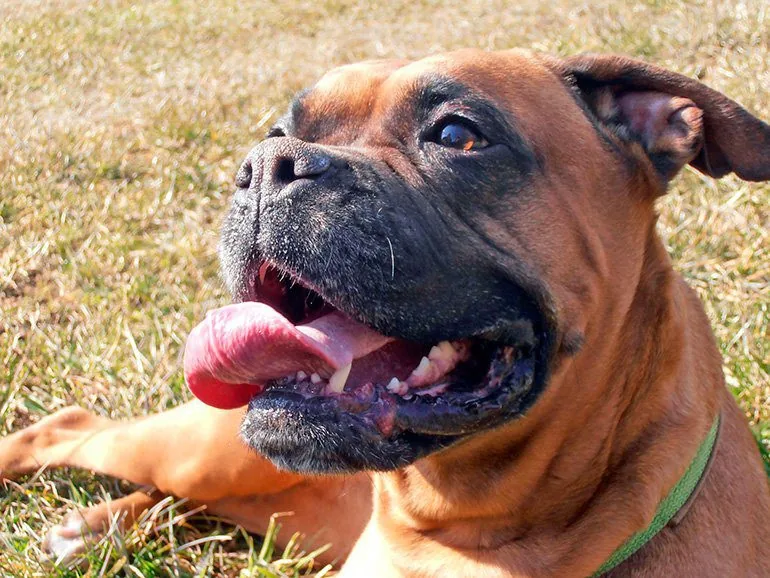
Its appearance is a combination of strength, elegance, and agility. It's a medium-to-large dog with a well-muscled build, especially in the legs. It has a powerful, deep chest and a short back. The head is slightly curved and well proportioned to the rest of the body.
The eyes are fairly large and have a distinctive expressiveness, reinforced by the forehead wrinkles typical of the breed. The ears are medium-sized and set at the highest point of the skull. The tail is set high and medium in length. The coat is coarse and lies close to the body.
 Height between 57 and 63 cm in males and between 53 and 59 cm in females
 Weight between 25 and 32 kg in males and around 25 kg in females
 Short, glossy coat. The only recognized colors are fawn or brindle; white individuals also exist
 Very active, protective temperament. Mischievous as puppies and still playful as adults
 Average health — deafness, hip dysplasia, and heart conditions are the most relevant issues to watch for, along with possible food intolerances and/or dermatitis
 Estimated life expectancy of between 10 and 12 years
What Is the Official Standard for a Boxer?
No colors other than the two mentioned above are accepted. White markings are allowed, but only as long as they don't cover more than a third of the body. A Boxer's eyes must be dark brown and should not appear overly bulging, nor be too deep-set. A dark line along the eye rim is desirable, but its absence isn't disqualifying. The nose should be broad and dark.
The standard only allows dogs with a lower jaw longer than the upper one, curving slightly upward, without showing the teeth when closed. Finally, the cheeks should not be excessively fleshy.
Differences Between the European and American Boxer
Although people tend to think there are two types of Boxer, in reality they're simply two different breeding lines: the European and the American. The differences show up mainly in physical build. While the European line has a build closer to the original, broad and muscular, the American line has become more streamlined and taller over time; in some cases the coat is a little longer too.
What Is a Boxer's Temperament Like?
Despite its imposing appearance, a Boxer is nothing more than a big puppy at heart. It's known as the "eternal puppy" for its always-playful attitude, with a mischievous streak. It's deeply affectionate with its family, especially with children, showing endless patience with them.
At home they love staying close to their people, so don't be surprised if they climb onto your lap thinking they're Chihuahuas. Boxers drool a lot, sometimes right onto you, and they tend to snore quite a bit too. Better to know that going in!
Dogs of this breed are real clowns at heart, especially when they want to show you affection. When they're happy they tend to jump or dance, spinning around in a very particular way. If they want your attention, they'll make a sound that's neither a bark nor a growl.
On the other hand, they usually have no trouble adapting to small houses or apartments, as long as you give them the exercise they need, which is quite a lot. They get along well with other dogs and cats. With unfamiliar dogs, especially of the same sex, there can be some friction, but early socialization will help smooth out their manners.
Boxers were bred to be guard dogs, so it's normal for them to be wary of strangers. That said, they don't tend to attack or turn aggressive unless they sense a real threat. They're a brave, intelligent breed, and if you put them in charge of watching the house, they'll do the job perfectly.
Training should be varied with this breed, since they need challenges to stay engaged. Boxers mature slowly and won't show adult behavior until around age 3. Even so, they'll stay playful well beyond that. You'll need patience!
Recommended Care for a Boxer
A Boxer's coat needs very little attention. Its short coat just needs weekly brushing and a bath only when it's genuinely dirty, since they tend to groom themselves the way cats do. It's also common for them to shed quite a bit, especially in spring. Tooth brushing should ideally be daily, while nails need trimming once a month.
These aren't dogs that handle extreme temperatures well, so they won't be comfortable spending long periods outdoors. Their short muzzle can cause breathing problems in very hot weather, while their short coat leaves them feeling the cold in winter.
Daily exercise is essential for this breed, since they're dogs bursting with energy. Walks should include both walking and play. They love jumping, running, and chasing small animals, so they should always be walked on a leash. Likewise, if you have a house with a yard, make sure the fence is fairly tall.
Common Health Problems in a Boxer
Besides a certain predisposition to deafness — especially in white-colored dogs — these dogs can be affected by congenital heart conditions such as Boxer cardiomyopathy, which causes arrhythmia and can occasionally lead to sudden death. Another known hereditary condition is aortic stenosis, a congenital obstruction in the heart's outflow valve that can be life-threatening.
A Boxer can also suffer from canine demodicosis, a parasitic disease caused by mites that attack the dog's skin if it has immune issues. Likewise, certain forms of cancer can show up in older dogs of this breed, particularly skin cancer, lymphoma, and brain tumors.
Hip dysplasia is a hereditary condition that limits mobility in some dogs of this breed.
History of the Boxer and Fun Facts
The Boxer's ancestors were war dogs from Asia — among them the powerful Tibetan Mastiff — that arrived in Europe during the Middle Ages. There they were crossed with native breeds like the Bulldog. For centuries these dogs were used to hunt bears, boar, and deer in the countryside, while in cities they proved useful to butchers who needed to control livestock. They also originally took part in dogfighting and bull-baiting, which is why they were initially known as Bullenbeisser (bull biters).
The breed as we know it today took shape in the late 19th century in Munich, Germany, after a Bullenbeisser female was crossed with an unpedigreed dog. The result was a much more streamlined dog, but just as strong and athletic as its mother. It was registered as "BierBoxer," a name that later evolved into the English term "Boxer," which comes from these dogs' habit of stretching their front legs forward while playing, as if they were a boxer throwing a punch.
In the early 20th century, in Germany, they worked as police dogs, and later, in both world wars, they proved their courage on the battlefield. After the end of the Second World War they became hugely popular in the United States, as many American soldiers returned home with a Boxer as a lifelong companion.
IMPORTANT: This article is for informational purposes only and does not constitute veterinary, nutritional or behavioural advice. Every dog is different, and only your trusted vet can advise you on its specific needs.