 Care
Care
Calluses in Dogs
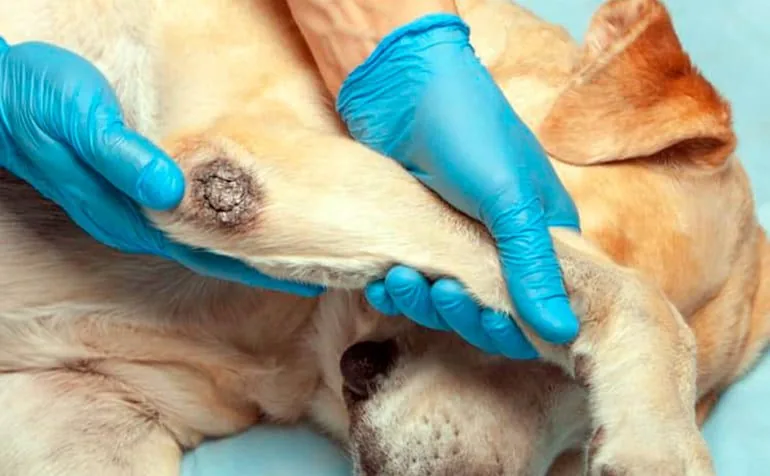
It's common to see, especially in large dog breeds, calluses appearing on the elbow area. They look like thickened, rough, dry patches of skin with a dark color.
Despite being visually noticeable, calluses generally aren't a pathological problem, but if we neglect them, complications such as ulceration or secondary infections can develop, requiring veterinary attention.
By following a few simple guidelines, we can prevent them from appearing or avoid complications if our dog already has calluses.
What Are Calluses?
In veterinary medicine, a callus is defined as a localized hyperplastic skin reaction caused by pressure or friction. In dogs, calluses show up as thickened, rough, dry, hairless patches of skin. Some calluses are dark brown and black, and others are gray; it depends on each dog's skin and how long the callus has been there. They usually appear on skin covering bony areas, since these are the areas that bear pressure when the animal lies down.
The elbow is the site where calluses most often appear, followed by the hocks and, in dogs with deep chests, the sternum.
This problem is seen more often in giant dog breeds, such as the Great Dane, Mastiff, or Saint Bernard. In these breeds, calluses are more likely to develop on the elbows or hocks. Calluses can appear on the sternum in smaller breeds, such as the Boxer, Pinscher, or Bulldog.
Why Do Calluses Appear in Dogs?
Just as in people, calluses in dogs occur due to repeated pressure or friction on a specific area of skin. Continuous trauma to the elbows caused by a dog dropping onto a hard floor causes the skin to thicken to protect the bone.
Among the possible causes favoring the appearance of calluses in dogs are:
- Resting on a hard surface (especially if the dog sleeps on the ground and outdoors)
- Overly soft beds that don't cushion, leaving the joints in contact with the floor
- Being overweight or extremely thin
- Hypothyroidism (an endocrine disease affecting skin condition)
- Joint pain or other conditions that increase how much time the dog spends lying down
Do I Need to Take My Dog to the Vet If It Has Calluses?
Generally, simple calluses aren't reason to see the vet, since they're usually a condition caused by repeated trauma to the elbow or other areas.
If we notice our dog has calluses, we need to periodically watch the area to check there are no wounds or changes that could indicate a skin infection. It's very important to maintain good hygiene in the affected area, with periodic washes with antiseptics such as chlorhexidine being beneficial.
If ulcerated areas, some type of discharge/bleeding, or changes in the affected skin appear, we need to see the vet.
How Can We Treat Calluses?
Generally, surgical removal of calluses isn't recommended, since canine calluses are different from ours. So, unless there are complications, we simply need to maintain good hygiene in the area, moisturize the affected areas with specific ointments to prevent cracking, and provide our dog with a soft, sufficiently cushioned bed so its joints rest on a soft surface and aren't subjected to pressure.
In some cases, protective dressings/bandages can be considered for the affected areas. It's important to treat the underlying cause in cases of dogs with obesity, extreme thinness, or other associated conditions that favor callus development.
What Is Callus Pyoderma?
In cases where the recommended measures for treating simple calluses aren't taken, a secondary infection (pyoderma) can develop. If calluses are neglected, ulceration, fistula formation, and exudative discharge can occur, including the development of deep pyoderma (infection of the deeper layers of skin).
If this situation occurs, treatment with general antibiotics and washing the area with disinfectants (chlorhexidine) is required. It's essential for this treatment to be paired with the necessary measures to eliminate the factors favoring callus development (weight control, cushioned bed, protective bandages).
How Can We Prevent Callus Development?
As we've explained, calluses develop from repeated pressure or friction on an area; because of this, the best preventive measure is preventing our dog from resting on hard surfaces. If we provide our dog with a good resting bed, keep it at its ideal weight, and encourage a good level of activity in its daily routine so it doesn't spend too many hours in a row lying down, the chances of calluses appearing are significantly reduced.
IMPORTANT: This article is for informational purposes only and does not constitute veterinary, nutritional or behavioural advice. Every dog is different, and only your trusted vet can advise you on its specific needs.