 Nutrition
Can Dogs Eat Broccoli and Cauliflower?
Although many owners choose commercial food, it's inevitable that questions eventually come up about whether a certain food can be eaten by dogs or not.
Below, from SoyUnPerro.com, we'll explain whether dogs can eat broccoli or cauliflower and how. We'll also go over the nutrients both vegetables provide and whether it's necessary or not to add them to our dog's diet.
Benefits of Broccoli for Dogs
Broccoli and cauliflower belong to a plant family that also includes cabbage and Brussels sprouts. Both can add to the diet, mainly vitamins and minerals, as well as fiber. Specifically, broccoli stands out for its potassium content, important for the neuromuscular system.
It also contains phosphorus, calcium, and magnesium. As for vitamins, we can point to its vitamin C and folic acid (vitamin B9) content. Vitamin C has an antioxidant effect. Folic acid, for its part, is involved in blood cell formation, nucleic acid synthesis, and protein metabolism.
The presence of fiber in the diet supports healthy bowel movement and helps achieve a feeling of fullness. This prevents constipation problems, more common in older dogs, and being overweight or obese. On the other hand, if broccoli or cauliflower consumption is excessive, it's possible to cause the opposite effect, meaning loose stool or diarrhea.
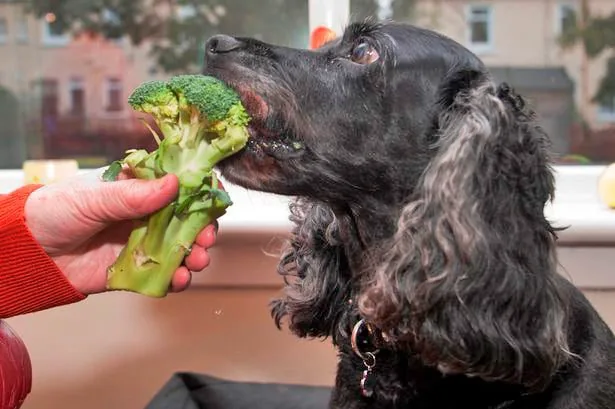
Benefits of Cauliflower for Dogs
Cauliflower's composition is very similar to broccoli's, though its vitamin and mineral content is somewhat lower. Due to this small difference, if choosing only one of these vegetables, we could go with broccoli.
Can My Dog Eat Broccoli or Cauliflower?
Dogs are carnivores, though nowadays, thanks to living alongside humans, they behave as omnivores. Because of this, their diet needs to necessarily be based on animal protein.
Meat can be accompanied by carbohydrates, such as those found in cereals, healthy fats, such as fish oils, and fiber, vitamins, and minerals added by vegetables and fruits.
That's why broccoli or cauliflower can be included in a dog's diet. But as a supplement, without ever exceeding 10, or at most 15%, of the total meal. So, they can't be the main food, nor is it necessary for dogs to eat them often.
Broccoli and Cauliflower in Homemade Dog Food
Neither broccoli nor cauliflower are foods dogs usually ask for, but if ours happens to be interested in them or we want to share them with it, we can do so every now and then, as a treat.
If what we want is to feed our dog a homemade diet including one or both, we should put ourselves in the hands of a canine nutrition expert. A homemade menu is an excellent option as long as it's made based on knowledge.
If we don't do our research, and instead just give the dog dishes like the ones we cook for ourselves or, worse, leftovers, we can cause significant nutritional deficiencies. These will result in growth problems, a poor-looking coat, or even various diseases if the diet goes on for a long time.
How a Dog Eats Broccoli or Cauliflower
Broccoli can be offered to the dog raw, sautéed, steamed, or baked. With no salt or sauce. It's better not to boil it, to minimize nutrient loss. Cauliflower can also be given as is or cooked the same way as broccoli. This second option is more recommended since it eases digestion — raw, it's more likely to cause gas.
Both broccoli and cauliflower can be offered as a purée, which is useful if the dog has a mouth problem making chewing difficult. In addition, both vegetables can be added to the dog's food or offered as a treat.
Recipe With Broccoli or Cauliflower for Dogs
If we feed our dog homemade food, here's an example recipe with these ingredients: chicken with vegetables and fruit. The dish's main ingredient needs to be chicken. We can choose meat from the breast or thighs, plus some organ meat like liver.
The broccoli or cauliflower would be the side, along with some fruit like apple. But we shouldn't lose sight of the proportions. So, if the dish's total weight were 100 grams, broccoli or cauliflower would only make up about 10-15 grams.
So, remember the amount you give your dog always needs to be small. If you choose to include one of these vegetables in a homemade dish, you can also freeze it with no problem.
IMPORTANT: This article is for informational purposes only and does not constitute veterinary, nutritional or behavioural advice. Every dog is different, and only your trusted vet can advise you on its specific needs.