 Nutrition
The BARF Diet for Dogs — Good or Dangerous?
Every day more people, like you, are giving thought to what their furry companions eat. And it is well established that a good diet can do a great deal for our dogs' health and general condition. Hence why BARF food looks like one of the best options available, since it is made from natural ingredients. But… how much truth is there in that?
Let's Start at the Beginning… What Is the BARF / ACBA Diet?
Although it is called a diet, it is not a diet as such. That is, it is not aimed at losing weight. BARF is the acronym for Biologically Appropriate Raw Food; in Spanish you will find the acronym ACBA, which says the same thing: Alimentación Cruda Biológicamente Apropiada. So BARF and ACBA are exactly the same thing.
In short, it means feeding our dog a diet based on natural, unprocessed ingredients — very much like a human diet, in other words.
The theory behind this trend in canine nutrition is that, since the dog descends from the wolf and the wolf fed on prey, dogs should eat prey too. Since that obviously is not going to happen, the answer is fresh products we can find in any market or food shop (just as we humans do).
Is It Dangerous to Feed a Dog BARF Food?
The truth is that this way of feeding is not free of dangers. Raw food can contain a great many parasites and bacteria that are harmful to dogs. While it is true that their digestive system is stronger than ours and can neutralise most of these parasites and bacteria, it is also true that it cannot handle all of them (Salmonella spp., Escherichia coli, Toxoplasma gondii) — which is to say, our dogs are not out of harm's way.
What is more, we have to aim for a diet well balanced in protein, vegetables, meaty bones, fruit and so on — something not everybody knows how to do, or has the time to prepare. Acting like an expert on the strength of a couple of YouTube videos can put our dog's health at risk.
If you are thinking of feeding your dog natural food, we recommend putting yourself in the hands of experts (canine nutritionists). Or of companies that supply this kind of food ready-made, such as Dogfy Diet (lightly cooked natural food).
What Are the Benefits of Feeding a Dog BARF Food?
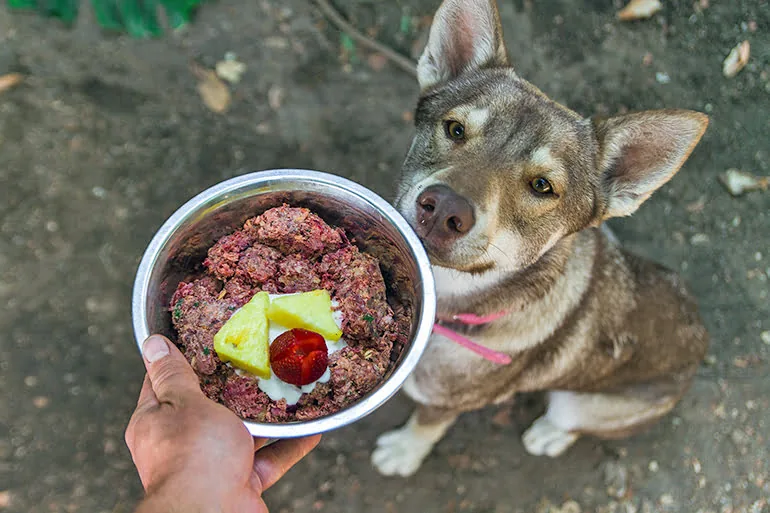
Plenty of groups of people who feed their dogs a BARF diet (such as the BARF for beginners Facebook group) maintain that the benefits of feeding their dogs natural food are numerous and, what is more, plain to see.
Among the benefits they most often point to, we find the following:
- Smaller, less smelly stools: Because the dog makes the most of the nutrients in their natural food.
- A better immune system: Natural feeding gives our dog a much stronger immune system (*with no scientific studies to back it up).
- Improved coat and skin: Better-nourished skin and a glossier coat.
- Less anxiety around food: Over time the dog becomes less anxious about eating and enjoys their food more. BARF feeding offers more intense, natural smells and flavours.
- Less water drunk: Because BARF food already comes hydrated.
- Teeth free of tartar: This applies only to dogs that eat whole meaty bones (not minced), since those bones help clean their teeth.
Another of the main benefits of BARF food for dogs is that we can pick the ingredients, making it more digestible, higher or lower in fibre, higher or lower in calories and so on. In other words, tailoring it very precisely to each dog's nutritional needs.
What Are the Main Ingredients of the BARF Diet?
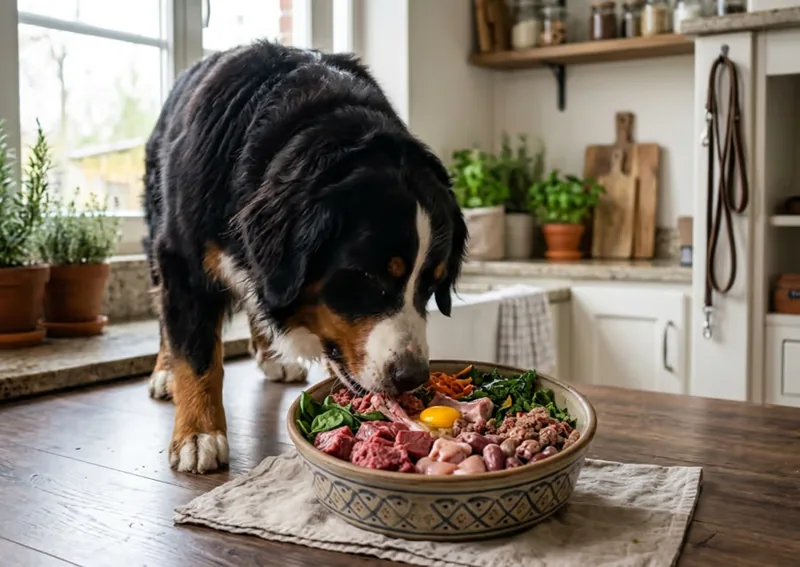
BARF food is made with natural, fresh products suitable for dogs, so that everything brings a good nutritional contribution at a biological level.
These are some of the ingredients used in BARF feeding for dogs.
- Meat and fish: Chicken (breast, wings), pork, lamb, beef, ox, horse, beef heart (being muscle, it also counts as meat). Sardines, trout, boneless fish in general.
- Meaty bones: These are the soft bones that are easily digested, such as chicken or turkey carcass, chicken necks or chicken wings. They are bones suitable for dogs with a good nutritional contribution.
- Organs and offal: In any butcher's or market you can find offal or chicken, beef or lamb liver.
- Fruit and vegetables: To start with, and since they are always available, you can use bananas, apples and pears. As for vegetables, pumpkin, chard or spinach.
- Grains and tubers: The most recommended grain in canine nutrition is rice, and the tuber is potato, which we can boil with the skin on.
- Optional: Raw egg or cooked (without the shell), plain yoghurt and other natural nutritional supplements.
There is no need to focus on sirloin or rib-eye — the meat that is on offer is more than enough. We can buy it at the market, the butcher's or even the abattoir.
BARF Food vs Dog Kibble
Dog kibble should not be demonised, since on many occasions it can be the best option. Always choosing, of course, a high-quality kibble made with suitable ingredients, such as the NFNatcane ranges.
The difference between the two is simply the way they are prepared: BARF food does not go through the extrusion processes that kibble does. For some people it is far more convenient to feed their dogs kibble, and others prefer the BARF option; both are good and entirely valid.
Which is better? It depends on the dog and on what we can manage when it comes to buying quality kibble or quality BARF food. In fact, a large majority of vets still defend the benefits of dog kibble over BARF food.
IMPORTANT: This article is for informational purposes only and does not constitute veterinary, nutritional or behavioural advice. Every dog is different, and only your trusted vet can advise you on its specific needs.