 Nutrition
Can I Give My Dog Popcorn?
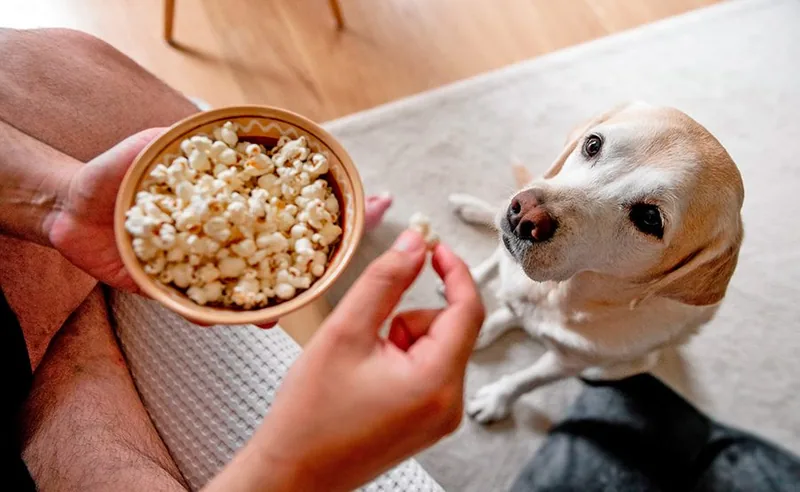
It sounds like a fantastic plan, spending the afternoon or evening on the couch at home with a good movie or show and enjoying some delicious popcorn. Our dog, as you'd expect, will stare fixedly at us to know what we're eating and, if possible, whether we'll give it some.
However, popcorn isn't the best food for dogs, though really it isn't for humans either. So generally, giving popcorn to our dog isn't a good idea, but there are always exceptions, which we'll explain below.
Popcorn Isn't Good for Dogs
Let's start by analyzing popcorn's nutritional properties for dogs, which are nonexistent. Corn is a cereal not very recommended for dogs, since they can't process it well, and it also has no positive nutritional value for them.
So on one hand, corn causes them poor digestion, and on the other, it doesn't nourish them. It doesn't matter whether the corn is ground or heated and popped — its nutritional value and digestibility remain just as poor for our dog, for any dog.
On the other hand, when we eat popcorn, we generally cook it with butter or oil, and salt or sugar, to flavor it. These fats are terrible for our dog, and sodium is also super harmful for dogs. This will cause short-term dehydration and long-term obesity in our dog. In addition, if they eat too much salt, they could even suffer fatal shock, ending their life.
When Can I Give Popcorn to My Dog?
Actually, our recommendation is to never give your dog popcorn, since it's not good for it, has no nutritional value, and it can't digest it well. However, we all know how persistent they can be with that "please give me a little" look.
In these cases, as long as the popcorn has no salt, sugar, butter, or any other additive (and of course never microwave popcorn), you can give it one. A while later, another, and so on until it has a small handful of five or six popcorns. In other words, a few plain popcorns won't kill your dog, though they're not beneficial for it either.
The problem is if you give it one, it will want another and another and another. That's why it's important to teach our dog not to beg for food while we're eating, something very simple. There are many healthy alternative snacks for dogs, such as fruits suitable for dogs or certain vegetables.
What to Do If My Dog Eats Popcorn by Accident?
First, we need to estimate the amount of popcorn it's eaten. If the popcorn has no additives, it may just have an upset stomach causing vomiting or diarrhea. But if the popcorn had fat or salt, then it's a veterinary emergency.
There's no effective home remedy to treat a dog that has eaten a lot of popcorn with salt, butter/oil, or sugar — it's absolutely necessary to see a vet so they can assess how serious it is and apply an appropriate, proportionate treatment.
Remember that salt (sodium) is so bad for dogs it's considered a poison. This means eating too much salt can seriously endanger its life. No matter what, you'll need to see the vet.
Healthy Alternatives to Popcorn
For our dog, there are many other healthy snacks we can give it while we're eating popcorn, so it will also be eating something and won't get jealous or give us that look only it knows how to give.
- Fresh or dehydrated fruit: There are many fruits like apple, pear, banana, or peach that dogs can eat and are delicious for them, as well as nutritious.
- Vegetables: You'll be surprised how many dogs love eating small pieces of, for example, carrot, which they love and are very nutritious. Discover all the vegetables dogs can eat.
- Homemade dog cookies: Commercial dog cookies can contain preservatives and ingredients not very beneficial for a dog. But instead, we can make our own dog cookies with this simple recipe.
As you can see, there are many alternatives to popcorn, so always prevent your dog from eating popcorn, and if it keeps asking insistently, give it one of these natural alternatives so it's happy.
IMPORTANT: This article is for informational purposes only and does not constitute veterinary, nutritional or behavioural advice. Every dog is different, and only your trusted vet can advise you on its specific needs.