 Care
Care
What Is Canine Distemper and How to Treat It
Distemper is a viral disease that mainly affects unvaccinated puppies and can be fatal. Since the virus itself can't be eliminated, treatment can only be supportive.
That's why prevention through a proper vaccination schedule is so essential. Below we'll explain the features of this disease.
What is canine distemper?
Distemper, also known as canine distemper, is a highly contagious disease caused by a virus from the Paramyxoviridae family, similar to the one that causes measles in people. It occurs worldwide, though cases are less frequent in countries where dogs are routinely vaccinated.
Not every dog exposed to the virus will show clinical signs, or they may show them very mildly. This depends on each dog's baseline health, which reminds us how important good nutrition, deworming, care, and vaccines are so the immune system can fight off the virus.
It especially attacks brain cells and cells on body surfaces such as the skin, the mucous membranes of the respiratory or digestive tract, the eyes, and so on. In each case, depending on which organs are most affected, we'll see different symptoms. What's more, the virus's presence weakens the animal, so secondary infections are common.

Symptoms of canine distemper
The clinical picture for this disease shows up roughly a week after contact with the virus. Its progression can be divided into several stages, which we'll detail in the following sections.
First stage
Fever appears, which can run high. The dog stops eating, is listless, and has watery discharge from the eyes and nose — which gives the disease its Spanish name (moquillo, or "runny nose") and can make us mistake it for a cold. The discharge eventually thickens and turns yellowish.
A dry cough also appears, along with fairly intense vomiting and diarrhea. The dog can become dehydrated. If we go to the vet at this point and follow the prescribed treatment, the dog may improve, but it will then relapse. This is the second stage of the disease.
Second stage
About 2-3 weeks after the first stage begins, the disease affects the brain. We'll notice this through symptoms like excessive drooling, chewing movements, or head shaking. Some dogs seem to have seizures, run in circles, fall down, or kick abruptly with all four legs.
When they recover from these episodes they seem disoriented, appear unable to see, and try to hide. Also characteristic is what's known as distemper myoclonus, a disorder involving rapid, rhythmic contractions in any muscle of the body, but especially in the head. Myoclonus appears both day and night.
In this state the dog will be in pain, which we'll notice from whimpering and howling. These contractions can persist even after the dog recovers, though more mildly.

Hard pad disease
Also known as hyperkeratosis of the paw pads and nasal epithelium. This is a form of distemper caused by a different strain of the virus that damages the skin of the paws and nose. This skin thickens and hardens. It appears around fifteen days after infection begins. It's an uncommon presentation.
How is canine distemper spread?
The distemper virus is released into the environment in all the bodily secretions of infected dogs. The most common route of infection is inhalation of the virus, since dogs typically sniff other dogs' urine and feces.
For this reason it's essential that unvaccinated pets not spend time in areas visited by other dogs whose health status or vaccination history is unknown. A recovered dog can keep shedding the virus for about 4-6 months.
How is canine distemper diagnosed?
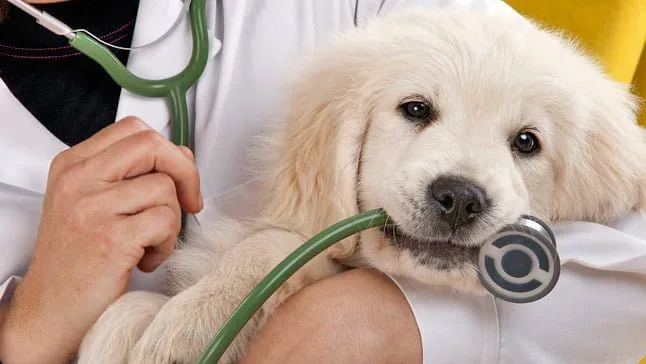
A blood sample can be taken to check for the presence of the virus. The vet sends it to an outside lab, where several techniques can be used, or uses a rapid test kit right at the clinic, taking a sample from the conjunctiva or nose.
That said, false negatives can occur, so the clinical picture, its progression, and the response to treatment also need to be taken into account. At minimum, blood tests will be needed to check the dog's overall condition.
When brain damage appears and there are other conditions that could be causing it, a cerebrospinal fluid analysis — the fluid that bathes the brain and spinal cord — can be used to help with diagnosis.
Which dogs does canine distemper affect?
Although any dog could potentially catch distemper, those at highest risk of getting sick are all the ones that haven't been vaccinated. That's why this is a disease we'll see more often in puppies, whose immune systems are still immature and who haven't completed their vaccination schedule.
Within this group, the highest incidence of the disease is in unvaccinated puppies between 6 and 12 weeks old. That's because this is when the antibodies passed on by the mother start to wane, and the necessary vaccine doses haven't been completed yet.
It's important to know that this disease is specific to dogs. So although it's highly contagious between them, other animals living with the sick dog won't be affected, even with close contact. The exception is ferrets. People don't get this disease.

Treating canine distemper
The first thing to know is that there are no home remedies for distemper. In fact, this disease requires intensive veterinary treatment. It's also important to see the vet at the first symptom. Any "cold" in an unvaccinated puppy should be suspected as distemper.
Since the virus itself can't be killed, the goal is to provide supportive treatment: intravenous fluids to keep the dog hydrated, antibiotics to prevent secondary infections, and medications aimed at controlling the various symptoms that appear, such as vomiting, diarrhea, or seizures.
Tips for caring for a dog with distemper
Treatment usually starts with hospitalizing the dog to receive specialized care and monitoring. If the animal improves, the vet will discharge them, and we'll be the ones continuing their care at home.
Here are the recommendations to follow:
- Of course, give any medication prescribed by the vet exactly as directed and follow their instructions.
- It's normal for appetite to be reduced, so we can offer the dog wet food specially formulated for recovering animals, or a homemade meal they like, such as chicken or cooked ham, always without salt or sauces.
- Warming up the food encourages a dog with a poor appetite to eat.
- This isn't the time for baths, though we do need to spot-clean the dog if they get soiled with vomit, diarrhea, discharge, or food.
- Keep them on a comfortable bed, at a suitable temperature, away from drafts or cold.
- If there are other unvaccinated dogs at home, we need to prevent contact by isolating the sick dog.
- Disinfect bedding, utensils, and surfaces. The virus is easily deactivated in the environment and can only survive a few weeks in cold climates, at temperatures between 0-4°C (32-39°F).
What's the prognosis for canine distemper?
We know that distemper is a serious disease that can be fatal for our dog. But it's impossible to say whether a sick animal will recover or not, since that depends on many factors.
When treatment was started, how virulent the strain is, the dog's age, its vaccination status, and how its immune system responds are the factors that influence the prognosis. Neurological involvement worsens the prognosis.
How to prevent canine distemper
Given how serious this disease is, the impossibility of eliminating the virus, and its potentially fatal consequences, the best option is to prevent it rather than have to cure it. To do this, it's essential to vaccinate our dog following the schedule set by the vet and adapted to their circumstances.
The efficacy of the distemper vaccine is very high. All puppies should be vaccinated, and adults need boosters at least every three years, though this vaccine is usually included in the annual booster. That said, no vaccine is 100% effective. Vaccinated dogs could still catch distemper, though in a milder form.
How does the distemper vaccine work?
Like any other vaccine, its mechanism is based on presenting the virus to the body, but in a weakened form. This is achieved using viral fragments, inactivated virus, or live virus. When the vaccine is given, the animal's immune system reacts by attacking the pathogen administered and creates memory antibodies.
So, if the dog were naturally exposed to the virus — in this case distemper — its immune system, which already has specific cells ready to fight it, would immediately respond. Without the vaccine, a first natural exposure to the virus can kill the dog if its body doesn't have time to build these defenses.
A dog that has recovered from distemper should also be vaccinated, because having had the disease only guarantees protection for two or three years. So they could catch it again.
Bibliography Carlson and Giffin (2002): Manual práctico de veterinaria canina. Madrid: Editorial el Drac. Centellas and Raurell (2018): Moquillo canino neurológico. Portal Veterinaria, August 14. Cortadellas and Tabar (2012): Enfermedades infecciosas en el perro y gato. ¿Cómo las diagnostico? ¿Cómo las descarto? Avepa Formación Continuada: Actualización en diagnóstico y control de enfermedades infecciosas en el perro y gato. Creevy, Kate: Canine Distemper Overview. https://www.msdvetmanual.com/generalized-conditions/canine-distemper/canine-distemper-overview Martella, Elia and Buonavoglia (2008): Canine distemper virus. Vet Clin North Am Small Anim Pract. 2008; 38: 787-797.
IMPORTANT: This article is for informational purposes only and does not constitute veterinary, nutritional or behavioural advice. Every dog is different, and only your trusted vet can advise you on its specific needs.