 Care
Care
CEA - Collie Eye Anomaly
Collie eye anomaly is a very common breed-related disease that can have serious consequences if not caught in time. Because of this, it's important to know about it and understand how it affects our dogs.
At Soyunperro, we'll show you which dogs can get it, how it affects their life, how to know if your dog has it, and the best way to treat and prevent it.
- Don't miss: Symptoms of blindness in dogs
What Is Collie Eye Anomaly?
Collie eye anomaly, or CEA, is a congenital syndrome, meaning puppies are already born with this condition. It's also hereditary — the main responsible gene is on chromosome 37 and is transmitted through simple autosomal recessive inheritance.
This is a bilateral choroidal hypoplasia, meaning there's thinning of the vascular tissue at the back of the eye. It's normally accompanied by other changes that vary from one eye to another, such as abnormalities in the optic nerve and the sclera.
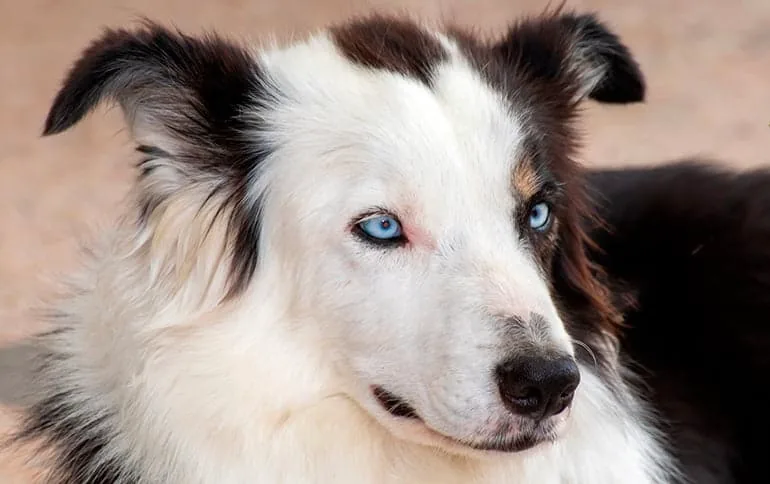
The Border Collie is the breed most affected by this disease, which is why it's named after it, but it's not the only one. It's also been described in the Shetland Sheepdog, Australian Shepherd, Lancashire Heeler, Nova Scotia Duck Tolling Retriever, and crosses of all these breeds.
What Happens to Dogs With CEA?
Generally, puppies born with this condition look completely normal. Most commonly, the disease doesn't progress, in which case the puppies won't have significant consequences for the rest of their life nor suffer any pain.
In some cases, there can be partial vision impairment, and in the most severe cases, the disease can involve retinal detachment and severe colobomas, which will result in blindness.
How to Know If a Dog Has Collie Eye Anomaly?
To know whether your puppy has CEA, it's very important for a veterinary ophthalmologist to give it a complete exam at 6-8 weeks of age. It's key for this to happen at a young age, since the area tends to darken over time and lesions become masked, giving it an apparently normal appearance.
If your dog is an adult, there's also the possibility of running DNA tests using a blood or saliva sample. Genetic tests are now available in many countries, and this is a reliable way to know whether your dog has CEA.
How Is CEA Treated?
Unfortunately, there's no cure for the disease, but if diagnosed at a young age, we can prevent it from getting worse. This is a highly prevalent condition, since if breeders don't run routine eye exams on their puppies, it's easy to overlook.
To prevent it, strict breeding control needs to be done. Never breed affected individuals, even if only mildly, since it can result in severely affected litters. So, if you buy a puppy, make sure it's from responsible breeders who are 100% free of the disease, or you can also adopt and spay/neuter.
Bibliography Anomalía ocular del Collie. (2019). Australian Shepherd Health & Genetics Institute. Retrieved from http://www.ashgi.org/home-page/genetics-info/eyes/collie-eye-anomaly/cea-es F. C. Stades & K. C. Barnett (1981) Collie eye anomaly in Collies in the Netherlands, Veterinary Quarterly, 3:2, 66-73, DOI: 10.1080/01652176.1981.9693799 Palanova, A. (2016). Collie eye anomaly: A review. Veterinární Medicína, 60(No. 7), 345-350. doi:10.17221/8381-vetmed Walser-Reinhardt, L., Hässig, M., & Spiess, B. (2009). Collie Eye Anomaly in Switzerland. Schweizer Archiv Für Tierheilkunde, 151(12), 597-603. doi:10.1024/0036-7281.151.12.597
IMPORTANT: This article is for informational purposes only and does not constitute veterinary, nutritional or behavioural advice. Every dog is different, and only your trusted vet can advise you on its specific needs.