 Care
Care
Colds in Dogs — Symptoms and Treatment
Just as humans catch colds, dogs can also come down with one, which can be more or less serious depending on its symptoms. Mild ones usually clear up within a week, but severe cases need veterinary attention.
If your dog is coughing or sneezing, or you have a cough, it may have a cold. That's why at Soyunperro we explain what you need to know, what treatments exist, and everything you should know.
How to Know If My Dog Has a Cold — Symptoms
If you've made it this far, it's because you suspect your dog may have a cold. Colds in dogs occur from an infection or inflammation of the respiratory system and present with these recognizable symptoms:
- Coughing or sneezing
- Excess mucus in the nose or throat
- Loss of appetite, eating less or not eating
- Sometimes they have a fever
- Lethargy, watery eyes, tiredness
It's not common for a dog to show every symptom during a cold — usually it will only show some. Though coughing or sneezing are very common and normally the first to appear.
How Does a Dog Catch a Cold?
Dogs catch colds the same way humans do, through contact with other dogs with a cold or through a virus and/or bacteria causing inflammation and/or infection in their respiratory system.
If our dog gets cold or is very exposed to drafts, it's very likely to catch a cold on its own. If it plays with a dog that has a cold, it can catch it from that dog and get sick.
Actually, it's very easy for them to catch colds, though luckily they're usually mild.
Home Remedies to Treat a Canine Cold
Colds are very common in dogs — it's a condition they normally catch once or twice a year (mainly during autumn months, due to the temperature change), and they're normally mild colds.
This type of cold may not require medication, since sometimes, if we catch the cold early, it can be cured with a few simple home remedies:
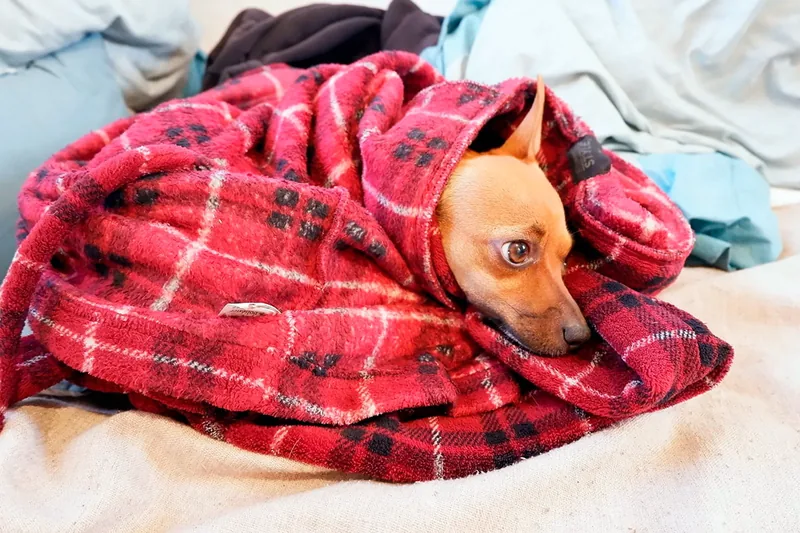
- Prevent the dog from getting cold, bundling it up if it goes for a walk in winter, and putting its bed somewhere warm at home.
- Don't bathe it while it has a cold, since it could catch a further chill and get worse (always dry it well when you bathe it).
- Rest a lot, avoid long walks or exercise (especially if it's cold).
- Don't breathe in smoke, avoid dusty areas or going to places where people smoke.
- Give it a bit of honey.
- Feed it well (with its head up) and always have water available for it to drink.
With this simple treatment, we can help our dog get over the cold, as long as it's caught very early and the inflammation and/or infection hasn't spread too much. Otherwise, these remedies may not be enough and it may need anti-inflammatories and/or antibiotics.
How to Know If My Dog Has a Severe Cold?
If our dog has a fever, doesn't improve over the following days, or is listless, we need to see the vet for a check-up so they can prescribe the necessary medication. The same applies if it has a very deep cough for several days, since, just as happens with humans, it will have pain and discomfort every time it coughs.
If our dog is under a year old, is elderly, or has some disease and catches a cold, we'll also need to see the vet, since its immune system will be weaker than during the time period between these life stages.
Some colds are more serious than others, and in these cases, veterinary attention is always necessary — from a virus affecting a weak immune system due to being a puppy, elderly, or having another chronic/systemic disease.
IMPORTANT: This article is for informational purposes only and does not constitute veterinary, nutritional or behavioural advice. Every dog is different, and only your trusted vet can advise you on its specific needs.