 Breeds
Croatian Sheepdog
The Croatian Sheepdog is far more than a herding dog: it's a companion with an intelligent gaze, a jet-black coat, and a loyalty forged over every shared workday. Bred to make independent decisions while guiding flocks across the Balkans, today it brings that same devotion and watchfulness home, where it needs an active family that understands its energy and its strong emotional bond.
What the Croatian Sheepdog Is Like
The Croatian Sheepdog is a medium-sized dog, standing 40 to 50 cm at the withers in both males and females, according to the official Fédération Cynologique Internationale (FCI) standard. Its weight ranges from 13 to 20 kg in adult dogs, with a compact, muscular build that gives it exceptional agility on uneven terrain.
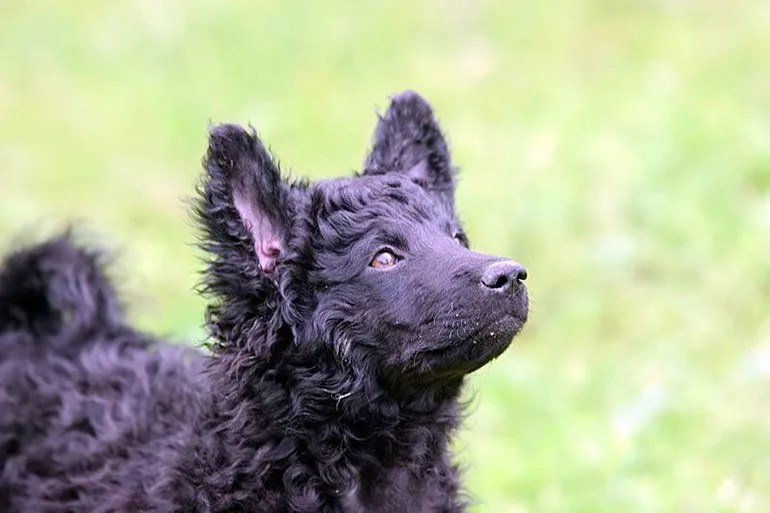
Its most distinctive trait is its dense black coat, short to medium in length, which may show small white markings on the chest or toes. This hardy coat protects the skin from harsh weather without accumulating excess dirt. The head is well proportioned, with dark, expressive eyes, and the chest is deep, a relevant anatomical detail for its health. Its life expectancy runs between 12 and 14 years with proper care.
Where Does the Croatian Sheepdog Come From?
The breed was developed in Croatia as a working herding dog, selected over generations to control flocks in demanding conditions with minimal human supervision. Its origin is tied to the region's livestock needs, where physical stamina and independent decision-making were essential qualities for moving livestock across hills and rugged pastures.
The official standardization process aimed to preserve those functional abilities and set the Croatian Sheepdog apart from other regional Balkan herding breeds. Although its population remains small outside its home country, more and more dogs live as companion pets in urban settings, without losing their watchful, hardworking essence.
The Croatian Sheepdog's Temperament
It's a dog that's naturally alert and watchful: its pastoral heritage required it to detect threats and manage livestock movement without constant instructions. Today that independence shows up as a highly observant personality, one that assesses each situation before acting. With family it forms deep loyalty, but don't expect instant warmth with strangers; its selective caution isn't shyness, but a natural filter before it grants its trust.
Its herding instinct can show up at home as attempts to gather children or other pets, sometimes with small nips at the ankles. Channeling this drive with directional games or obstacle courses lets the dog manage its energy without suppressing its nature. Although it's capable of deciding for itself while working, at home it needs to feel like an active part of the family group to stay balanced.
The strong bond it forms with its owners is its great strength, but also its main vulnerability. If it doesn't learn to handle being apart, that attachment can turn into separation anxiety, with signs like excessive panting, continuous howling, or destroying objects. These behaviors signal real stress, not bad temperament.
Unique Traits of the Croatian Sheepdog
Few herding breeds have a completely black coat as an almost exclusive trademark. This coat isn't just for looks: its dense, semi-long texture acts as a natural barrier against rain and low vegetation, an adaptation perfected over centuries of work in Croatian fields.
Another quirk is its ability to make independent decisions while herding, a working intelligence that sets it apart from working dogs more dependent on constant commands. Its deep chest — an anatomical trait inherited from selection for stamina — also gives it great lung capacity, but calls for specific health precautions every owner should know about.
Health and Care for the Croatian Sheepdog
The main health risk tied to its build is bloat, encouraged by its deep chest. To prevent it, it's recommended to split meals into two daily portions and avoid intense exercise right after eating. This isn't a breed especially prone to serious hereditary diseases, but regular veterinary follow-up is essential.
As for exercise, it needs at least an hour of daily physical activity, combined with mental stimulation that channels its herding instinct. Tracking games, agility, or advanced obedience sessions are excellent allies. Its coat needs weekly brushing to remove dead hair and maintain its natural shine, with no need for complex professional grooming.
Preventing separation anxiety starts with a predictable schedule and gradual training for short absences from puppyhood. A Croatian Sheepdog that feels secure and exercised is a stable dog, quiet at home, and deeply connected to its family.
IMPORTANT: This article is for informational purposes only and does not constitute veterinary, nutritional or behavioural advice. Every dog is different, and only your trusted vet can advise you on its specific needs.