 Care
Care
Dehydration in Dogs: Symptoms and Treatment
Signs of dehydration vary widely, and not catching them in time can be a serious problem for the dog's health. Delayed skin tenting, sunken eyes, or chronic fluid loss are some signs that should put us on alert.
Good observation will help us detect this symptom, letting us prevent the possible consequences dehydration brings. Let's take a detailed look at everything we need to know.
What Is Dehydration?
We should remember that, just as most of our own body volume is water (about 60%), so is a dog's. Dehydration involves the loss of fluids and, with them, electrolytes, which causes the dog's body to become imbalanced, with different consequences depending on the percentage of dehydration.
Most fluid is found inside the cells (intracellular). A loss of this fluid toward the extracellular space could be defined as dehydration, as could the loss of that extracellular fluid to the outside.
Electrolytes are responsible for proper cellular osmosis, as well as the proper functioning of many organs in the body. A severe imbalance in these could have serious consequences. Some electrolytes are calcium, phosphorus, potassium, and magnesium.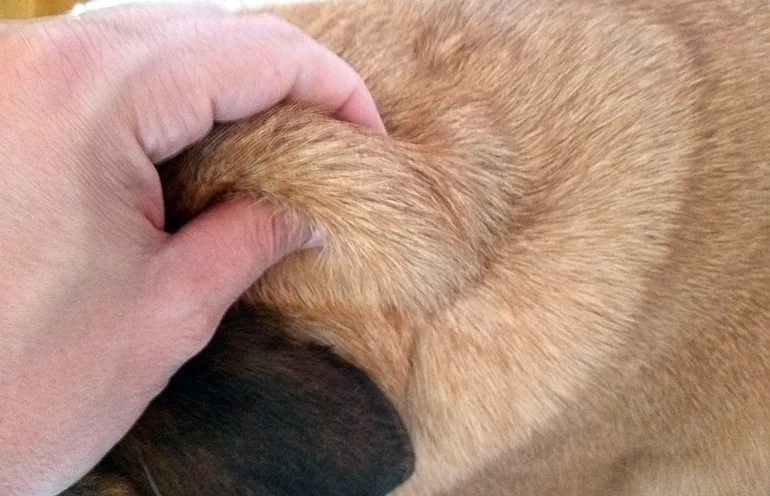
What Causes Dehydration in a Dog?
Generally, a dog will normally develop dehydration when it chronically loses water through processes such as vomiting, diarrhea, or bleeding. As will a dog with no appetite over the course of several days, since it won't take in enough water or food.
There are several conditions that can leave a dog dehydrated. Here we cover some of them:
- Diarrhea
- Vomiting
- Heatstroke
- Poisoning
- Bleeding
- Oral (or any other) conditions that can make a dog refuse to eat/drink
Symptoms of Dehydration in Dogs
Knowing the signs of dehydration is crucial for acting quickly. Not only can we help our dog and see a vet in time, but we can also discover a possible disease we didn't know it had.
Symptoms showing dehydration:
- The most telling sign is a delay of more than two seconds in the skin returning to normal after pinching a fold (for example, on the back). We'll explain this better in the next section of the article.
- Dry mucous membranes (gums, for example).
- Absence of drooling if your dog belongs to a breed that drools a lot.
- Concentrated urine.
- Sunken eyes.
The consequences of a dehydrated dog can show up within hours in the case of puppies, putting their life in immediate danger. In adult dogs, dehydration may show up within a few days and have consequences such as acute kidney failure, among others. In any of these cases, see the vet as soon as you notice it.
How to Know If a Dog Is Dehydrated?
Building on the previous point, we'll describe two simple methods we can use to check whether our dog is dehydrated:
- Skin recovery time: stretch and pinch the skin over your dog's nape. If it returns to its shape quickly (in less than two seconds), it's not yet dehydrated. On the other hand, if the skin takes more than two seconds to return to its place or stays wrinkled, there's dehydration.
- Dehydration confirmed in the mucous membranes: take any of your dog's lips and pull it back to observe the gums. Generally, gums should be moist and bubblegum-pink in color. In cases of dehydration, they tend to be dry.
However, depending on the degree of dehydration, the consequences will be more or less severe. Here's a useful table for knowing the percentages and understanding that dehydration is a very serious condition if not treated in time.
How to Treat a Dehydrated Dog
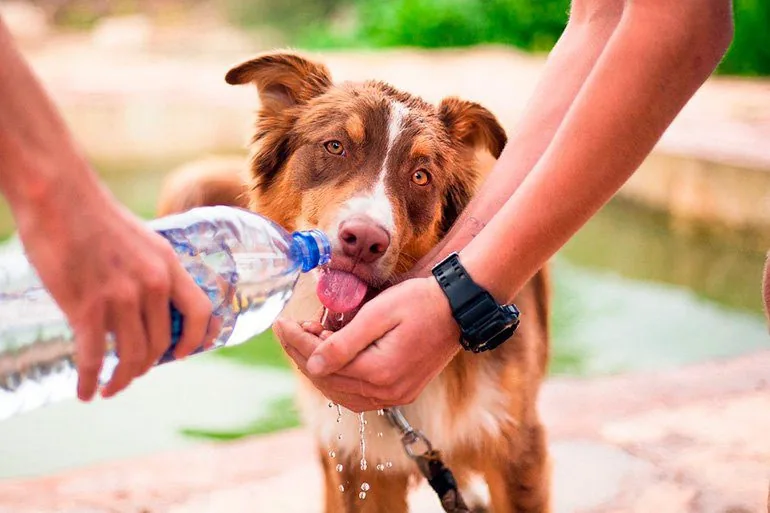
If you've noticed symptoms of dehydration and think your dog is dehydrated, the most important thing is to see a vet to locate the cause and treat the dehydration. Meanwhile, there are some actions you can take that will help your pet. For example, if it's suffered heatstroke in summer, try to put it somewhere cool or shaded and offer it water, as well as cooling it down by pouring water over it. Our advice is that, in cases of dehydration, you take it to the vet.
The best therapy for dehydration (and any other condition that may result from it) is giving intravenous fluids. This fluid helps reduce dehydration and provides electrolytes, vital for recovery. If there's a parallel condition, its symptoms will be treated too.
The amount of fluid will depend on the dog's size, the losses, and the level of dehydration (in percentage) it has. Normally, these cases usually require hospitalization to extend the hours and properly hydrate the animal.
IMPORTANT: This article is for informational purposes only and does not constitute veterinary, nutritional or behavioural advice. Every dog is different, and only your trusted vet can advise you on its specific needs.