 Care
Care
Dipylidium Caninum and Tapeworm in Dogs
There are many ectoparasites, or external parasites, that can affect our pet, including fleas. For example, those of the genus Ctenocephalides felis and canis are intermediate hosts between the tapeworm (Dipylidium caninum) and humans.
Tapeworm is the common name for the cestode (flatworm) causing this disease. It occurs in our dog when it eats a flea that has ingested this cestode. At Soyunperro we'll cover the general aspects of this disease.
The Tapeworm's Cycle and Transmission
Tapeworm causes this disease, which occurs in dogs (though it can also affect children, so it's considered a zoonosis) after ingesting a flea (less commonly lice) carrying the parasite inside it.
The cycle starts when flea larvae feed on organic matter or dog feces, ingesting what are known as proglottids (containing eggs inside), which in turn have been expelled by a definitive host such as a dog through its feces. When the dog eats this flea, the adult cestode develops inside it.
Adult Dipylidium caninum are found in the infected dog's small intestine. They're between 15 and 70 cm long and attach to the intestinal mucosa. Dogs can start shedding proglottids as soon as 2 to 3 weeks after infection. In the absence of appropriate intermediate hosts, the life cycle can't continue.
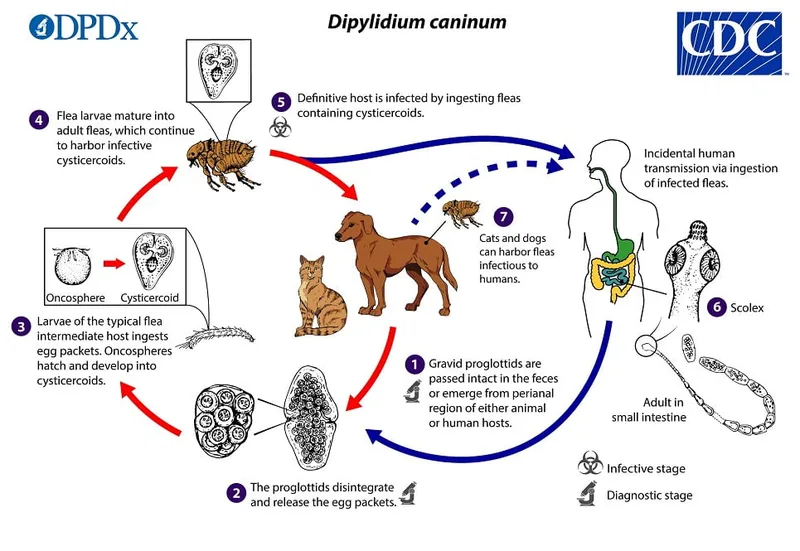 Image: https://www.cdc.gov/dpdx/dipylidium/index.html
How to Know If My Dog Has a Tapeworm? Symptoms
Dipylidium caninum doesn't usually cause a significant disease with extremely frequent, notable symptoms in dogs. It's usually asymptomatic in our dogs.
When signs do appear, they can include:
- Abdominal pain.
- Vomiting
- Diarrhea
- Mild anal itching associated with proglottids (segments of the cestode or flatworm) in the perianal area.
In humans, infections occur occasionally, mainly in children who get infected by swallowing intermediate hosts such as fleas.
Diagnosis
Seeing proglottids (segments of the cestode) in the perianal area, in the stool, or around the hosts, along with the presence of fleas and/or lice, makes diagnosis easier.
The eggs released by the proglottids can also be observed by the vet under a microscope using the fecal flotation technique (stool analysis).
However, since proglottids aren't evenly distributed in feces and the eggs don't float consistently, fecal flotation alone is insensitive for diagnosing tapeworm infection in dogs.
Treatment and Prevention
Praziquantel is the drug of choice for cestode infections, being the only drug used on a large scale for human schistosomiasis.
In veterinary species, oral, topical, and injectable praziquantel formulations are available for use against cestodes and trematodes. It shouldn't be used in dogs weighing less than 2 kg. Sometimes a single dose isn't enough, and treatment may need to be repeated after a few weeks.
Controlling this parasitic infestation in dogs requires both treatment and prevention. By regularly deworming animals against external and internal parasites, both are being done at once. The best prevention is controlling fleas on pets and in the environment.
This can be done through several methods such as spot-ons, collars, and pills. It's more frequent and necessary in spring and summer, but recommended year-round.
Every animal living together needs to be treated at the same time to prevent reinfestation. Thorough cleaning is essential to prevent recurrence and spread of the infestation after treatment. Any area that could be soiled with feces or other waste needs to be thoroughly cleaned and disinfected.
Always pick up your dog's feces, especially in public areas. Collect them with a bag and dispose of them in the trash. Also prevent your dog from eating dead animals.
This disease doesn't cause major symptoms, but your dog will be more relieved if we get an anti-parasite product and treat it. However, it's always better to prevent than to cure, so I recommend using preventive anti-parasite products year-round to avoid this and other possible diseases transmitted by ectoparasites or external parasites.
Bibliography Information provided by the parasitology course at Universidad Alfonso X el Sabio and by the CAPC (Companion Animal Parasite Council)
IMPORTANT: This article is for informational purposes only and does not constitute veterinary, nutritional or behavioural advice. Every dog is different, and only your trusted vet can advise you on its specific needs.