 Breeds
Doberman
The Doberman is far more than an imposing silhouette and an alert gaze. Beneath its athletic, elegant bearing hides a companion of ironclad loyalty, sharp intelligence, and an emotional balance that surprises anyone who truly gets to know it. Born in 19th-century Germany as a tireless protector, today it comes in two breeding lines with distinct nuances, but always with a heart fully devoted to its family.
Athletic Silhouette and Noble Bearing
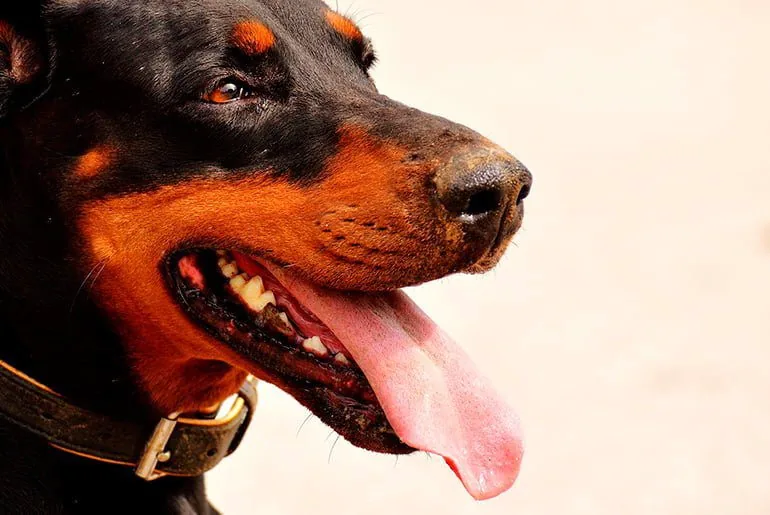
The Doberman projects a square, muscular, clean-lined image, built for agility and endurance. Its chest is deep and its belly tucked up, giving it a functional elegance that enhances every movement. The coat, short, dense, and close to the body, needs barely any maintenance and accentuates a powerful yet streamlined build.
Under the official American Kennel Club (AKC) standard, recognized colors are black and tan, brown (red) and tan, blue and tan, and the less common fawn and tan. Tan markings appear clearly defined over the eyes, on the muzzle, chest, legs, and under the tail. As for size, males stand between 66 and 71 cm at the withers and weigh 34 to 45 kg, while females fall between 61 and 66 cm and weigh 27 to 41 kg. Its wedge-shaped head, with a subtle stop and dark eyes showing a permanently watchful expression, rounds out a look that conveys nobility and determination. The breed's life expectancy runs between 10 and 13 years.
The Tax Collector Who Sculpted a Guardian
The Doberman's origin is tied to a very specific need: personal protection. In the late 19th century, Karl Friedrich Louis Dobermann, a tax collector and night watchman in the city of Apolda, Germany, wanted a dog to escort him on his often dangerous rounds. His goal was to create a guardian capable of immediate deterrence, combining intimidating physical power with a fast response and absolute loyalty.
To establish the breed, Dobermann selected dogs from various sturdy, firm-tempered breeds. Although no exact records exist, it's believed the mix included the Rottweiler, the German Pinscher, and the Weimaraner, among others. Over time, breeding was refined to strengthen not only the protective instinct but also mental stability, which allowed the Doberman to go from being an individual protector to taking on official roles in security forces and urban patrol work.
Unwavering Loyalty and an Analytical Mind
Far from the stereotype of an aggressive, impulsive dog, a properly socialized Doberman is a well-balanced animal, extremely loyal, and deeply bonded to its family. Its intelligence, among the most notable in the dog world, lets it read situations quickly and respond proportionately, acting more like a sensible protector than an unpredictable reactor.
That said, it's essential to understand the two current breeding lines before choosing a dog. The European Doberman keeps to the original working standard: it has a sturdier structure, thicker bones, and a more intense protective instinct. It reacts faster to perceived threats and needs an owner experienced with guard breeds. By contrast, the American Doberman has been bred with more focus on conformation and companionship, resulting in a more streamlined build, finer lines, and a softer expression, and it tends to be more sociable in everyday settings.
Unique Traits of the Doberman
Few breeds can claim such fast learning ability. The Doberman consistently ranks in the top 5 for working intelligence and obedience according to the most widely cited canine rankings, which explains its excellent performance in disciplines like IPO, competitive obedience, and substance detection.
On the genetic front, a scientific study from the Royal Veterinary College has identified mutations in the TTN, PDK4, and RNF207 genes associated with dilated cardiomyopathy in UK Dobermans. This finding is a crucial step toward letting breeders select dogs with lower predisposition to this serious heart disease, improving the health of future generations.
Another distinctive trait is its historic image with cropped ears and a docked tail, a functional practice meant to prevent grip points during fights or interventions. Today, most European countries ban these cosmetic modifications, and the natural Doberman, with dropped ears and a long tail, is gaining growing acceptance as the breed's most authentic expression.
Health and Routine for a Domestic Athlete
The Doberman is a working dog that needs intense daily exercise and constant mental stimulation. Short walks aren't enough; it needs running sessions, structured play, or dog sports that channel its energy. A bored Doberman can develop destructive behavior or anxiety, which makes activity an essential part of its care.
On the health front, the breed has a predisposition to several hereditary conditions. The most concerning is dilated cardiomyopathy (DCM), a heart muscle disease that can develop silently and lead to heart failure. Von Willebrand disease, a clotting disorder that requires testing before any surgery, is also relevant. Other conditions to watch for include hip dysplasia and Wobbler syndrome, which affects neck stability.
Its short coat needs barely more than weekly brushing, but it does make the dog sensitive to extreme temperatures. In cold climates it needs warm clothing for walks, and in summer it should avoid exercise during the hottest hours of the day. With regular vet check-ups, quality food, and a structured family environment, the Doberman can enjoy a full, active life throughout all its years with its people.
IMPORTANT: This article is for informational purposes only and does not constitute veterinary, nutritional or behavioural advice. Every dog is different, and only your trusted vet can advise you on its specific needs.