 Care
Care
Dog Beds: Which Is the Best?
Even though many dogs will spend hours lying on our sofa or bed, it's a good idea for every dog to have their own bed as a calm, restful space just for them.
We have an enormous range of dog beds available in all sizes, shapes, and materials. So we don't get lost among so much variety, below we go over the different options and their most notable features.
Which is the best bed for my dog?
First off, to choose a bed we need to be clear on what it's for and who it's for. So it should above all be comfortable, but also suited to the dog's traits, and very easy to maintain and wash.
To choose it, we'll keep these tips in mind:
- The dog's age. Puppies explore their surroundings using their mouth, which makes it very likely they'll end up destroying their own bed. Senior dogs, meanwhile, may experience urinary incontinence.
- The season. We can't use the same plush bed at freezing temperatures as we would above 25°C.
- The dog's comfort. They need warmth from below, so it's not about covering them with blankets on top, but about properly insulating them from the floor.
- Size. Both of the space we have available and of the dog itself. The bed should let them curl up or stretch out completely.
- Material. It shouldn't just be washable — we should also consider its thickness, texture, and whether or not it repels hair and stains.
- Breathability. If you pay attention, when the dog gets up after sleeping you'll see that the part of the bed touching the floor, and the floor itself, are damp from perspiration. To prevent this, there are elevated beds or ones with a waterproof base.
- Indoor and outdoor. Dogs who live outdoors also need a bed, which should be placed somewhere sheltered and protected from the elements. It can be placed inside doghouses, carriers, or plastic crates.
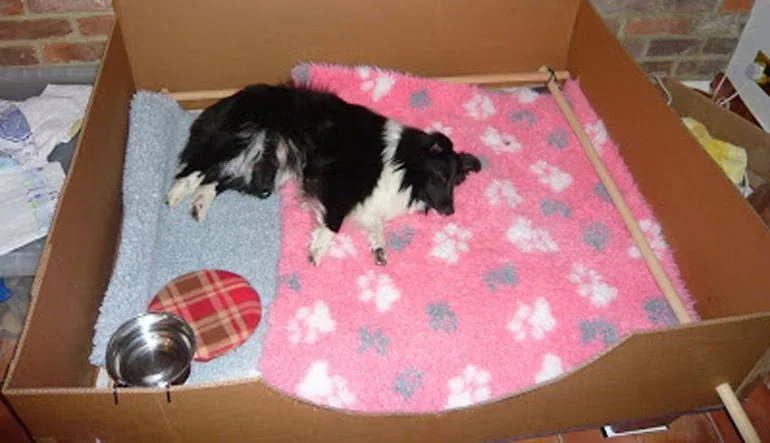
Homemade bed with a cardboard box
An exploring puppy can destroy their bed, and so can a dog with behavioral issues. In cases like these, before considering buying a new bed, we can go with the classic cardboard box with a blanket, towel, or old sweater of ours, so the newcomer starts feeling like part of the family.
Once we've confirmed the dog doesn't bite their bed, we can consider choosing among the market's options. We'll start with the simplest ones until we're sure the new bed won't get damaged.
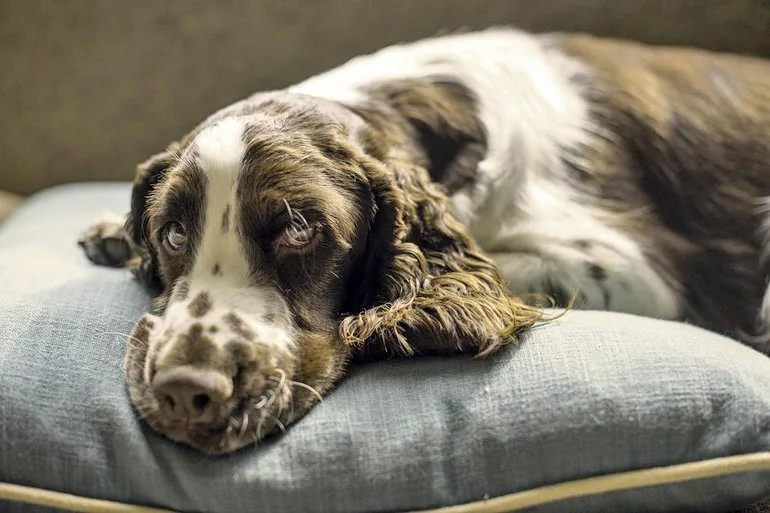
Cushion-style beds
These are among the most common models. They're usually made of foam and have a central area surrounded by a raised edge that makes them cozier. The shape can be round, rectangular, or square. Thickness will vary depending on filling quality. They're machine washable. Some have removable covers, others are one piece.
Available in every size, they're an affordable, basic option. We can keep a couple of them to place in different spots or as spares. They work for all types of dogs and climates.
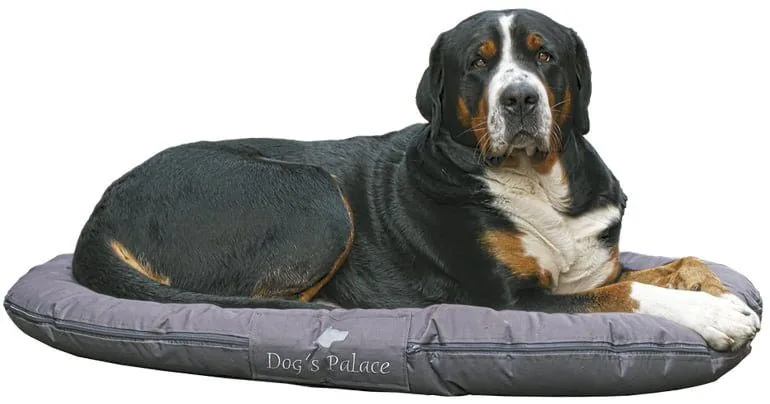
Mattress-style bed
Mats are another option similar to the previous one in terms of variety. Rectangular in shape, they come in different sizes and thicknesses. Since they lack a raised edge, they're widely used by large dogs, since it lets them stretch out comfortably.
They're also often removable, so they're easy to machine wash, and many models have waterproof fabric on the whole side that touches the floor. For hotter months, if our dog needs it, we could get a cooling mat.

Crib-style bed
The classic crib consists of an oval, rounded, or rectangular fabric frame with a removable cushion of the same material inside. Both the frame and the cushion are washable. It lets the dog sleep curled up, although many dogs have the habit of stretching out over the edges, which end up getting deformed.
The frame of these cribs can also be plastic. We'll complete the bed by adding whatever soft material we prefer. This type of bed is very useful for puppies or sick animals, since the plastic can be disinfected without any problem. Cribs made of other materials, like wicker, also exist.
Blankets as a dog bed
Thicker blankets can work as beds placed directly on the floor. Thinner ones, on the other hand, are used on sofas or beds so the dog can use them but without covering them in fur. They're another staple in homes with dogs.
We can find thermal blankets for cold weather and cooling ones for hot months. Rollable blankets are also useful, letting us move them around easily. There are also dog rugs and mats that can serve a similar purpose.
Igloo beds
These types of beds are similar to cribs, with the difference that they're also enclosed on top, like a cave. They're mostly used by small dogs. Some dogs end up sleeping on top of them instead of inside, which also ends up deforming them. They're machine washable.
Furniture
In recent years, actual furniture for dogs has come onto the market. We can buy different types of sofas and beds specifically designed for them, and in every size too.
If we go with one of these furniture pieces, we should make sure they're easy to wash. The main downside is usually the high price. They're only suitable for dogs who don't destroy things.

Hammocks
Made of a leg-based frame with fabric stretched over it, this type of bed serves the purpose of keeping the dog off the floor. We'll find them in different sizes, and the legs are usually foldable. They're not very recommended for dogs with mobility issues, since getting on and off could be uncomfortable for them.
And now that you know all the types of beds available for a dog, which one will you choose for your furry friends?
IMPORTANT: This article is for informational purposes only and does not constitute veterinary, nutritional or behavioural advice. Every dog is different, and only your trusted vet can advise you on its specific needs.