 Care
Care
Dog Crates — When and How to Use Them
Although at first glance having a crate for our fur baby might seem outrageous, the truth is that if we get it used to it from puppyhood, it will become a real home for it. As long as we know how to use it correctly.
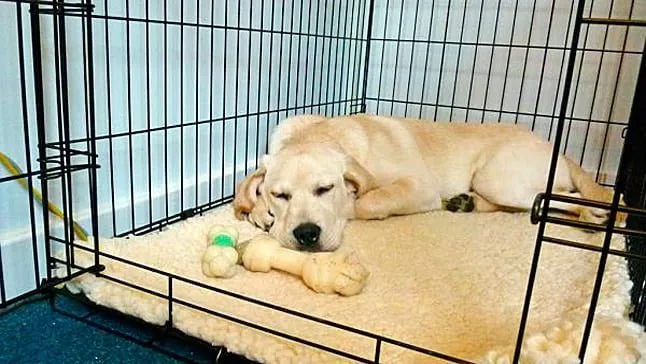
Dog crates aren't a means of confinement or a punishment zone, but a home. Surprised? By the time you finish reading you'll understand that this is very real. Dogs are den animals — that is, they love finding a cave-like shelter to hide in.
This instinct comes from their ancestors, wolves. And this doesn't mean, in any way, that we should leave our dog locked in a crate all day... the ideal, in fact, is to leave it open so it can go in whenever it wants. Let's take a detailed look at how and when to use them.
Dog Crates or Carriers?
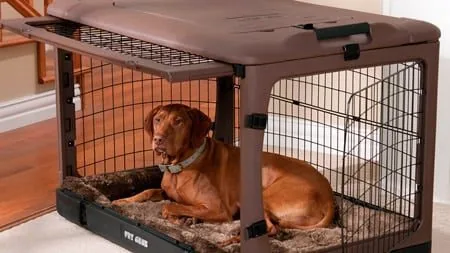
We shouldn't confuse these two words — a dog crate is one we can place inside our home, which becomes our dog's resting area. A carrier is a crate for transporting our dog from one place to another, for example when we travel by car.
There are crates of different sizes, for small, medium, and large dogs. Choosing the right size is essential for our dog to feel comfortable in it. There are even crates that are open on top (without a roof), which are usually foldable, so we can use them only when needed.
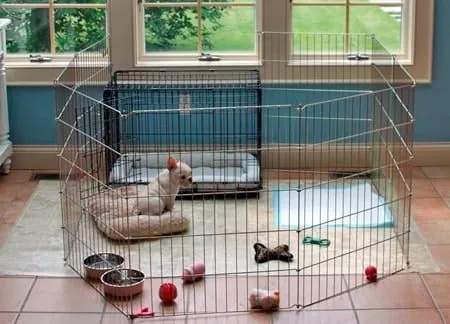
Foldable crates aren't really used as a den — their purpose is more about confinement. For when there are a lot of puppies, or when we want to keep our dog from leaving a certain area.
A crate should be a place where the dog can go in, lie down, and rest — a kind of den or cave for it. In fact, it's best for the crate to be covered with a cloth or blanket on all sides except the entrance, so it's dark inside.
How Do You Get a Dog to Use Its Crate?
Obviously, the ideal is to start using the crate from puppyhood, so they get used to it without any fear. Although adult dogs can also learn to use it, with a bit more patience.
The first thing we should do is set up the crate, place it somewhere fixed, and put a blanket or dog bed inside it, so the floor is comfortable and our dog can lie down comfortably.
To get our dog to go inside, we'll simply place a bit of food inside — something it really likes, like a bit of sausage or a dog treat. Once it goes in and eats, we'll praise it a lot.
We should never force the dog to go into the crate, and much less lock it in — it should be free to go in and out whenever it wants. We'll repeat this for several days until we finally end up always putting its food inside the crate.
The dog will associate the crate with the place where it eats, and with having a bed, a place where it can lie down peacefully. Once it's fully familiar with the crate we can start closing it for short periods of time.
We'll start by closing it for five minutes. Then we'll open it and won't repeat the exercise until the next day, gradually increasing the time.
How NOT to Use the Crate
A crate isn't a containment spot to leave your dog in all day while you work to keep it from getting into mischief. If you can't take care of a dog, don't get one. Keeping a dog locked in a crate for many hours is torture, and it's reportable.
Never force your dog into its crate — it should go in when it wants and feels like it. Otherwise, it will become afraid of it and never want to go in — don't make that mistake.
If you're scolding your dog because it did something naughty and it runs off to hide in its crate, don't pull it out or lock it in — just leave it be. It will feel that its crate is a safe place, a place you must always respect.
Don't buy a crate that's too small for your dog — the dog needs to be able to move around inside the crate, turn around, and lie down without any problem. Otherwise, it will be a small, uncomfortable crate that will cause it stress and anxiety.
IMPORTANT: This article is for informational purposes only and does not constitute veterinary, nutritional or behavioural advice. Every dog is different, and only your trusted vet can advise you on its specific needs.