 Breeds
Differences Between the Dogo Argentino and the Great Dane
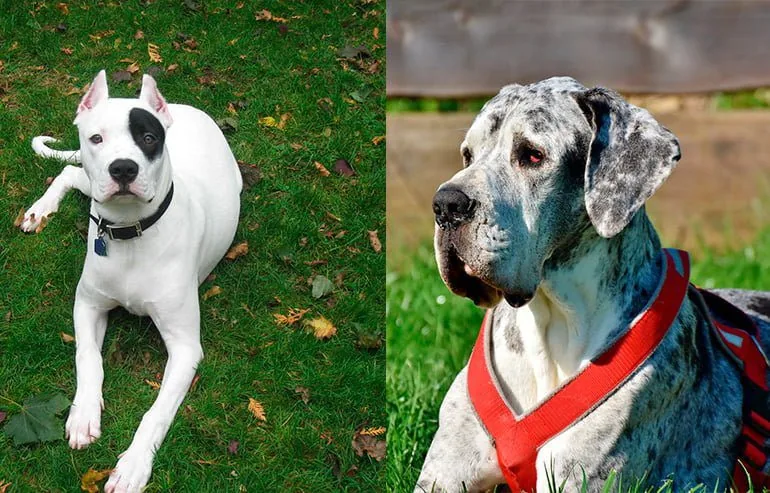
The differences between the Dogo Argentino and the Great Dane aren't easy to spot at a glance, since these breeds share some external traits. For example, both are molosser-type dogs with compact, strong bodies and a somewhat proud bearing.
Looking at a photo, can you tell them apart? If your answer is no, don't miss the explanation below to learn how to tell them apart. Keep reading and discover what SoyUnPerro has prepared for you!
Characteristics of the Dogo Argentino
As its name suggests, this molosser breed is native to Argentina, where it was originally bred to hunt pumas, wild boars, and other large game. The breed is muscular and athletic; males stand between 60 and 68 centimeters at the withers, while females reach 60 to 65 centimeters.
The Dogo Argentino's skull is mesocephalic and solid. The nose is black and the muzzle is the same length as the skull. The lips are also black, hiding a bite that can be either level or scissor. The eyes are almond-shaped, dark or hazel in color, while the ears are triangular and set high.
The breed's coat is short and smooth all over the body. The coat should be entirely white, though some individuals have a black patch on one ear or around an eye. International kennel clubs don't recognize any other coat colors.
The Dogo Argentino's temperament is adventurous — it enjoys outdoor activities and following scent trails, an ideal task given its excellent sense of smell. It's a somewhat rugged dog, though with good socialization it shouldn't be aggressive or distrustful toward strangers or other pets.
Characteristics of the Great Dane
The Great Dane is a dog native to Germany, where it was used as a hunter; today, though, it's known for being gentle. Its appearance is proud and dignified, paired with a strong body. As for size, males stand between 80 and 90 centimeters at the withers, while females reach 72 to 84 centimeters — they're truly huge!
The Great Dane's head is elongated, though it tapers toward the muzzle, giving it an overall rectangular shape. The nose is black in almost all dogs, except in those with a spotted coat, where it shows a black-and-white combination. The jaw has a scissor bite and the eyes are almond-shaped. The iris is usually dark, though lighter shades appear depending on coat type. The ears hang down to the cheeks, wide and thin.
The Great Dane's coat is short, glossy, and smooth. The coat comes in five color combinations: fawn (various shades of gold with a black mask on the face), brindle, harlequin (white base with black patches), black (some of these dogs have white splashes), and blue (glossy black with bluish tones).
This dog is friendly and affectionate. It's never aggressive and enjoys family company, making it an excellent pet for homes with children thanks to its calm, patient temperament.
Differences Between the Dogo Argentino and the Great Dane
You've probably already spotted some important details for telling the Dogo Argentino and the Great Dane apart. Although they share some similarities, pay attention to this list to more clearly tell their traits apart:
- Size: both are large molosser breeds, but the Great Dane is more than 10 centimeters taller than its counterpart.
- Bite type: the Dogo's bite can be level or scissor, while the Great Dane's is only ever scissor.
- Coat color: all Dogos are white; the Great Dane's coat, on the other hand, comes in multiple color combinations.
- Ear set: the Dogo Argentino's ears are set high, while the Great Dane's hang down over the cheeks.
- Head shape: the Dogo's head is mesocephalic, while the Great Dane's is rectangular; both, however, have a solid, massive appearance.
- Nose color: both the Dogo Argentino and the Great Dane have black noses, the only exception being the Great Dane's black-and-white combination with a harlequin coat.
- Neck length: the Great Dane's neck is a bit longer, while the folds that form where the neck meets the back are clearly visible on Dogo Argentinos.
IMPORTANT: This article is for informational purposes only and does not constitute veterinary, nutritional or behavioural advice. Every dog is different, and only your trusted vet can advise you on its specific needs.