 Care
Care
Entropion in Dogs: Causes and Treatment
Entropion refers to an eyelid abnormality in which the eyelid margins fold or turn inward toward the eye's surface, causing the eyelashes to rub against the cornea. The opposite case would be ectropion, in which the eyelid margin folds in the opposite direction from the eye's surface, exposing the inner part of the eyelid outward.
Canine entropion can be unilateral, affecting only one eye, or bilateral, affecting both. As for the eyelids, it can also occur in both, but the truth is there are many more cases in the lower eyelid. In most cases the animal is born with this abnormality, which can change as it finishes growing. In some animals entropion resolves, while in others it can end up getting worse.
This condition tends to be common in certain breeds, and it's important to catch it early to prevent severe damage to the affected eyes. That's why at Soyunperro we'll show you everything you need to know about this eye problem, how to detect it, and some possible solutions.
Causes and Types of Entropion in Dogs
Based on the causes, we can tell apart two types of entropion affecting dogs: primary and secondary. What's the difference between them? Basically, the first is due to a birth defect or congenital condition, while the second is acquired.
Primary entropion mainly affects puppies and young dogs, since it has a strong genetic component. That's why we say some dog breeds are more prone to entropion than others. For example, entropion is common in molosser-type breeds, such as the Shar Pei, Bulldog, Bloodhound, Boxer, Bull Terrier, Bullmastiff, American or English Cocker Spaniel, Rottweiler, etc. It can also affect other types of breeds, such as the Maltese, Chow Chow, or Labrador Retriever.
If it's the secondary type, then all dog breeds can be affected, and it will normally be older dogs. The most common causes are: chronic inflammation, obesity problems, eye infections or trauma, eyelid spasms, or sudden weight loss.
Symptoms of Canine Entropion
Some of the main symptoms of entropion are the following:
- Watery, constantly tearing eyes
- Drooping or inward-rolled-looking eyelid
- Eye irritation
- Difficulty keeping the eyes open
- Constantly rubs its eyes, with the resulting risk of self-injury
- Eyelid spasms
- Corneal ulcers or non-ulcerative keratitis (dark spots or blood vessels on the cornea).
- Vision loss (in the most severe cases)
- Pain and listlessness
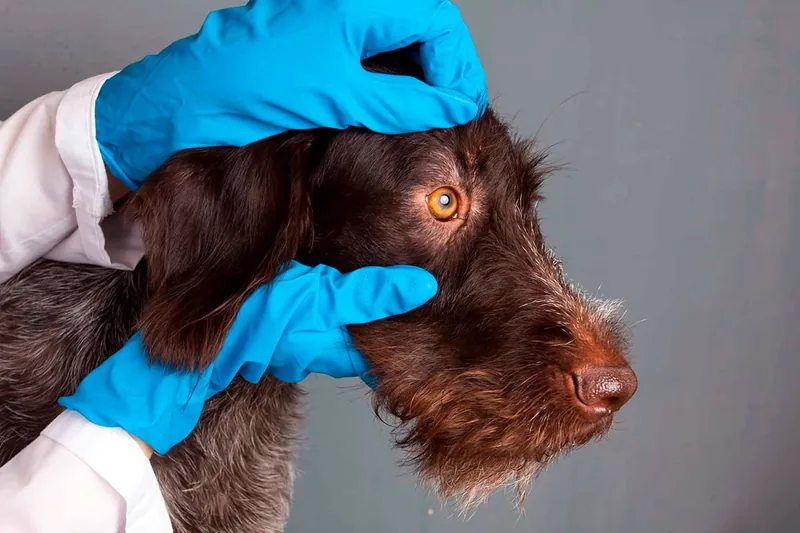
If you notice any of these signs, it's best to see the vet as soon as you can so they can examine the dog, since they can easily confirm whether it's entropion through an eye exam. If there are complications, other diagnostic tests may be needed.
How to Cure Entropion
The way to eliminate the problems entropion causes is through corrective surgery, which generally has a good recovery prognosis and will bring a significant improvement in the dog's quality of life.
If your furry friend is still a puppy, surgery may need to wait until it reaches the minimum recommended age (between 6 months and a year). Until then, there are reversible alternatives using tacking sutures, complemented with medical treatment (anti-inflammatories and painkillers) to ease the pain and eye irritation.
There's no need to rush into surgery, since the breeds most prone to this condition also tend to tolerate anesthesia the worst due to the anatomical layout of their snout (brachycephalic).
Either way, your vet can guide you, giving you all the necessary instructions. Once operated on, the dog will need a series of special care measures you should keep in mind. Some of the most important are:
- Protect it with an Elizabethan or cone collar, which will prevent it from scratching or removing the stitches from the wound before it's fully healed. Normally, if recovery goes well, the cone can be removed within about two weeks.
- Clean the wound with saline solution and sterile gauze. It's recommended to do this very carefully two to three times a day. This is important to remove eye discharge and leave the wound area clean before applying the drops or creams the vet has prescribed.
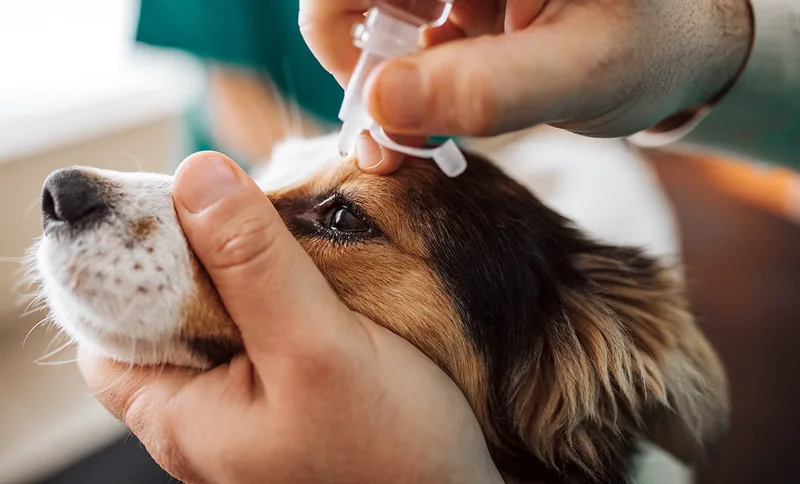
- Follow the treatment a specialist gives you. They'll likely prescribe an antibiotic ointment or eye drops, as well as anti-inflammatories. Don't forget to give every dose or application it needs.
- The dog needs to be watched closely to make sure it doesn't lick its wound.
Finally, keep in mind that sometimes, even after surgery, this problem can recur, meaning it can come back after some time. This is especially common in breeds like the Shar Pei, which has particular skin that tends to sag, although we can always repeat the surgery if needed.
IMPORTANT: This article is for informational purposes only and does not constitute veterinary, nutritional or behavioural advice. Every dog is different, and only your trusted vet can advise you on its specific needs.