 Nutrition
Feeding the Andalusian Rat Hunting Dog
Andalusian Rat Hunting Dogs are highly active and energetic; they love exploring every corner and playing constantly, which is why their food needs to be high quality to cover their energy expenditure.
If you want your Andalusian Rat Hunting Dog to be healthy and strong, feeding them properly stops being an option and becomes an obligation, to cover all their dietary needs.
How to Feed an Andalusian Rat Hunting Dog
Every dog is naturally carnivorous, since they descend directly from the wolf, which is why we should use a diet rich in high-quality animal protein. Alongside other basic ingredients such as carbohydrates and some fruit or vegetables.
Feeding an Andalusian Rat Hunting Dog a commercial food free of meat protein is very harmful to their health. So it is worth finding out in depth what makes for good food for our dog.
Essential Requirements of the Andalusian Rat Hunting Dog's Diet
These days there are hundreds of options when it comes to choosing kibble for our dog (in Spain commercial food is called "pienso"; in countries such as Mexico it is called "balanceado", and "croquetas" in Argentina and the United States of America).
Choosing one containing the most suitable amounts of protein and fat is not always a simple task, though. Our Andalusian Rat Hunting Dog's food should be balanced and high quality, easily assimilated and palatable.
Recommended Protein and Fat in Their Diet
We need to make sure the food we give our Andalusian Rat Hunting Dog is made mostly of meat products. We can check this through the product's ingredient label.
The first ingredients should always be meat, and the sum of non-meat ingredients on the label should never outweigh the sum of meat ingredients. We should avoid any food containing "by-products" or "derivatives", as well as "meals", since these are not good quality.
The fat level in our dog's food should never exceed twenty per cent; it is advisable to look for foods around twelve to fifteen per cent. Such as the ones we can find from canine food companies like NFNatcane or Orijen.
The protein level is not so critical, since excess protein is excreted through the dog's urine; even so, their food should always contain a minimum of twenty per cent protein from animal sources.
Feeding Andalusian Rat Hunting Dog Puppies
Andalusian Rat Hunting Dog puppies need to be fed a special kibble for small-breed puppies, since the size of the kibble pieces in conventional food could make them choke.
Investing in quality food is investing in our puppy's health, since they will need very high-quality nutrients to develop properly.
How Much Food Should I Give My Andalusian Rat Hunting Dog?
Depending on how much physical activity they get day to day, our Andalusian Rat Hunting Dog will need more food than a Bodeguero living a more sedentary life. Even so, every manufacturer includes rough guide tables on their food packaging for the daily amounts to give.
Broadly speaking, an adult Bodeguero will need to eat between two and three per cent of their body weight in dry kibble. So if they weigh ten kilos, we should feed them between two hundred and three hundred grams a day.
Puppies need a larger amount, at around five to six per cent of their body weight.
How Many Times a Day Should a Dog Eat?
Puppies should eat between four and five times a day, splitting their daily ration across the different meals. We should avoid giving them more food than recommended, since they will end up bloated.
Adults should eat two to three times a day, splitting their ration across the different meals. It is most advisable to give them three meals until they turn nine or ten years old, and two meals from then on.
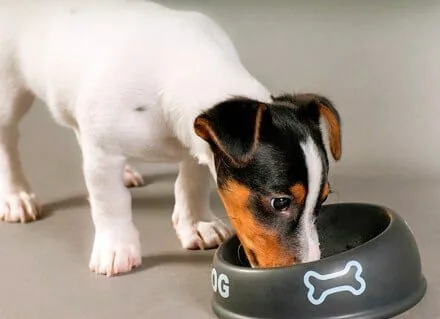
Feeding Guidelines for the Andalusian Rat Hunting Dog
Depending on our Bodeguero's age, their nutritional needs will differ. That is why we need to adapt their food to their needs, so they develop properly and our Bodeguero's health stays strong.
Zero to Twelve Weeks
Andalusian Rat Hunting Dog puppies under three months old should be fed on their mother's milk, which they get by nursing from her.
If our dog is orphaned, we should buy special milk for puppies from a vet we trust. We should never give a puppy cow's milk or anything similar.
Three Months to Five Months
From three months old puppies are weaned, and we should start working commercial food into their diet, little by little, so their digestive system can adapt.
The ideal approach is to mix a little commercial food for small-breed puppies with lukewarm water or milk for dogs, and make a kind of purée. That way they can eat it easily with their delicate milk teeth.
After a few weeks we can start introducing commercial food without softening it beforehand.
Five Months to One Year
We should only use commercial food specially formulated for small-breed puppies. This kind of food contains every nutrient our dog needs, and their kibble pieces are also small, matched to the jaw of small breeds.
One Year to Nine Years
Once they turn one year, or a year and a half, we should switch from commercial food for small-breed puppies to commercial food for adult dogs of small breeds. Always bearing in mind that it should contain high-quality animal protein.
Nine Years Onward
From nine years of age we should choose a commercial senior dog food, since their nutritional needs will be lower, and this way we will avoid them becoming overweight.
BARF Diet for an Andalusian Rat Hunting Dog
If you do not like feeding your dog commercial food, you can always use what is known in the canine world as the BARF Diet for dogs. This means feeding dogs fresh products, such as chicken, pork or beef, vegetables, carbohydrates such as rice, and fruit.
Is the BARF Diet Really Healthy?
The BARF diet for dogs is considered the best food we can give a dog, by quite some margin, over commercial food. Dogs fed on fresh products are far calmer, healthier and live longer.
What is more, a natural diet prevents excess wind in dogs, and their stools will be smaller and less smelly. The BARF diet is the healthiest type of food we can give our Andalusian Rat Hunting Dog from six months of age, once they have their adult teeth.
What Ingredients Does the BARF Diet Use?
There is a wide range of fresh, healthy products we can use to feed our dog, from soft, meaty bones such as chicken carcasses, chicken wings, chicken necks, pork ribs and so on, to muscle meat such as chicken, turkey or duck breast, pork, beef, lamb, or organs such as kidneys or hearts, and so on…
Healthy fruits for dogs are also used, such as apple, pear, melon, watermelon and banana. Healthy dairy such as cured cheese or yoghurt. Vegetables and carbohydrates such as boiled rice, pulses and so on…
How Much BARF Diet Should I Give Them?
The amount depends on our dog's age and weight, from five per cent of their weight as a puppy to three or four per cent as an adult.
Common sense also plays a big part in this kind of feeding: if our dog loses weight we can and should increase the daily amount of food, while if they gain weight we should reduce it.
IMPORTANT: This article is for informational purposes only and does not constitute veterinary, nutritional or behavioural advice. Every dog is different, and only your trusted vet can advise you on its specific needs.