 Breeds
Fox Terrier: Complete Breed Guide
The Fox Terrier has a catch. He looks manageable given his size, but he comes from centuries spent literally underground: in the 18th century he was used to squeeze into burrows and force foxes out. That past shows in everything he does.
Fox Terrier health and care
Here we cover his history as a working dog, the health care worth anticipating, and why his character calls for you to step up on training from the moment he arrives home as a puppy.
The Fox Terrier is a sturdy, hardy breed, with a life expectancy of 12 to 15 years given proper care. His health depends largely on preventive management including regular vet check-ups, up-to-date vaccinations and regular deworming. Early detection of problems is key, so it's recommended to watch for any change in his behaviour, appetite or physical condition.
In fact, Demodex injai mites were detected in eight wire-haired Fox Terriers showing greasy skin and coat on the back; seven of them were parasitologically cured, according to ‘Demodex injai infestation and dorsal greasy skin and hair in eight…’ (2009).
Dental care is especially relevant in this breed, since they tend to build up tartar and develop periodontal disease. Brushing his teeth several times a week with dog-specific toothpaste and offering appropriate chew toys helps maintain oral health. Vet check-ups should include a professional dental assessment to prevent complications.
Parasite prevention is essential given his tendency to dig. The vet will set a deworming protocol adapted to the dog's lifestyle.
Origin and history
In the 18th century, in the United Kingdom, someone had the idea of breeding a dog to do what hunters couldn't. Go into the burrow. Force the fox out. That needed a brave animal, able to handle tight spaces and not bolt at the first growl. That's how the Fox Terrier was born, within the broad terrier group, dogs known for combining energy, stubbornness and a hunting instinct that's very hard to switch off.
From the start there were two types: smooth-coated and wire-coated. For a long time nobody separated them on paper, same breed with a different coat. The wire-coated one had an advantage on terrain with brambles and thorny vegetation, where his coat acted as a shield. Over time the differences carried more weight, and each variety ended up with its own standard, officially recognised as separate breeds.
By the late 19th century the Fox Terrier was already a familiar face at dog shows, one of the most represented breeds of the time. He gained ground as a companion dog without giving up his work. And in that transition he didn't lose what makes him recognisable: determination, intelligence, that prey drive terriers carry etched in.
Physical characteristics
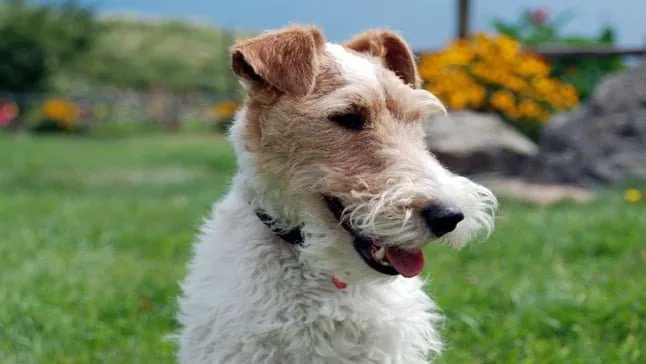
We're looking at a small dog leaning toward medium. Males stand between 36 and 41 cm at the withers; females fall somewhat below, at 33 to 38 cm. As for weight, males run around 7-9 kg and females 6-8 kg. What catches the eye most in person is that almost square silhouette, where height and length match, all muscle compressed into a body conveying solidity without heaviness.
The head is long and flat, with a barely noticeable stop and jaws with plenty of muscle behind them. The eyes are small and dark, with that lively look that's hard to ignore. The ears fall in a V toward the cheeks. The tail is another matter with nuances: where legislation still allows it, it's docked, but more and more Fox Terriers keep their tail intact, carrying it raised and stiff without curling over the back.
The standard recognises two varieties based on coat type. The smooth-coated one has a dense, straight coat lying very close to the body. The wire-coated one, by contrast, shows that harsh, twisted coat — the so-called wire coat — with a soft undercoat underneath. Colours are the same in both: a white base with black patches, tan, or the combination of both. White predominates for a practical reason: in the field, during a hunt, that colour helped tell the dog apart from the prey being chased without confusion.
Temperament and life together
The Fox Terrier is a dog who never sits still. Alert, bold and with a fairly marked territorial instinct, he watches his surroundings almost compulsively, which makes him a natural alarm. With family it's another thing: playful, affectionate and always ready to get into some mischief. That said, if he isn't trained firmly from puppyhood, stubbornness can become his most dominant trait. Early socialisation helps a lot to stop him lunging at everything that moves.
They bark. A lot. Any odd noise, anyone approaching the garden, anything out of the ordinary triggers that instinct. It runs deep. For centuries these dogs had to alert during hunts and watch over properties, and that instinct doesn't erase overnight. The way to manage it is giving them real occupation, both physical and mental, and teaching them from puppyhood that not everything deserves a barking concert.
With other animals, living together can get complicated. The prey drive is high, and small mammals or pet birds have a hard time sharing a home with a Fox Terrier. He also doesn't usually get on especially well with other dogs, particularly of the same sex. In homes with children he works well as long as the kids learn to treat him with respect: he doesn't take rough handling well at all.
How to care for each variety's coat
Between the smooth Fox Terrier and the wire-coated one there's more distance than it seems when it comes to keeping the coat in shape.
The smooth one has it easier. A weekly brush with a rubber grooming glove or soft-bristle brush controls dead hair and spreads the natural oils. During shedding season you'll need to increase frequency if you don't want the shedding to show up on the sofa and clothes.
The wire coat needs more work and some method. Hand stripping, done every three or four months, is the only system that genuinely removes dead hair without ruining that harsh texture defining the wire coat. You can learn it yourself with practice, or leave it to a dog groomer. Bathing is separate: only when it's needed, no bathing as routine, and always with products specific to his skin to avoid irritation.
Health and common conditions
Although generally healthy, Fox Terriers show a predisposition to certain conditions worth monitoring. Among the most common are skin problems, like skin allergies and atopic dermatitis, usually presenting with itching, redness and excessive licking. There are reported cases of Demodex injai mites in wire-haired Fox Terriers associated with skin problems.
Other recurring conditions include eye disorders like lens luxation and cataracts, which can affect vision especially in old age. Heart diseases, like degenerative valve disease, also show up fairly often in the breed. Hip dysplasia, though less common than in large breeds, can occur and should be assessed at vet check-ups.
Running genetic tests on breeding stock is essential to reduce the incidence of hereditary diseases. Owners should watch for symptoms like exercise intolerance, a persistent cough or behaviour changes, which could indicate underlying problems. Geriatric check-ups from age 8 onward help catch age-related conditions early.
Recommended diet
The Fox Terrier's diet needs to match his age, activity level and physical condition. As an active breed, they need high-quality kibble with a protein content suited to maintaining muscle mass and energy. Adults usually need two daily meals to avoid gastric overload.
It's important to control portions to prevent excess weight, since his compact structure can be affected by extra kilos. Measuring food precisely ensures the right portions. Treats shouldn't exceed 10% of his daily calorie intake, and it's preferable to opt for healthy rewards like pieces of fruit or vegetables suitable for dogs.
In senior dogs, it may be necessary to adjust the diet toward lower-calorie formulas with joint supplements like glucosamine and chondroitin. Any diet change should happen gradually to avoid digestive upset. At signs of food intolerance or allergy, like itching or gastrointestinal problems, the vet may recommend elimination diets to identify the problematic ingredients.
Exercise and education
The Fox Terrier needs a minimum of 60 minutes of daily exercise to stay physically and mentally balanced. This breed combines endurance and speed, so ideally his activity should include walks, controlled runs and interactive games. Insufficient exercise can lead to destructive behaviour, hyperactivity and excessive barking from frustration.
His training should be built on positive reinforcement and consistency, since they respond poorly to punitive methods. They're intelligent and learn fast, but their independence can make them question commands if they don't see a clear motivation. Short, varied training sessions work better than long, repetitive ones, keeping their interest and preventing boredom.
Dog sports like agility, earthdog or obedience are excellent for channelling his energy and working instinct. It's crucial to provide mental stimulation through puzzle toys, scent searches or hiding treats. They should never be let off in unfenced open spaces given their strong chase drive, which can lead them to ignore recall when chasing potential prey.
The Fox Terrier is a loyal, character-filled companion who thrives with active owners committed to his training. Consulting a vet to set up an adapted preventive plan will ensure you enjoy his company throughout his 12-15 year life expectancy.
If you decide to share your life with a Fox Terrier, get ready for a tireless companion who needs to channel his energy and intelligence into structured activities. Beyond the daily walk, adding scent games, agility or small obedience exercises at home will help him stay balanced and stop him seeking entertainment on his own (like digging or chasing small animals).
IMPORTANT: This article is for informational purposes only and does not constitute veterinary, nutritional or behavioural advice. Every dog is different, and only your trusted vet can advise you on its specific needs.