 Breeds
Goldendoodle
Although they seem like a modern fad, these dogs were bred with a very specific purpose: to create a hypoallergenic guide dog for blind people. What began as an experiment in the 1990s became one of the most sought-after breeds in the world, and today they spark just as much enthusiasm as controversy among breeders and veterinarians.
Get to Know the Origins of This Breed
Its origins go back to 1992, when the Golden Retriever and Poodle breeds were crossed with the goal of producing guide dogs capable of helping blind people.
This beautiful dog was developed in the United States and Australia. Its elegant look led the British to nickname it "the designer dog." This friendly animal's sociable nature later turned it into the ideal companion for adults and children alike.
What Are Its Physical Characteristics?
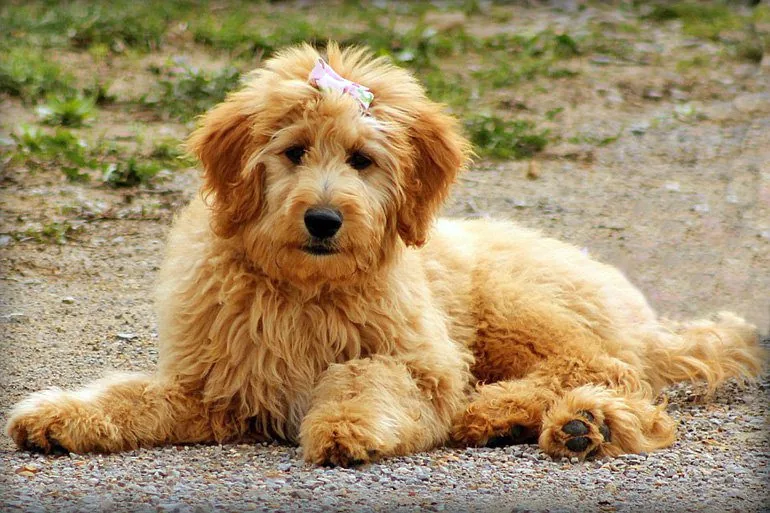
The Goldendoodle stands out for its long, thick, curly coat, which can come in different colors: black, beige, and chocolate, though cream and gold tones are the most common. Its physical appearance varies considerably depending on the type of cross and its size, which makes every individual dog unique, with its own distinct traits.
As for size, the largest weigh between twenty and thirty kilos, the medium ones between fourteen and twenty kilos, and minis can weigh up to six kilos. Females tend to be five centimeters smaller than males.
These are high-energy dogs, so they need long walks or even runs with their owners. Some love swimming, though this ability only develops with proper training. Their coat needs constant brushing to prevent tangles and mats.
Types of Goldendoodle
There are two ways to classify these dogs: by genetic cross type and by size. Both factors influence their weight, energy level, and coat characteristics.
Genetic Crosses: F1, F1b, and F2
The F1 cross is the direct result of a purebred Golden Retriever with a purebred Poodle. These dogs tend to be sturdier and show greater variability in coat, though they generally inherit the Golden's stronger build.
The F1b cross combines a purebred parent (Golden or Poodle) with an F1 Goldendoodle. This type usually has more predictable traits and, in many cases, better tolerance for people with allergies.
The F2 cross comes from mating two F1 Goldendoodles. These dogs offer the most predictable traits and generally the best hypoallergenic properties, though with greater variability in temperament.
Sizes: Standard, Medium, and Miniature
Size depends mainly on the type of Poodle used in the cross. The Standard Goldendoodle weighs over 23 kilos and stands between 53 and 61 centimeters tall. These are the largest and need more space and exercise.
The Medium Goldendoodle weighs between 16 and 22 kilos, standing 43 to 51 centimeters tall. It offers a balance between energy and manageability, making it ideal for families with moderate space.
The Miniature Goldendoodle weighs between 12 and 16 kilos and stands between 36 and 41 centimeters tall. Despite its smaller size, this dog keeps the energy typical of the breed, often being more active than its larger relatives.
F1 Goldendoodles tend to be sturdier; F2s are more predictable and have better hypoallergenic properties.
Goldendoodle Temperament and Behavior
The Goldendoodle's temperament combines the best of both parent breeds: they're especially sociable, sweet, and affectionate, with an exceptional ability to connect with people of all ages. Its friendly nature is so pronounced that it loves being surrounded by both people and other animals, which makes it a terrible guard dog but an extraordinary companion for families with children.
They tend to develop behavioral problems if their owners leave them alone for long stretches. They're also faithful, loyal, and obedient, which makes them easy dogs to train when given proper guidance.
They tend to chew on anything they come across, so they'll need proper training to break this habit. They also have a great sense of smell, so you can play hide-and-seek games with objects for them to find.
Care a Goldendoodle Needs
Its life expectancy is around fifteen years, and it usually enjoys good health throughout that time, though you should pay special attention as it reaches old age, since it can develop hip dysplasia. You also need to watch its eyes and ears, areas prone to infection that require regular cleaning.
Adult dogs should eat a couple of times a day, once in the morning and once in the evening. Their food should be high in protein, which ensures they get all the energy they need. They should also rest after meals to prevent bloat.
Puppies should eat special puppy food until their first year, after which you can switch them to adult food. Naturally, you'll need to keep a bowl of water available at all times to prevent dehydration, especially during summer.
How to Train a Goldendoodle
Even though this is a very intelligent dog, and therefore easy to train, you need patience and should reward it every time it correctly follows a command. You can reward it with special treats, so it learns to associate the two.
It's better to motivate your dog with rewards than to punish it for not following a command. Although the latter approach may seem effective, all it accomplishes is making your furry companion afraid of you. What's more, physical punishment can cause the dog to suffer episodes of anxiety by suppressing its frustration, which could lead to aggressive behavior down the line.
Consistency is the key to any training. Don't give up if your dog doesn't listen during the first few days — some take longer than others — but if you're persistent and keep at it, you're sure to get good results.
Goldendoodle vs. Labradoodle: What's the Difference?
Although both are intelligent, sociable hybrids, they come from different base breeds. The Goldendoodle crosses a Golden Retriever with a Poodle, while the Labradoodle combines a Labrador Retriever with a Poodle.
As for size, Standard Goldendoodles can reach up to 30 kilos in their largest version, a similar weight to Labradoodles, which also tend not to exceed 30 kilos. Goldendoodles tend to be calmer and more affectionate, while Labradoodles are usually more energetic and restless.
The color palette also differs: Goldendoodles come in lighter shades like gold, caramel, and cream, while Labradoodles offer a wider variety that includes black, blue, chocolate, and red. Both need similar coat care and regular exercise.
CHOOSE YOUR BREEDER CAREFULLYMake sure the breeder has registered credentials and a good reputation. Ask to meet the puppy's parents and ask about previous litters to gauge their personalities. 80% of owners get their Goldendoodle through a breeder, which makes this decision crucial for ending up with a healthy, well-socialized dog.
Frequently Asked Questions
Are Goldendoodles Hypoallergenic?
Although they're considered suitable for people with allergies, they're not a guarantee of being hypoallergenic. Allergies are mainly caused by dander, not just the coat itself. An F2 Goldendoodle has better hypoallergenic properties than an F1, but if you're sensitive, it's always a good idea to spend time with the dog before adopting.
How Much Does a Goldendoodle Cost?
81% of owners expected to spend between 500 and 2,000 dollars on initial expenses. As for monthly costs, 73% spend between 50 and 149 dollars, while 21% spend more than 150 dollars a month. Costs vary depending on the breeder, location, and type of cross.
Do They Need a Lot of Exercise?
Yes, they're high-energy dogs. They need long daily walks and, ideally, activities like running or swimming. Miniature Goldendoodles, despite their size, keep this same need for exercise and can be even more active than the standard version.
Are They Good Dogs for Families With Children?
Absolutely. Their affectionate nature, patience, and tolerance make them ideal companions for families. They're playful and enjoy running around with children, though proper socialization and positive-reinforcement training are important for safe interactions.
If you're looking for a loyal companion that combines intelligence, affection, and adaptability, the Goldendoodle could be the perfect choice. Just make sure you can offer the exercise, company, and care this active, sociable breed needs to thrive.
IMPORTANT: This article is for informational purposes only and does not constitute veterinary, nutritional or behavioural advice. Every dog is different, and only your trusted vet can advise you on its specific needs.