 Breeds
Gordon Setter
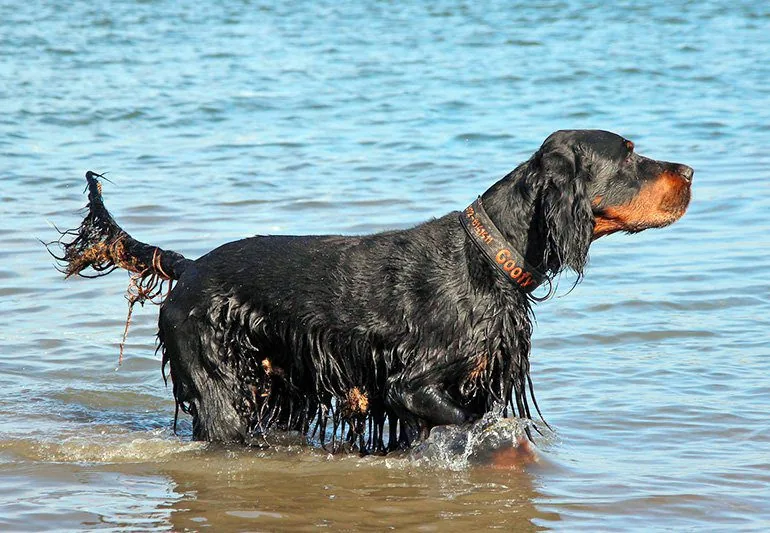
The Gordon Setter isn't just another pointing breed; it's the canine embodiment of Scottish nobility. Its striking black-and-tan coat and deep expression instantly set it apart from its Irish and English Setter relatives. Bred for big-game bird hunting in the Highlands, this dog has earned its place in modern homes as a loyal, patient, surprisingly affectionate companion.
Athletic Elegance: The Gordon Setter's Bearing
The Gordon Setter is the sturdiest of the setter family, with a build that combines power and style. Under the official American Kennel Club (AKC) standard, males reach a height at the withers of 66 cm and a weight of 29 kg, while females are slightly smaller, standing 62 cm and weighing around 25 kg. Its muscular yet streamlined body, with wide hips and oval feet, reveals exceptional stamina forged on difficult terrain.
Its most distinctive trait is its coat: pure black with tan markings clearly defined on the muzzle, chest, inside of the legs, and under the tail. The coat has two textures: short and fine on the head and front of the legs, and long, straight, and silky on the rest of the body, forming elegant feathering. Its dark-irised eyes with a cunning expression, along with medium-sized ears covered in long fringes, round out a look of great nobility. A well-cared-for dog's life expectancy runs between 12 and 13 years.
Scottish Heritage: From the Highlands to the World
The Gordon Setter's story begins in the vast Scottish Highlands, where a versatile dog was needed to handle birds like partridge and grouse. The term "setter" comes from the English verb "to set," describing the dog's innate instinct to crouch and freeze upon detecting game, letting the hunter ready the net or gun without spooking the bird.
The breed's great architect was Alexander Gordon, 4th Duke of Gordon, who in the late 18th century fixed the traits we know today. To achieve this, he made selective crosses between the English Setter, the Pointer, and the Bloodhound, aiming to enhance scenting ability, stamina, and a well-balanced temperament. For decades, these dogs were known as Gordon Castle Setters, in honor of the ducal residence where the breeding program was developed. The breed arrived in the United States around 1842, and after several name changes, in 1924 the name Gordon Setter was permanently established, recognized by the major international kennel clubs.
A Loyal Companion With a Patient Heart
At home, the Gordon Setter transforms: from a tireless hunter into a calm, gentle dog deeply loyal to its family. Its intelligence and highly developed sense of smell are a direct legacy of its hunting past, but its temperament isn't that of an aggressive guardian. It prefers close companionship over distant watchfulness, which has made it an excellent family dog, especially patient with children, showing them a tenderness that's earned it the nickname "nanny dog."
That said, it has an independent streak that can translate into a bit of stubbornness without consistent training from puppyhood. It's reserved with strangers, but rarely aggressive. It responds much better to methods based on positive reinforcement and needs a handler who combines firmness with affection to channel its energy without letting its natural stubbornness take over. Early socialization is key to unlocking its full potential as a well-balanced dog.
Unique Traits of the Gordon Setter
The Gordon Setter has some quirks that make it unmistakable in the dog world. It's the only setter with a black-and-tan coat, a color combination that visually links it to breeds like the Rottweiler or the Doberman, though with a completely different silhouette and coat. Its historic nickname "nanny dog" isn't a coincidence: few hunting breeds show such innate patience with the youngest members of the household, tolerating games and mischief with admirable calm.
What's more, its coat has drawn veterinary interest. A study on canine and feline skin disorders conducted at the University of Montreal, published in a scientific study in The Canadian Veterinary Journal, documented the breed's presence in university dermatology referrals, providing data on its predisposition to certain skin conditions. Research like this helps us better understand the specific needs of its dense, silky coat.
Essential Health and Care
The Gordon Setter is generally a sturdy breed, but like many medium-to-large dogs, it has a predisposition to certain conditions. Notable ones include hip dysplasia, progressive retinal atrophy, and bloat, the latter especially dangerous, requiring meals to be split up and intense exercise avoided right after eating. Regular vet check-ups and eye exams are essential for early detection.
As for daily care, its beautiful coat needs frequent brushing, at least two or three times a week, to prevent tangles and remove dead hair, especially in the feathered areas. The ears, covered in long fringes, need regular cleaning to prevent infection. Physically, this isn't a dog suited to a sedentary life: it needs generous daily exercise, ideally combining long walks with free play sessions or activities that stimulate its nose, like tracking.
IMPORTANT: This article is for informational purposes only and does not constitute veterinary, nutritional or behavioural advice. Every dog is different, and only your trusted vet can advise you on its specific needs.