 Care
Care
Head Pressing in Dogs — What Is It and How to Respond?
Sometimes our furry friends show certain seemingly unexplainable behaviors that can seem strange to us and even funny at times. But in reality, they can be signs that something isn't right.
Today we'll explain head pressing, which isn't a disease in itself, but a phenomenon accompanied by a series of very recognizable symptoms that can be telling us there's a problem, whose cause and severity we'll need to figure out.
Although not very well known, it's more common than we think, and it can show up in our dog even without us giving it the importance it deserves.
How Does Head Pressing Show Up?
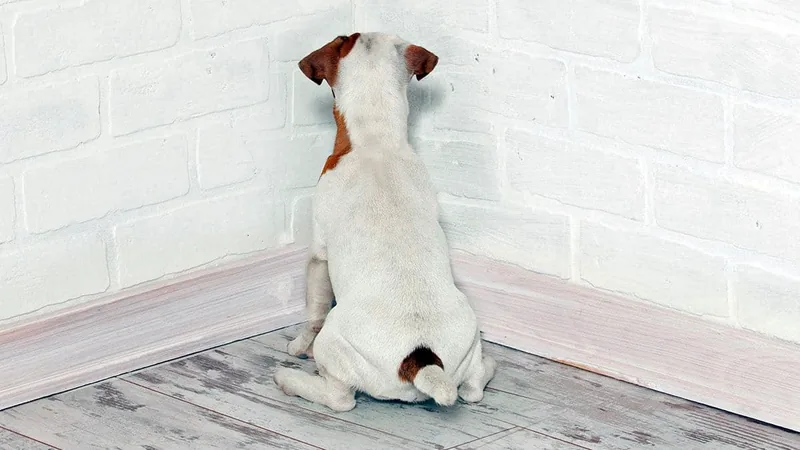
Symptoms of head pressing show up through strange, unusual behavior in which the dog presses its head against the wall, the floor itself, or a large flat object, with no apparent reason.
But generally, it's telling us something isn't right and our dog is feeling a very strong headache and seeking relief. It would be the equivalent of when us humans rub our forehead or temples to relieve a headache.
However, despite this being the most common cause behind head pressing, this abnormal behavior could also be warning us of a different type of problem, one that could be more serious than we think.
Besides head pressing, there are other symptoms we could observe, such as repetitive, compulsive circling movements, behavioral changes, apathy, abnormal sounds, altered motor function, seizures, impaired reflexes, and vision changes.
Why Does My Dog Press Its Head Against the Wall?
The causes of head pressing can have different origins. Even the headache itself could be telling us there's an underlying condition causing this pain.
It's not our intention to alarm you, since occasionally catching our loyal friend pressing its head against something doesn't necessarily mean it has a problem.
Sometimes dogs do this simply to scratch areas their paws can't reach, or simply because it makes them feel good, like us when we massage some part of our body. But if the action repeats or lasts too long, it could be telling us there's a problem.
There are several causes that can lead to this behavior. Below, we describe the most common ones, from least to most severe:
- Headache (the most common).
- Head trauma that increases intracranial pressure.
- Hyponatremic encephalopathy (due to low blood sodium levels, and can be mild, severe, or moderate, related to giving hypotonic fluids to patients with elevated antidiuretic hormone levels).
- Hypernatremic encephalopathy (originates from elevated blood sodium levels and is linked to dehydration).
- Poisoning from ingesting some toxic product.
- Neurological condition.
- Nervous system infection (caused by fungi or even rabies).
- Brain tumor.
- Liver conditions.
Are There Breeds More Prone to Head Pressing?
In reality, any breed can suffer this type of problem and, therefore, show the symptoms described. However, brachycephalic breeds, such as the French Bulldog, Chinese Pug, or Boston Terrier, have a higher predisposition, as do the Yorkshire and the Beagle.
What to Do If Our Dog Shows Symptoms of Head Pressing?
The moment we have clear indications our dog may be showing head pressing, we need to see the vet as soon as possible. They'll give it a check-up and can determine what's causing it, as well as the treatment or guidelines to follow.
The vet visit will likely come with an exam of the retina and other structures at the back of the eye, to rule out infectious or inflammatory diseases. Other likely tests are blood pressure measurements, CT scans or MRI, urinalysis, and blood lead level tests.
In addition, they'll ask for details related to when the phenomenon appeared, which is why it's a good idea to write down everything we remember related to when the symptoms appeared: when they started, foods or substances it's eaten in recent days or changes to its diet, unusual behaviors the animal has shown, etc.
IMPORTANT: This article is for informational purposes only and does not constitute veterinary, nutritional or behavioural advice. Every dog is different, and only your trusted vet can advise you on its specific needs.