 Care
Care
How Does a Dog’s Memory Work?
You've surely wondered more than once how your dog's memory works — why, if you give it a treat at four in the afternoon, the next day at four it comes to you asking for another, yet it's unable to remember it shouldn't pull on the leash.
Dogs' memory works differently from humans'. They don't use episodic memory the way we do, but they can use other types of memory, like short-term memory, spatial memory, or scent memory, among many others.
Our dogs have an incredible memory — they're able to remember where they buried a bone even years later. We're going to explain how a dog's memory works and why they're able to remember some things and not others.
How Does Our Dog's Memory Work?
No one truly knows for certain how their memory works, but many scientific studies have been conducted, and based on the results, it's believed dogs' memory works in several ways — they use a memory system different from ours. We explain it below.
From puppyhood, dogs use a type of memory known as procedural memory, which helps them learn the things we teach them, like relieving themselves outside the house or giving their paw when we ask.
This type of learning memory improves with repetition, which is why when we train a dog, we should always base it on repeating the exercise, with a reward when it's done correctly. A dog's brain doesn't learn our language, but it quickly learns to get food by making certain movements when we command it.
We all know eating and searching for food is a basic primal instinct in dogs, which is why using food to reward a well-done exercise is what its brain values most. In other words, giving your dog a treat when it does something right is the best way for it to remember.
Procedural memory becomes strongly ingrained in our dogs' brains, so in the future, it's used almost unconsciously. A dog will give you its paw to get its treat automatically, without thinking, because its brain already knows giving its paw earns food.
This type of memory becomes associative over time, so the dog will quickly learn everything related to food. Associating food with certain movements is their best way of remembering.
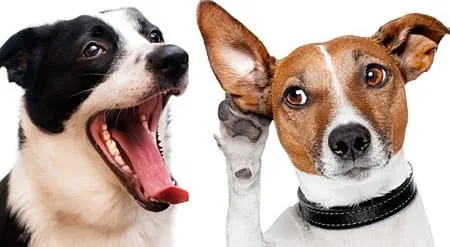
Short-Term Memory in Dogs
Dogs have long-term memory — they're able to remember the training and education exercises we taught them as puppies. But they also have short-term memory, meaning they can remember what happened a few hours ago.
That said, their brain doesn't work like ours — we're able to relive the moment step by step, while they only relive the important part. For example, if we're walking through the park and trip over a rock, falling and hurting ourselves... we can remember leaving the house and going for a walk in the park, that it was a beautiful sunny day, and that we tripped out of carelessness. A dog in the same situation only remembers that falling hurts.
Dogs have short-term memory, but it's very selective — they remember what's important, not the unimportant details the way we humans do. That said, when it comes to feeding or protecting itself, its short-term memory can stretch out indefinitely.
For example, if the dog meets a human and that human mistreats it, the dog will remember that human is bad for a long time. The same happens if a stranger gives it a treat — every time it sees them on the street, it'll go looking for them hoping to get another treat.
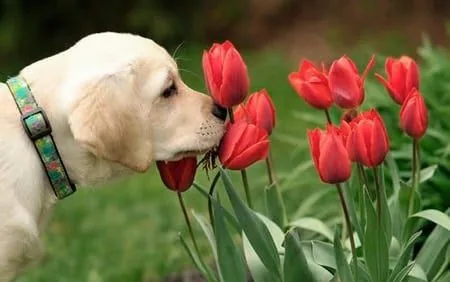
Dogs' Scent Memory
Dogs have a scent memory that's simply amazing — their brain is able to associate smells with different places and even different situations. Let's not forget a dog's nose is more than a thousand times better than a human's — its scent capacity is unmatched.
A dog's brain builds and memorizes a scent map of everything — its home, the park where it walks, and even places it visits for the first time and might not visit again for years.
Humans can see with our eyes and build a mental map of our surroundings to interact with them — besides a visual mental map, dogs also use a scent-based mental map, able to give them a wealth of detail without needing to use their sight.
Has it ever happened that your dog meets someone new and growls at them or won't let them touch it? This could be because that person possibly gives off a smell signaling something negative to the dog, activating its associative memory and identifying them with something bad.
Distinctive Memory in Dogs
If several people at home interact with your dog, it's able to remember details about each of them. Dogs have a kind of distinctive memory that lets them interact differently with each person.
For example, if you're the one walking your dog, you might let it play, sniff everything, chew on the leash, or pull. But if your sister also walks the dog and she's always forbidden pulling on or chewing the leash, it won't do those things with her.
Dogs know what they can and can't do with each person individually. The same way they know which humans will give them treats and pets every time they see them, and which won't.
They're able to learn each human's different habits and adapt to them, which is genuinely impressive. A dog's memory is designed for survival, so finding food or avoiding danger is always what it retains best, in any of its forms.
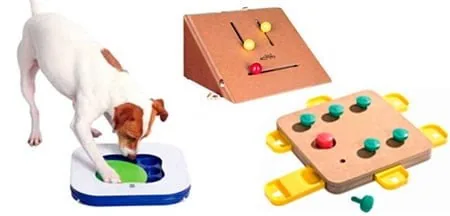
How to Improve a Dog's Memory
The best way to improve a dog's memory is through stimulation — training exercises, improving its education, and so on... If we have our dog use its memory daily, it'll gradually improve over time.
Studies show a dog's memory capacity is directly related to its intelligence, which is why tests to determine the world's smartest dog breeds always include practical memory exercises.
There are also educational games for dogs that stimulate their memory — simple games we can find at any specialized pet store. These kinds of games can be used from puppyhood and genuinely help.
We should keep in mind that older dogs don't have the same memory as young dogs — when a dog enters its "senior" stage, meaning when it's already an elderly dog, its memory tends to worsen, which is completely normal.
Not every dog has the same memory capacity, but we can work on and stimulate this ability through games and training. Using food as a reward is the best option for its brain to learn faster.
There's no such thing as a dog with no memory at all — there are simply dogs with less capacity to remember, due to genetics or because they haven't been stimulated.
Remember, a dog can remember for its whole life that you once hit it, which is why you should never mistreat a dog — it'll take a very, very long time for your dog to change that memory fragment. Always use positive reinforcement to train your dog, so it'll always have good memories of you.
IMPORTANT: This article is for informational purposes only and does not constitute veterinary, nutritional or behavioural advice. Every dog is different, and only your trusted vet can advise you on its specific needs.