 Care
Care
How to Help a Dog Give Birth
Giving birth is always a delicate moment, and as caregivers of a pregnant dog, it's normal to have questions about how to manage it. Below we'll cover everything you need to keep in mind for it to go well.
Learning about pregnancy, how labor unfolds, and nursing will help us understand the maternal process and spot any problem that should be brought to the vet's attention. Ready?
The Pregnant Female Dog
The first thing we should know if we live with a dog expecting puppies is that gestation in this species lasts an average of 63 days. This will help us prepare for the birth.
For it to go well and end successfully for both mother and puppies, it's very important that during pregnancy the female receives food suited to her new nutritional needs. A puppy-formula food is appropriate.
The female should be properly dewormed, both externally and internally, and vaccinated. If this hasn't been possible, we should see the vet so they can decide what steps to take. It's also important for this professional to schedule follow-ups to make sure the pregnancy is progressing normally.

Preparing for Labor
As the end of pregnancy approaches, we may notice the female showing seeking behaviors. This is due to the nesting instinct, meaning the need to find a calm place, sheltered from predators, called a nest, to bring the puppies into the world.
We can help her by providing a bed somewhere out of the household's foot traffic. A box with blankets or towels covered with puppy pads can be ideal. We'll make sure they're not too plush, to avoid the risk of the puppies suffocating.
Either way, we should know our dog may reject the spot we offer and even choose one that seems unsuitable to us, like inside a closet. In these cases, we can try to change her mind, always without forcing her, or move her once she's given birth.
The Importance of Stress
For labor to start and proceed normally, the female's body needs to secrete a series of hormones that trigger contractions. These hormones, notably oxytocin, need the female to be calm to flow properly, and are inhibited by stressful situations.
That's why it's essential not to overwhelm the female. Although the birth and the puppies naturally draw the attention of adults and children alike, the family's priority should be the dog's wellbeing. So, we'll avoid handling the mother and litter, at least until the puppies start interacting with their surroundings, around 3-4 weeks of age.
And just as calm is essential during labor, oxytocin secretion is also essential for nursing. This hormone triggers the release of milk. A stressed female, even if she has milk, will have trouble nursing.

The Stages of Labor
Shortly before labor, our dog will often seem restless. She'll stop eating and scratch at the floor as if looking for something. These are signs labor is approaching. This is the time to make sure the nest is ready, that nothing is disturbing the dog, and that we have the emergency vet's number handy, just in case.
Labor, which usually happens at night, begins with a phase of contractions that often goes unnoticed by us. This gradually prepares the birth canal for the puppies to come out. Once contractions intensify, we're already in the second stage. The dog will pant, we'll notice her straining, and some dogs may vomit.
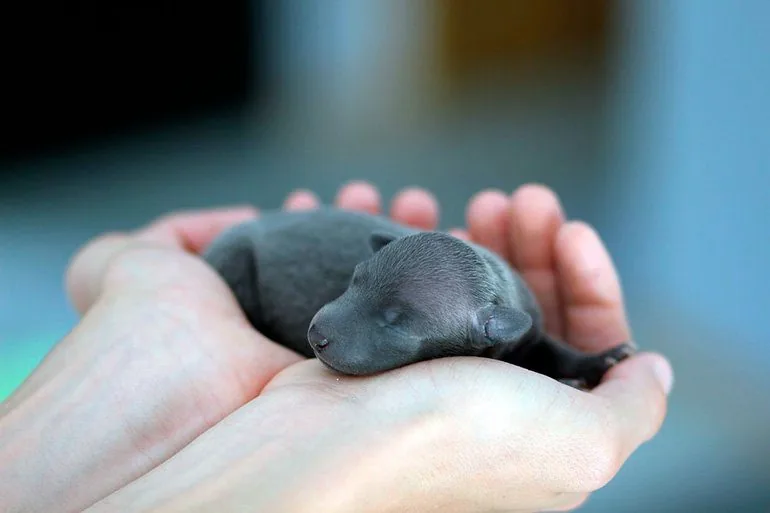
From that point on, the female will enter the pushing stage and the puppies will start being born one by one. The third stage involves expelling the placenta. Labor duration varies. It can last around 12 hours. Puppies are born at intervals of 15 minutes to 2 hours. The mother cleans them, eats the placentas, and cuts the umbilical cords.
Warning Signs
The best help we can give a female dog giving birth is providing calm and comfort. But this doesn't mean we should ignore her. We need to keep an eye out to make sure everything is going normally.
If we notice signs like the following, it's essential to contact the vet immediately:
- The dog strains obviously for 30-60 minutes but doesn't deliver.
- Purulent, greenish discharge, or vaginal bleeding appears.
- We see a puppy stuck in the vulva.
- We suspect a puppy is still left to be born.
- More than 63 days have passed and labor hasn't started.
- Fever.
- General weakness.
The C-Section
Some of the warning signs described above will end in a C-section. In addition, in brachycephalic or very small breeds like Chihuahuas, we should know that births usually happen through this surgery.
The anatomical changes these dogs have undergone have made puppies' heads larger than the birth canal, making natural birth impossible. Veterinary monitoring is mandatory in these cases.
Does a Female Dog Need to Have Puppies?
Finally, although this idea still circulates, female dogs don't need to have a litter to be happy, either physically or psychologically. Given the large number of abandoned and mistreated animals, spaying our dogs is part of responsible pet ownership.
Bibliography Carlson and Giffin (2002): Manual práctico de veterinaria canina. Madrid: Editorial el Drac.
IMPORTANT: This article is for informational purposes only and does not constitute veterinary, nutritional or behavioural advice. Every dog is different, and only your trusted vet can advise you on its specific needs.