 Care
Care
How to Make a Dog Pool
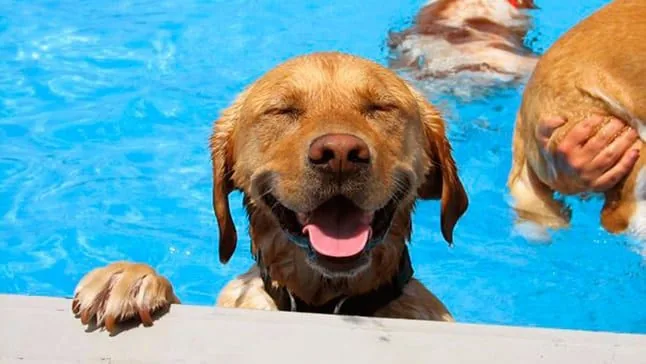
Global warming is causing summers to get longer and hotter, so it's about time we think about building a homemade pool for our dog in the yard, so it can cool off whenever it wants.
Building one is actually quite simple, and we'll barely need a small budget — plus, depending on our dog's size, we'll need a smaller or larger pool.
The goal of building a homemade pool is to let our dog enjoy the summer heat more, taking a dip whenever it wants to cool off. And since we're building it ourselves, it won't cost much either.
How to Make a Homemade Pool With Pallets or Straw
The idea is very simple — we just need to form a side structure with pallets, screwing them together with the help of wood from other pallets. This creates a kind of circle with whatever diameter and height we want.
To build this type of pool, we'll barely need any budget, since pallets can often be found for free at many stores and big retailers. The only thing we need to buy is a good-quality waterproof liner, so it doesn't tear easily.
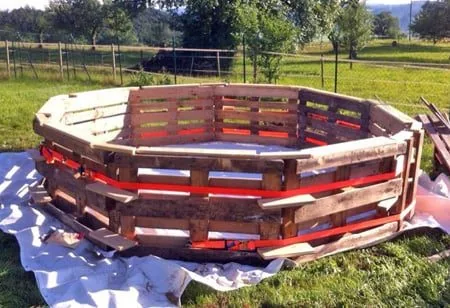
We recommend buying a rubbery waterproof liner — it's a bit thicker and holds up better against our dogs' sharp nails. Explaining the liner's purpose to the seller, they'll know how to recommend the most suitable one.
Once we've built the pool's side structure with the pallets and secured them firmly to each other with screws or straps, we can move on to building the homemade dog pool.
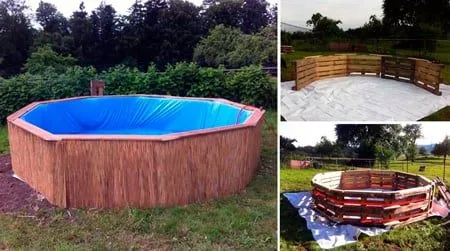
Remember, the structure will hold the weight of the water inside the pool, so building it well is essential for the pool to be sturdy. We'll place the liner over the structure, securing it at the top so it doesn't sag.
And that's it — we now have a homemade pool for our dog to enjoy hot summer days without suffering heatstroke. Remember, if you build the pool under a tree, it'll have shade for most of the day, which is even more beneficial.
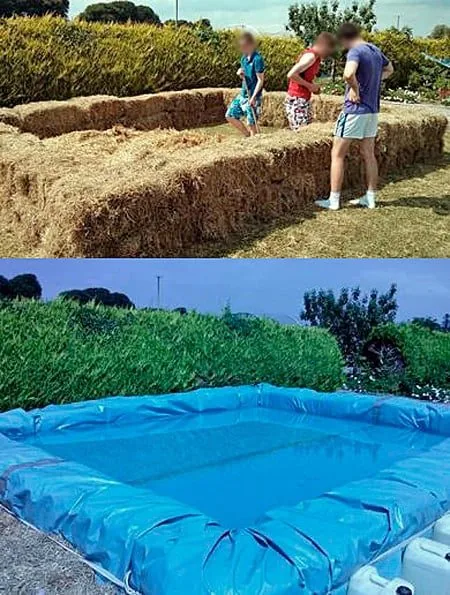
If we want an even simpler build, we just need to use straw bales (compressed straw, the kind used for livestock). Construction is quite similar — we'll build the structure with straw bales, then cover it with the waterproof liner.
It's important to secure the top part of the liner well — we can tuck it under the straw bales so their own weight holds it in place, or anchor it to the ground.
Important Precautions When Building the Pool
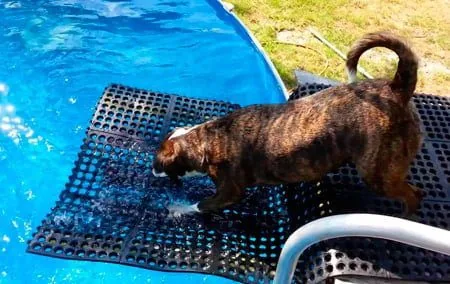
There are two really important factors to keep in mind when building a pool for our dog. The first is that the pool needs a dog ramp or steps, so the dog can easily get in and out whenever it wants.
The second is that the pool shouldn't be too deep for the dog — while we can create a deeper section by adjusting the ground level (digging), most of the pool shouldn't be deeper than the dog's head height.
These two points are extremely important to prevent our dog from drowning, having a bad time, or destroying the pool trying to get out.
- A ramp or steps for dogs in the pool. It should be wide and clearly visible to the dog.
- A depth shallower than the dog's size, preventing it from drowning if it can't swim.
On another note, a dog being in the water doesn't mean strong sun can't harm it. That's why building the pool near a tree, or setting up a good umbrella, will let our dog cool off in the shade too.
The dog's size is essential when building the pool — small dogs don't need giant pools, just as large dogs won't do well in an overly small one.
Other Simple Ways to Build a Pool
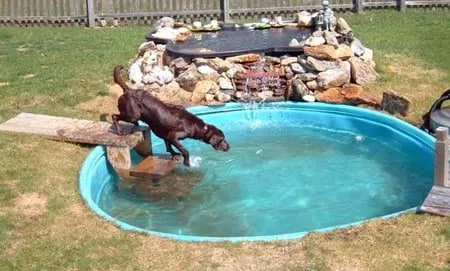
If we don't want to use pallets or straw bales, we can simply dig a hole in the yard with whatever dimensions we want for the pool, keeping depth and diameter in mind.
Once the hole is finished, we can place a prefabricated collapsible pool inside it, or simply cover the hole with a waterproof liner and fill it with water afterward.
Here too, it's very important to leave steps in the pool so the dog can get in and out whenever it wants — a visible ramp is also a great option. Remember, dogs aren't experts at getting out of pools... if you don't make it easy for them, they'll end up panicking and tearing part of the liner trying to escape.
IMPORTANT: This article is for informational purposes only and does not constitute veterinary, nutritional or behavioural advice. Every dog is different, and only your trusted vet can advise you on its specific needs.