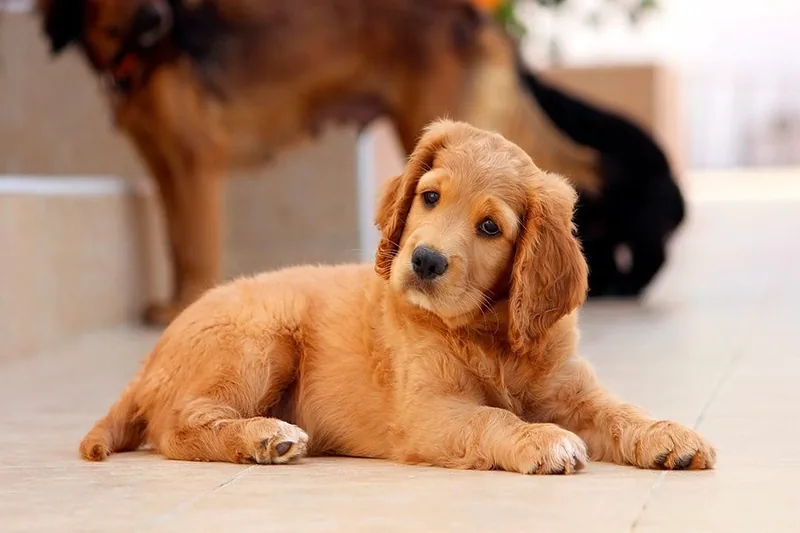
 Training
How to Train a Puppy
If you've made it here, it's because you're lucky enough to be sharing your life with a lovely puppy, and you most likely have plenty of doubts about how to properly train them so they learn to live alongside you, other humans, and of course, other dogs and animals.
You're in luck, since I have quite a few, many years of experience behind me. In the lines below you'll learn the most important things about puppy training, practical advice, and even some tips to make the process much simpler.
First of All…
Remember a puppy is like a human baby — even though we think they're very clever and learn very fast, the truth is they're just that: babies. With this I want to tell you that you need plenty of patience — plenty? No, tons of patience!
Puppies don't learn overnight — it'll be a long, steady process, where the only goal is for the dog to enjoy learning, something known within canine training as "positive training".
So don't obsess over your new puppy's training, but don't neglect it either — you simply need to bring it in gradually, slowly but surely. And you'll see how your dog gradually learns everything they need to live in their new surroundings.
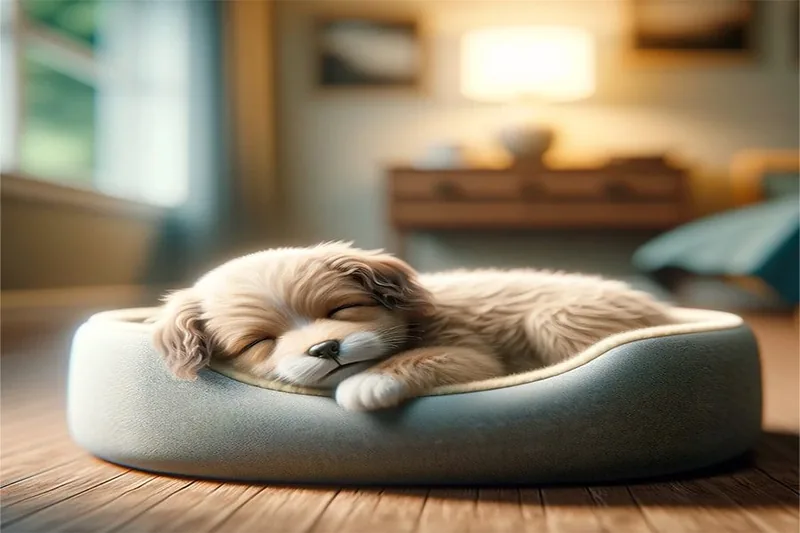
How to Train Them to Sleep in Their Own Bed
Dogs are extremely social animals, and puppies especially so. For them, being with you is their top priority, since you're their family. That's why they'll want to be with you all day long, even at bedtime.
Some people let their puppies onto the bed to sleep with them, something lovely that will bring you even closer together, but not very advisable while they're very young, since they won't yet know how to control their bladder and bowels, and you might wake up to a surprise…
My advice is to train your puppy to learn to sleep in their own bed, and once they're a bit older, decide whether or not you want to let them sleep in your bed with you.
To do this, you need to follow these simple steps:
- Place their bed in the same spot where you are or sleep. Even while asleep, they'll want to be by your side. Remember it needs to be a comfortable, soft bed.
- During the first few days, always leave a soft light on. If they wake up and can't see anything, they'll get scared and start crying.
- Let them sleep as much as they want, though before sleeping at night, it's advisable to take them for a short walk so they relieve themselves.
Remember puppies wake up plenty of times throughout the night — they don't sleep for as many hours in a row as we do, so be patient and don't get annoyed if they wake you several times during the first few days or weeks — it's entirely natural.
And… How Can I Stop Them Crying?
Being a puppy isn't easy — you're in a new house with a new family, and on top of that… you don't understand anything they're telling you. So here are some tips so you can train your dog to avoid crying at night or when they wake up in the early hours.
- Place a warm water bottle in their bed with a blanket over it. They'll sleep on top of the blanket. With the water bottle's warmth, they'll feel more comfortable sleeping (thinking it's their mother's warmth).
- You can also place a ticking clock under their bed. The clock's sound will mimic their mother's heartbeat.
- If you get the chance, rub a cloth or T-shirt against their parents so it picks up their scent. Place that cloth in their bed — their mother or father's scent will help them relax.
Teaching Them to Relieve Themselves Outside the House
From three months old, once they have all their mandatory vaccines, you can take your puppy for walks on the street, and with this, you can also train them to urinate and defecate there, and not inside the house.
It's a genuinely simple, quick and effective process. Some dogs learn within a few days, and others only need a few weeks.
The first thing we need to do is set up a walking routine, that is, go out for walks always at the same time so the dog gets used to that schedule. While they're puppies we recommend going out at least five times a day, something we can reduce as they grow (if we want to).
Not every walk needs to be long, but do devote at least ten minutes so they walk a bit, sniff around, and hopefully relieve themselves on the street.
Once our puppy relieves themselves on the street, once they're done, we'll praise them a great deal, give them strokes and a reward, such as a bit of food or a dog snack, for example. This way our puppy will link relieving themselves on the street with something good ("positive training", remember?). This is, by far, the best way of training a puppy to learn to do their business outside the home.
Puppies Under Three Months Old
Puppies who are one, two, or even three months old can't go out on the street until they have all their mandatory vaccines. That's why it also matters to teach them to go to the toilet inside the house. This way they'll learn to relieve themselves in a single spot.
There are special pee pads for dogs you can buy at any pet shop — they're cheap and highly useful. We need to place several of these pads in nearby spots, always accessible to our puppy. Ideally you'd choose one or two spots in the house where they're always available for the puppy.
Now we'll note down the times our puppy usually relieves themselves, whether peeing or pooing. They usually do it after a nap, before or after eating, or after drinking water.
Knowing when they relieve themselves, we'll simply place our puppy on the pads and wait for them to pee or poo. Once they're done, we'll praise them a great deal and give them a reward.
Within a very short time they'll learn to link relieving themselves there with getting rewards and praise. Even so, remember, if they do it outside the pad, you should never get angry or scold them — simply ignore them.
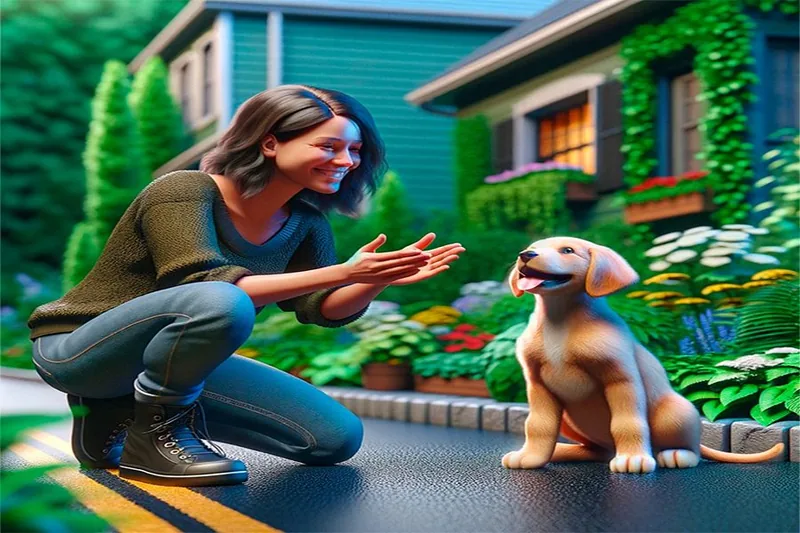
Teaching Them to Come When I Call
This kind of training is very simple, since puppies quickly recognise their name, though often they'll look at us and "play dumb". That is, they won't come to where we are.
For your puppy to learn to obey the recall command, you simply need to use their weak spot: food. Every puppy loves eating, and even once they stop being puppies… it stays their Achilles' heel.
Try calling them while showing them a bit of food, a reward. They'll come right away, and once they do, praise them and give them their reward. Now move away from them and repeat the process — it's that simple. As the days go by, always praise them when they come, but only give them a reward now and then. And if they ever don't come when called, simply show them the reward.
Simple, isn't it? Training them to come when called is one of the easiest processes within a puppy's training — even so, remember you should always practise it in a safe setting (in case they decide to run off elsewhere to play).
Teaching Them Not to Bite
Every puppy feels the need to bite things, furniture, slippers, cables, sofas, and even us. This is entirely normal, since this is how they play and get to know what's around them.
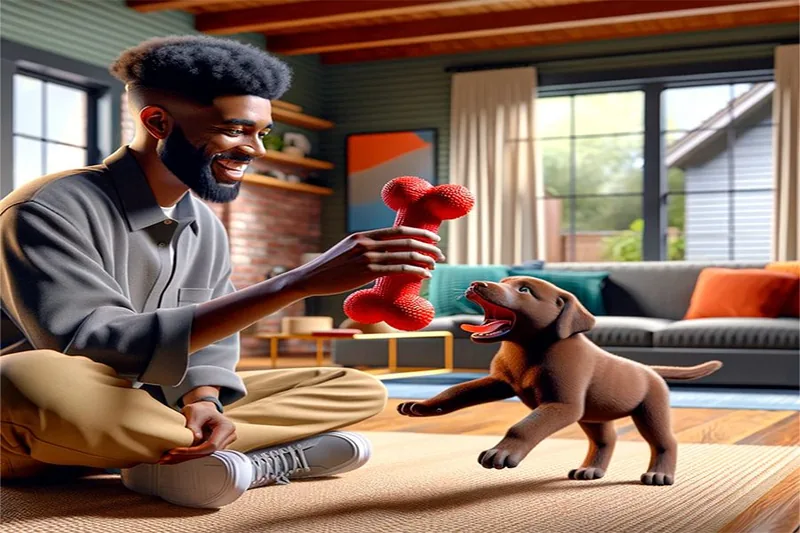
Even so, when our puppy bites something they shouldn't, ourselves included, we need to grab their attention. A loud, firm "No!" or "Shhhh!" should be enough. Right after, we'll grab one of their toys and put it in their mouth for them to bite. We'll play with them, encouraging them to bite the toy (only the toy).
The goal is for them to learn they can't bite whatever they want, except their toys, which they can bite whenever they like. This way they'll quickly learn to respect our home's furniture and us too. Although it's a very simple technique, it's the best way there is to teach a puppy not to bite.
Teaching a Puppy to Walk on a Lead
No puppy likes having a collar put on them, let alone a lead. It's as if you were limiting their freedom, entirely understandable. Sadly, dogs can't be off the lead on the street in most cases, since they could be hit by a vehicle or even run off and get lost.
Put the collar on your puppy, not too tight — you should be able to fit two fingers between the collar and their neck with no squeezing. Bear in mind your dog will grow very quickly, so make sure the collar is never tight — you'll need to loosen it every so often.
It's best to leave the collar on at all times, both on the street and inside the house, until they're an adult and used to it. This way they'll quickly get used to wearing the collar and won't constantly try to take it off.
Before leaving the house, put on their lead — we recommend using a short lead, no more than two metres, that isn't retractable. We need to teach our puppy to walk, not to roam freely with an excessively long lead.
Open the front door and go out first yourself — afterwards your dog should go out, but always when you tell them to; get them used to going out with a command such as "let's go" or "out".
During the walk, be patient with them — puppies walk far more slowly than you and, what's more, don't like walking… they just want to run and sniff things.
I recommend going to a park or a spot where you can let them off and let them run and play, let them burn off steam, get tired, and enjoy life. Once they're tired, before heading home, will be the perfect time to walk with them calmly for a bit.
If your puppy pulls on the lead, simply stop and wait for them to come back to your side. Don't pull on their lead — just let them gradually learn that if they tug, you stop. Teaching a dog to walk is a task that will take us quite a while, but will prove hugely useful throughout their whole life.
Personal Advice
Puppies grow far faster than we imagine, so enjoy every single day of their puppyhood. A dog is considered to stop being a puppy and become a young dog from fourteen months old in small and medium-sized dogs, and from sixteen months old in large dogs.
Apply the training advice gradually and calmly, bit by bit, without getting angry if things don't work out — gradually, they'll come together. Let your puppy be what they are, a dog. Go out for walks with them and let them sniff everything they want, play with other dogs and get up to mischief — remember they're not humans, they're dogs, and dogs do these things.
If possible, let your dog enjoy their mother's company at least until they're three or four months old, since mothers will teach them far more things than we can, purely by instinct. If this isn't possible, let them play with other dogs and even get corrected if they overstep (as long as they're not aggressive dogs, obviously).
Don't obsess over having the best-trained dog — obsess over enjoying your new adventure companion, give them plenty of affection, and enjoy life together.
IMPORTANT: This article is for informational purposes only and does not constitute veterinary, nutritional or behavioural advice. Every dog is different, and only your trusted vet can advise you on its specific needs.