 Nutrition
How to Transition From Kibble to Natural Food for Dogs?
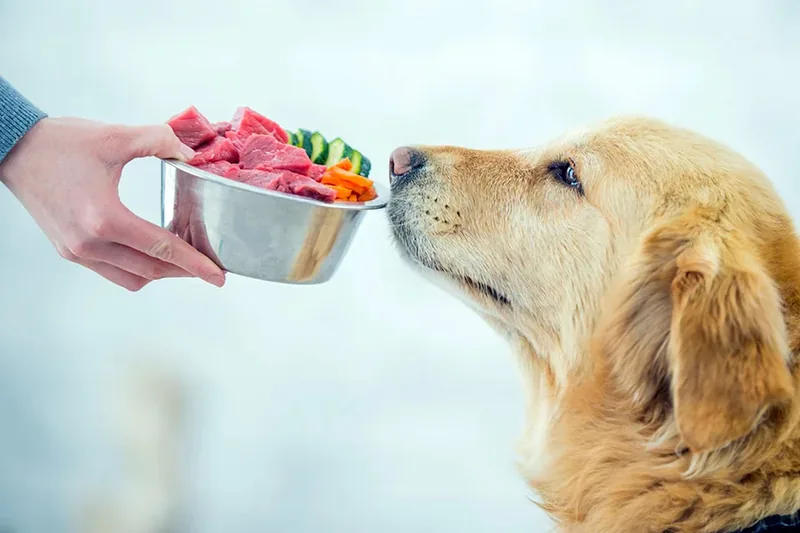
We often decide to switch to natural food for dogs, but aren't quite sure how to start, so at Soyunperro we'll explain step by step how to make the transition to phase out the previous food (we'll focus on kibble) and bring in the new natural food, highlighting possible changes our dogs may experience.
When we decide to take the step and introduce our dog to natural food, we should know there are many ways to do it. We'll decide on the most suitable way based on each dog's individual needs and eating habits. We'll focus on the transition from kibble to cooked food for dogs.
Detox Process
Before explaining the transition, we should know that, during the switch from one diet to another, our dog will go through a series of changes in its body. This process is called detoxification, and it involves the body eliminating all toxins built up from processed food.
These changes may not be visible in some dogs, but in others, they can show up as digestive symptoms such as diarrhea, vomiting, mucus-covered stool, bad breath, and other external ones such as watery eyes, dandruff, itching, and hair loss.
The body's adaptation will affect each dog differently — it all depends on the state of its digestive system and any sensitivities it may have.
This detox process is temporary, so we shouldn't worry excessively as long as the dog keeps its energy and normal habits.
Dogs are carnivorous animals with a stomach pH between 1 and 2 to properly digest. This lets them kill off pathogenic microorganisms, release digestive enzymes, dissolve bones, absorb nutrients, speed up bowel movement, and improve the immune system.
Dogs that eat kibble have a more alkaline digestive pH, mainly caused by the cereals present in its composition. This prevents neutralizing pathogens, as well as achieving proper nutrient absorption and bone dissolution, and can also compromise their health.
During the transition process, the pH will gradually normalize, becoming progressively more acidic.
How Can We Make the Transition?
There are different ways to make this transition, depending on our dog and how its digestive system usually works.
Overnight
First, we'd have the simplest one, for healthy adults, which involves switching the food from one day to the next leaving a minimum 3-hour fast, meaning one day we give it kibble and the next we fully introduce the natural diet.
For Dogs With Sensitive Digestion
In these cases, we'll go with a bland diet, which we'll prepare at home by cooking 70% lean white meat (for example: chicken, turkey, or hake) and 30% easy-to-digest vegetables (for example: carrot, pumpkin, or zucchini), which we'll calculate based on its daily food ration.
Intermediate Transition
The intermediate transition is the most recommended, and the one advised by natural cooked dog food companies such as Dogfy Diet.
The food will be introduced gradually as kibble feedings are phased out. We'd do it this way, always in feedings separated by a minimum of 3 hours:
Day 1 and 2: 25% natural food + 75% kibble
Day 3 and 4: 50% natural food + 50% kibble
Day 5 and 6: 75% natural food + 25% kibble
Day 7: 100% natural diet
We need to keep in mind that digesting kibble and natural food is completely different. The natural diet takes about 3 hours to digest, while kibble easily takes 8 to 12 hours. That's why we recommend spacing out feedings — for example, giving the kibble feeding at night and the natural food in the morning, to make sure the previous night's food has finished digesting properly.
It's very important that before starting the transition, we already start including probiotics, since these will help make the detox process go smoother and ease digestion. For this, we can give it a bit of kefir or 100% natural yogurt every day along with its food ration. The dose would be 1 teaspoon per 5kg of the furry one's weight.
IMPORTANT: This article is for informational purposes only and does not constitute veterinary, nutritional or behavioural advice. Every dog is different, and only your trusted vet can advise you on its specific needs.