 Nutrition
Can a Dog Eat Bones?
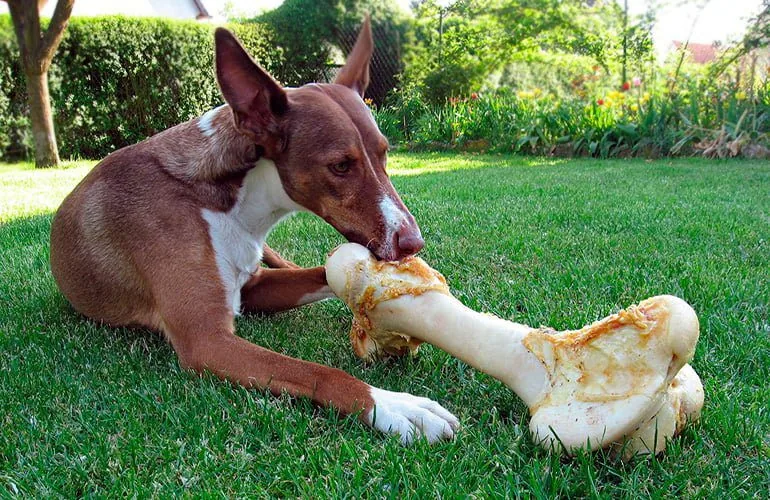
Bones have always been thought of as classic dog food, but are they really healthy for them? Should they be part of the diet? And if so, which ones and how do we serve them?
Below we explain what benefits bones can bring when included in a dog's diet and, conversely, what risks they pose, particularly depending on the type we pick and how it is prepared.
Are Bones Beneficial in a Dog's Diet?
Those in favour of feeding bones point out that they provide minerals such as calcium and phosphorus, along with magnesium, sodium, iron and zinc. They also contain protein and cartilage, a type of connective tissue made up of collagen. What is more, if we offer bones with marrow we make use of the nutritional value of that part too.
It is where blood cells are formed, though it also contains more fat. Beyond that nutritional contribution, dogs get a great deal of entertainment out of bones. They offer mental stimulation and relaxation. Dogs can gnaw at them, which soothes them while their adult teeth are coming through, and carry them about and bury them, if they have somewhere to do it.
Bones also contribute to dental hygiene by helping to clean away food debris that may have lodged between the teeth, thereby preventing the build-up of tartar. The best bones to include in our dog's menu are meaty ones — soft and well covered in meat. There are also so-called recreational bones, such as beef knuckle or marrow bones.
The Dangers of Bones in a Canine Diet
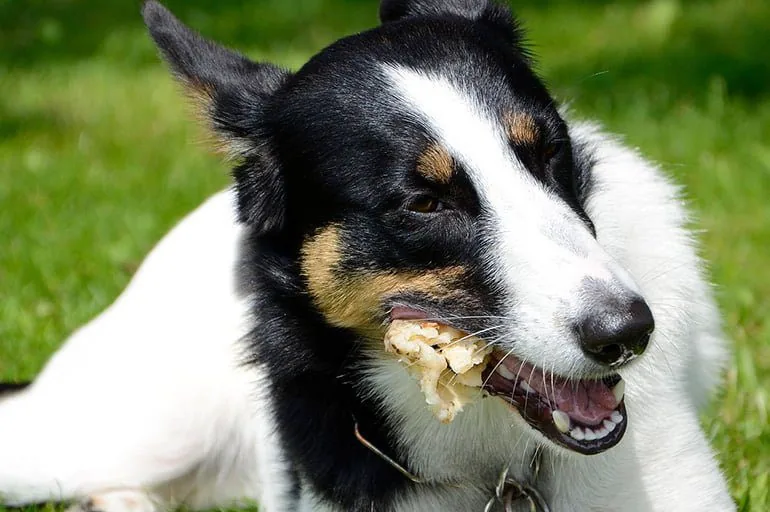
Other experts, on the other hand, advise against including bones in a dog's diet. Their reasoning is that they consider their nutritional value to be "practically nil" and that they can also cause health problems, some of them very serious.
On this point even the advocates of bones agree, when they note that a poor choice or unsuitable preparation can have negative consequences. For instance, small bones or bones with no meat on them can easily cause choking. These are some of the most frequent problems:
- Broken or worn teeth.
- Blockage of the airway. If the bone lodges in the trachea the dog can end up choking.
- Injuries at any point in the digestive system, which begins at the mouth and ends at the anus. These can range from small wounds to serious tears with fatal consequences such as peritonitis.
- Blockage of the digestive tract at any point. It may be complete or partial, and how serious it is depends on that.
- Constipation and difficulty passing stools because they harden. Blood may appear at the anus or in the stools themselves, which will be whitish in colour and hard in consistency.
Any sign of breathing difficulty is an emergency. The dog has to be taken to the vet immediately. Restlessness, rubbing the mouth with the paws, drooling heavily or retching are warning signs. If we notice other symptoms such as intense abdominal pain, vomiting or an inability to move, peritonitis may have set in.
There may be an anorectal blockage. Vomiting, diarrhoea, pain or abdominal distension, meanwhile, are signs of partial or complete intestinal obstruction. If your dog gets constipated every time you give them bones, cut down the amount you offer.
Are Cooked Bones Safe?
The specific problem with cooking bones is that the bone structure can weaken during the process. In that state they splinter more easily, and those bone fragments become extremely dangerous for dogs. They can lodge in the throat or even perforate the gastrointestinal tract.
How to Give a Dog Bones
Dogs can eat raw bones. Before offering them it is worth freezing them to kill off any parasites they might carry. Remember to choose meaty bones, that is, ones surrounded by a good amount of meat. Roughly speaking, the piece we offer should have as much meat on it as bone.
Bones that are small and have barely any meat on them should be avoided. Match the size of the bone to the size of the dog. Check that they cannot swallow it whole and choke. We can offer bones of this kind now and then, as a treat, deducting it from the dog's daily ration.
If we want to prepare home-made food such as the BARF diet and count bones as one more ingredient, we need to get in touch with a canine nutrition specialist. Otherwise we run the risk of offering an unbalanced diet that can lead to health problems for our dog.
Types of Bone Suitable for Dogs
We should completely avoid any kind of hard bone, since these can be difficult to gnaw and may lead the dog to try swallowing them whole, causing choking or a blockage.
Soft, meaty bones are the only ones we can give our dogs, with care and common sense. Some examples:
- Chicken carcasses
- Chicken wings
- Chicken necks
- Rabbit carcasses
- Rabbit legs
Some large dogs with powerful teeth, such as Rottweilers, are able to eat harder bones such as pork ribs. But the risk they can pose is not worth it, when softer bones such as chicken or rabbit are available to us.
Bibliography Carlson and Giffin. 2002. Manual práctico de veterinaria canina. Madrid. Editorial el Drac. Dopico, David. ¿Qué sabes de las dietas crudas? Revista Ateuves no. 62. pp. 20-22.
IMPORTANT: This article is for informational purposes only and does not constitute veterinary, nutritional or behavioural advice. Every dog is different, and only your trusted vet can advise you on its specific needs.